
GUEST COLUMN:
Simon Jones
Chief Executive
Global Centre of Rail Excellence
There is a tangible difference between a project looking for a market and a market waiting for a project.
The Global Centre of Rail Excellence in South West Wales is firmly in the second category. Demand for the world-class facilities it will offer has been evident from the start – not just from the rail industry here in the UK but from across Europe and globally.
The commercial pull of being able to use the unique innovation infrastructure we will have at GCRE is what gives the project such a firm commercial underpinning. GCRE is a clear response to a strategic gap in the rail market. There are test facilities elsewhere, but none offer the range and the breadth of what will be available at our site, particularly for infrastructure testing.

Rail urgently needs a purpose-built facility to test, prove and demonstrate the next generation of railways products, technologies and systems. That means not only vehicles and trains, but the infrastructure that does not move: the signalling, electrification, drainage systems, track and so vital to making railways function effectively.
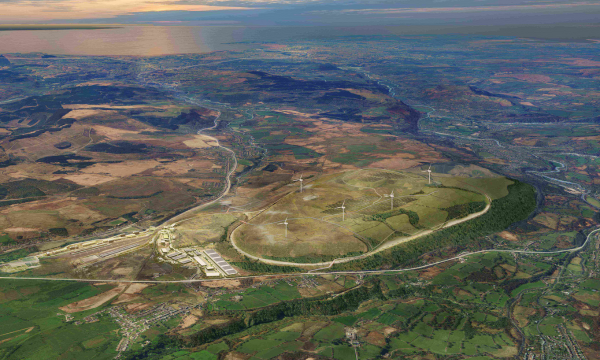
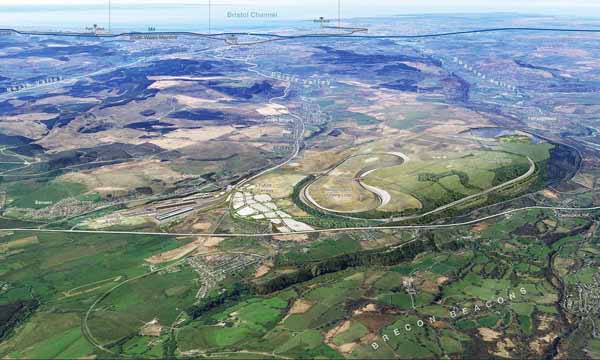
Our site is a former opencast coal mine, straddling the Neath Port Talbot and Powys border that is the size of Gibraltar. That scale is central to the commercial opportunity. The rail industry cannot test everything it needs to in a laboratory or on a computer. Simulation has a vital place, but there comes a point where you have to take products for real-world testing.
Neither can the industry invite prospective clients to inspect new products on an operational railway. GCRE offers the ability to bring people up close to the products; the ability to show them technology in operation, in turn giving confidence to the potential buyers of innovations because they can see it with their own eyes.
The market has been telling us that they need a facility like GCRE. More than 200 organisations have told us they GCRE is a good idea and that they would like use the services and facilities we will offer once fully operational. Critically, around 20% of those organisations are from overseas.
That is why this is such an exciting export opportunity for Wales and the UK. It could give South West and Mid Wales new economic identity as an international hub for railway innovation – much like compound semi-conductors in Newport or aerospace in North East Wales have become the ribs of those economies.
The closest comparator facilities are not really in rail, but in automotive at places such as Silverstone or Millbrook. Those places have become hubs of high quality R&D, utilised by international firms as well as domestic companies to speed up innovation and increase their commercial competitiveness. One such facility, Horiba Mira in Nuneaton, which itself was initiated by the UK Government, contributes £500m annually to the economy.
This is scale of what we could achieve on our own technology park. GCRE is not simply about testing a few trains, its about creating an innovation cluster that draws in the worlds best. Where firms large and small will choose to locate and set up around because of the uniqueness of what we have.
That is where the economic development and the commercial opportunity of GCRE intersect. We want to re-build prosperity in an area badly impacted by more than four decades of de-industrialisation and the most effective route to that is building something that the market actively wants to use.
The path to delivery has not been straightforward. The economic conditions of recent years have made the task more difficult than we envisaged at the beginning. Covid, the war in Ukraine, wider geopolitical uncertainty, domestic policy impacts on rail, interest rates and inflation have all affected the investment environment. But we remain positive.
One of the things fuelling that positivity is a complementary project we are working on to secure a partner to develop renewable energy and data centre assets on the GCRE site. That could not only provide a significant cash injection to the business but also, and importantly for government, a stream of significant and long-term non-domestic rates income. That income stream could in turn become vital to helping underpin the viability of the rail project.
While that work continues, GCRE has already tangibly shown what it can do. Through the recent Innovation in Railway Construction programme hosted at GCRE in collaboration with Innovate UK, a dozen teams were able to develop and showcase cutting-edge new rail technologies at the site. One of the strongest pieces of feedback from that competition was that being at GCRE gave them a spotlight they would not otherwise have had. Some of these teams have gone on to gain international interest in their products; secure new equity investment in their companies as well as grow their teams and businesses.
The next step for us at GCRE is to work with the new Welsh Government to move GCRE onto the next level. The opportunity to create new, sovereign capability in the Welsh economy by making it an internationally significant home for rail innovation is in front of us. We now need to take it.
Simon Jones talks about this and more on the Economy & Infrastructure Wales podcast. Listen here: