Strong market demand from the UK and overseas rail industry is driving the case for the Global Centre of Rail Excellence in South West Wales, sector leaders have said.
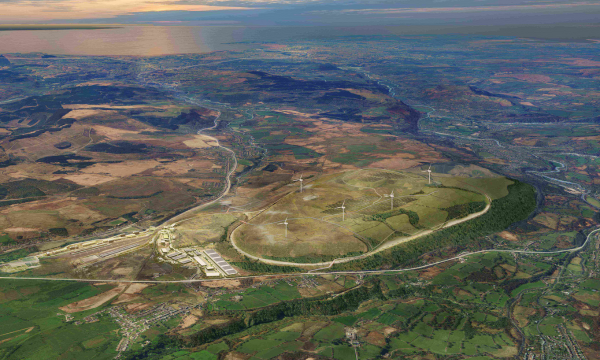
The facility, being developed on a former opencast mine 15 miles from the Tata Steelworks in Port Talbot, aims to give rail suppliers a dedicated place to test, prove and demonstrate new products away from the operational railway.
Speaking on Business News Wales’ Economy & Infrastructure Wales podcast, GCRE Chief Executive Simon Jones said more than 200 organisations had expressed an interest in using the facility when it opens, with around 20% of that support coming from overseas.

He said the project would fill a clear and strategic market need in the UK and European rail industry.
Simon said:
“The market has been telling us for the last five, six, seven years that if we build this, people will come.
“We’ll put Wales at the centre of the map when it comes to railway innovation.”
He said there were rail testing facilities elsewhere, mostly in Europe, but they did not offer the same range of services planned for GCRE. Where facilities did exist, he said, they were often significantly oversubscribed.
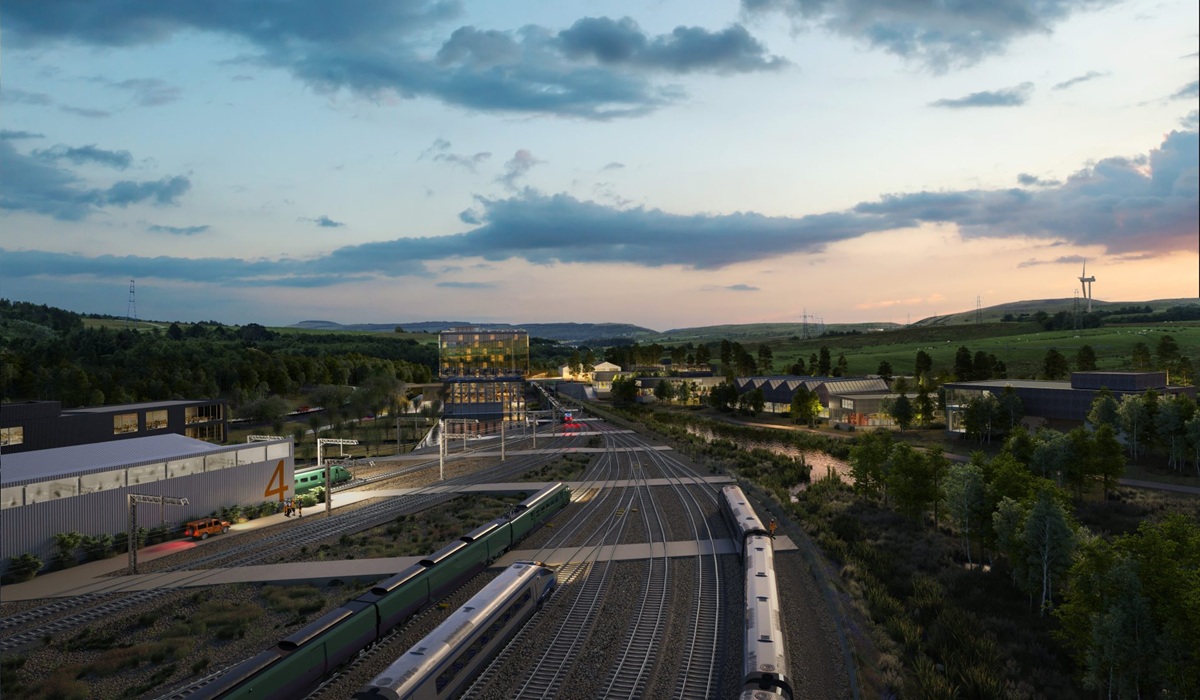
The GCRE site is expected to provide two, seven kilometre testing loops where railway vehicles, trains and infrastructure can be tested, proved and demonstrated. That includes rolling stock as well as signalling, electrification, drainage systems, track and other infrastructure.
Simon said that the scale of the 700-hectare site – the same size as Gibraltar – was central to the opportunity because rail needs a large, real-world environment to test the full range of railway technology.
He said GCRE could become a rail innovation hub comparable in concept to automotive research and development centres such as Horiba MIRA and Millbrook, where specialist facilities have attracted firms to locate development activity around them.
The commercial case has also been reinforced by companies already using the site.
Noel Dolphin, Managing Director of Furrer+Frey, said his company had used the facilities which have already been developed at GCRE to test products focused on lowering railway costs and improving reliability. Before GCRE was available, the company had carried out testing across Europe, including in Germany, Switzerland, Italy and Japan, as well as parts of the UK.
Noel said existing facilities tended to offer individual functions, making testing spread out and difficult to showcase to clients.
He said GCRE would allow suppliers to test products in a real-world environment and give customers confidence.
Noel said:
“You can take people in the snow, in the rain, in the sunshine, all on the same day, and really show and give people confidence.”
Noel Travers, Chief Executive of Buckland Rail and Chair of the Railway Industry Association, said the facility could help overcome one of the biggest commercial barriers facing rail suppliers, particularly SMEs.
He said smaller companies were often the source of rail innovation, but the challenge was turning an idea into something proven, operational and commercially viable.
Testing unproven technology on the mainline railway brought both safety and operational risk, said Noel, particularly on a heavily constrained network. An off-network facility would allow companies to test and refine products without importing that risk into the live railway.
Simon said a UK Government-backed competition at GCRE had already supported a dozen, mostly SME businesses. Some of these teams have gone on to secure international interest in their products; secure new equity investment in their companies and grow their operations.
GCRE is now seeking private sector investment to deliver its next major phase. A decision on the future of the project is due to be made by Ministers later this year.
Simon said investors could see the use case for the facility but needed some form of government underpinning to help lever in capital investment for the facility that would be unique in Europe.
Noel Travers said backing from industry and government, including commitments from major government-funded rail bodies to use the facility, could give private investors confidence to support construction.
He said:
“What’s really important to me, if we’re going to realise the benefits for the rail industry but also the economic benefits for Wales, is that we get on and get GCRE built.”
Listen to the Economy & Infrastructure Wales podcast here: