

GUEST COLUMN:
Tomos Attewell
Invest Lead
GlobalWelsh

Until recently, where you founded a company mattered almost as much as what you were building. The prevailing wisdom was clear: success required proximity to capital, talent and customers, which often meant London or California, if you wanted a genuine chance of making it. That premise is shifting and Wales may be well positioned to take advantage.
Sam Altman spoke for two years about a betting pool among tech CEOs for the first one-person billion-dollar company. Dario Amodei has put a number on it: 2026, at 70-80% confidence, naming developer tools, proprietary trading, and automated customer service as likely categories. Whether that prediction lands exactly on schedule is beside the point. Matthew Gallagher built Medvi, a telehealth business tracking toward $1.8 billion in revenue, from his home with $20,000, using AI for code, copy, and customer service, outsourcing only the parts that legally required a human.
Forbes has argued the more realistic pattern is the two-person company rather than the one-person company: a founder with vision, plus one AI-fluent operator who runs the agents day to day. Even that more modest version has a simple implication for anyone thinking about where to build. A small team no longer needs to be co-located with a large one. You don’t need an office in Shoreditch to run sales, support, marketing, and ops. You need good judgment, a laptop, and a handful of AI tools that used to require departments.
This is the part of the story that gets less attention than the AI headlines, but it matters more for where you actually choose to build. When a five-person team can do what fifty used to, the pressure to be near an office, investors, or a large talent pool weakens. The question of where you actually want to run the business from gets more room to matter. Wales answers that question well.
It’s cheap to operate here without being cut off. Cardiff was ranked the No.1 UK city for business growth in Arbuthnot Latham’s 2025 Business Growth Index, driven by affordability, graduate retention, and a strong support ecosystem. Office space, salaries, and burn rate go further than in London, without giving up infrastructure, universities, or services. Cardiff to London is roughly two hours by train, so you can easily meet investors or clients.
The clusters are real, not aspirational. South East Wales has a genuine fintech and insurtech base out of Cardiff (Admiral, Confused.com, and newer companies like Delio), plus a cybersecurity cluster backed by academic research and the Airbus Centre of Excellence. Newport hosts Europe’s largest data centre campus and a world-leading compound semiconductor cluster, backed by a £250 million expansion. This is an existing, working infrastructure you can plug into now.
It’s a similar story across the rest of Wales. North Wales has its own established tech and innovation base around Bangor, supported by M-Sparc and grassroots communities like North Wales Tech, giving founders access to grant funding, mentoring, and a growing pool of graduate talent outside the usual south-east corridor. West and south-west Wales – Swansea and the wider region – brings a strong manufacturing heritage alongside a growing focus on net zero and renewable technology, backed by initiatives such as the South West Wales Launchpad. Together, this gives Wales a genuinely national ecosystem rather than a single-city story: whichever part of the country you’re based in, there’s local support, funding routes, and talent to draw on.
The universities produce talent an AI-era company needs. Cardiff, Swansea, Bangor, and Aberystwyth turn out graduates in cloud, AI, cybersecurity, and data. Wales is small enough that you can hire well without entering a bidding war with five other companies for the same candidates, the way you would in London or the Bay Area.
The support infrastructure has caught up. Between the Development Bank of Wales, numerous co-working and accelerator networks across major Welsh towns and cities, and Welsh Government schemes aimed at innovation and R&D, a founder starting today has more scaffolding than founders had even five years ago: fully funded bootcamps, investor-readiness programmes, and regional co-investment funds among them.
Founders themselves have already made this case. A widely cited survey of the Welsh tech ecosystem found that people building here feel Wales is well placed to capitalise on the shift to remote and hybrid work, precisely because you no longer have to trade quality of life for access to opportunity.
If economics explain why location is no longer a constraint, lifestyle explains why Wales is a compelling answer. It’s compact enough to offer a capital city, wild coastline, and mountains within a single working day, wherever you choose to set up.
Cardiff and the south east give you the city part: a capital with a university, a professional services base, good restaurants, an airport, and a mainline station that gets you to London in around two hours. From there, the rest of the country opens up fast. The Gower Peninsula, Britain’s first officially protected area of outstanding natural beauty, with its cliffs, surf beaches, and coastal path, is under an hour’s drive away. The Bannau Brycheiniog, with Pen y Fan, the highest peak in South Wales, at its centre, is about 45 minutes from Cardiff.
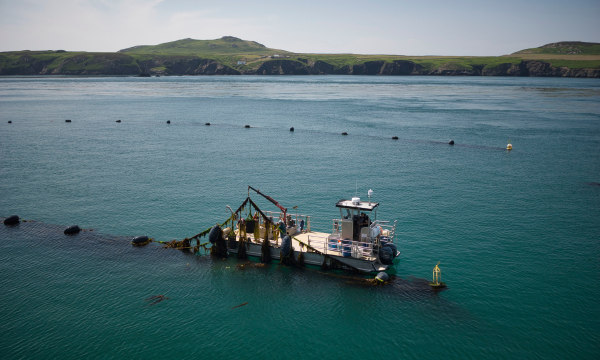
Base yourself in the west instead, around Swansea or further out toward Pembrokeshire, and you get much of that same connectivity to Cardiff and beyond, along with a slower pace, some of the best surf and sailing in the UK, and a lower cost of living.
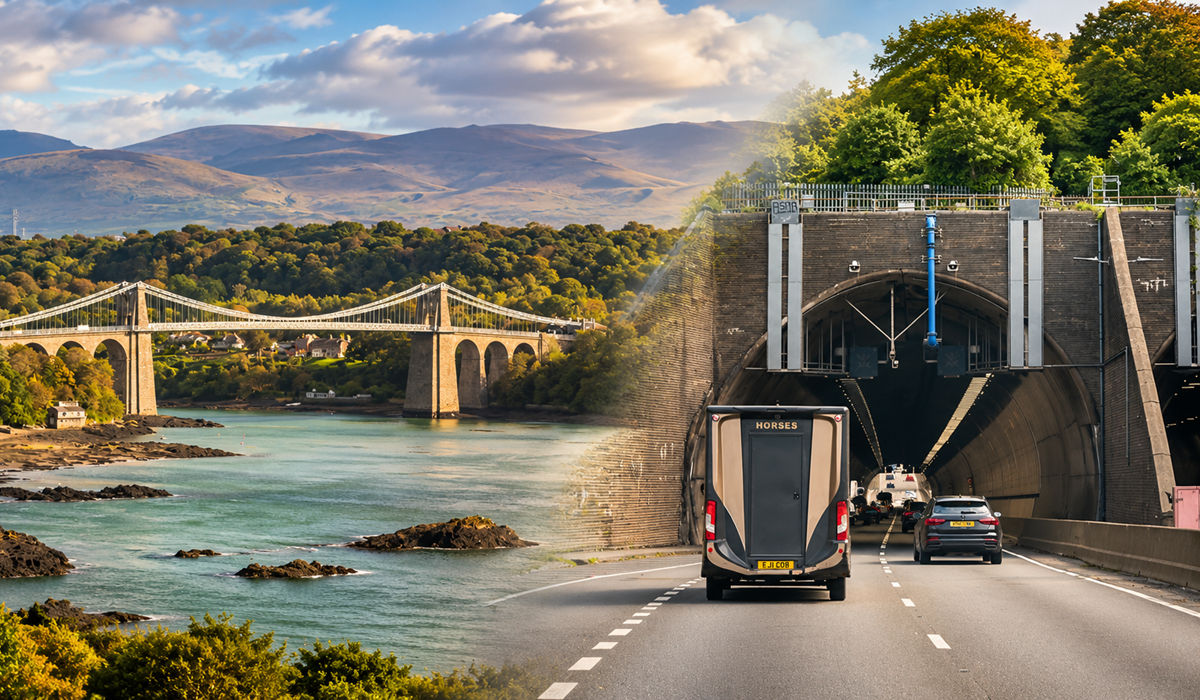
Go north and the picture changes again. Eryri (Snowdonia) puts proper mountains on your doorstep rather than an outing, and Bangor and the surrounding area offer a university town feel with its own growing tech and innovation base. The north isn’t cut off from other major economies either. Liverpool and Manchester are both under two hours away by road, and a ferry from Holyhead on Anglesey gets you to Dublin, putting a second country’s business and investor network within a morning’s reach.
A capital city, a serious coastline, and proper mountains, all reachable within a working day, plus easy access to Liverpool, Manchester, and Dublin: that combination is rare anywhere. Most people who want city infrastructure and dramatic landscape have to choose one, or accept hours of travel between them. In Wales, depending on where you base yourself, you can have a client call in the morning, be on open water or a mountain path by afternoon, and still be home for dinner, without leaving the country you started in. For founders and small teams who now have the freedom to work from anywhere, that’s a genuine answer to a question AI has just made newly relevant: given that you can build from anywhere, where do you actually want to live while you do it?
A fair case has to include what founders themselves flag as gaps. Rural broadband and physical infrastructure still lag what’s needed, though the Welsh Government’s current infrastructure push targets this directly. Founders have also said they want more co-working hubs and denser founder networks outside Cardiff, and some feel Welsh Government support has been spread thin trying to be equitable across every region and sector, rather than concentrated on the areas, fintech, semiconductors, cyber, where Wales already has a real shot at being a global leader rather than a regional one.
These are the ordinary growing pains of an ecosystem still building itself, not reasons the underlying case falls apart. If anything, they’re arguments for getting in now, while the community is still small enough to actually know and help each other, rather than waiting until Wales looks the way Austin or Bangalore already do.
GlobalWelsh is an independent not-for-profit connecting Welsh people and friends of Wales in over 70 countries, acting as a bridge between founders in Wales and the diaspora abroad. We are an organisation that covers key gaps for small-nation founders. Capital through GlobalWelsh Invest, a diaspora angel network offering equity investment, mentorship, and validation; talent and sales through global hubs that help Welsh businesses trade and network without relocating, plus a Connect platform for sourcing talent and opportunities globally; and mentoring through MyMentor, which pairs founders with experienced business mentors. For a founder based in Wales, that’s a real edge: a ready-made global network few small nations can match.
The old argument for London or California was simple: that’s where the people, money, and customers are. AI is dismantling the “have to be” part of that argument faster than most people predicted even two years ago. Once location stops being a constraint, the question becomes: where you actually want to build something? For a founder who wants real tech clusters, strong university talent, government backing, a lower cost base, and a decent life outside of work, while staying a couple of hours from major business hubs and no distance at all from a global customer base, Wales is one of the strongest options in the UK right now.