
GUEST COLUMN:
Simon Jones
Chief Executive
Global Centre of Rail Excellence
The western Valleys of the south Wales coalfield is a landscape forged by heavy industry. Its communities grew around the tin, copper, steel and coal trades that drew people there to live and to work. Around those industries grew something more enduring than simply output alone, it created a wider political and social identity rooted in pride, solidarity and an understanding that what was made there mattered, both locally and globally.
Today, those same communities fight hard to keep what remains of their industrial base. At Port Talbot both Welsh and UK Governments are rightly working together to ensure that after the trauma of more than 2,000 jobs lost after the blast furnace closed, the Electric Arc Furnace (EAF) project stays on track and that the area remains a hub for sustainable steel production well into the future.
But as well as protecting what it has, it’s clear the western Valleys also needs new nodes of economic strength. New industries that can themselves deliver productive, well-paid work for the next generation. One of the questions now facing Welsh Ministers is whether the Global Centre of Rail Excellence (GCRE) can be a part of that new future for the region.
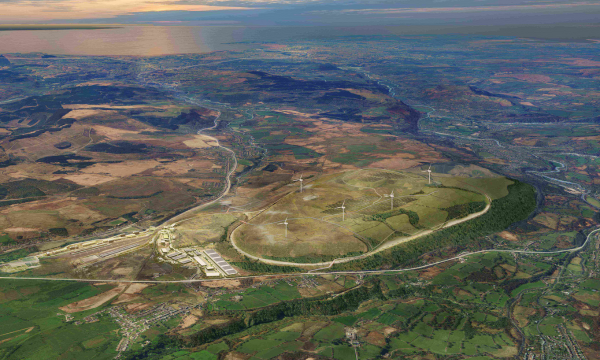
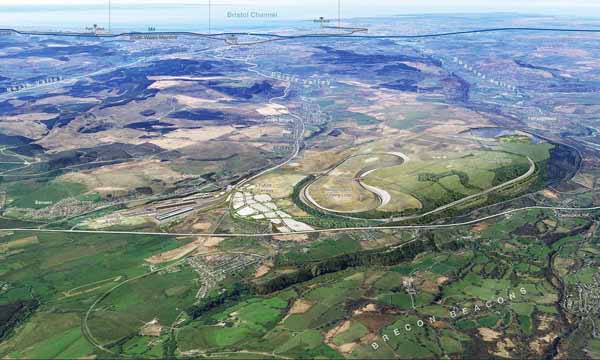
GCRE was established in 2021 on the former Nant Helen opencast mine and Onllwyn washery site. Its purpose is an ambitious one, to create a facility where world-class rail innovation can flourish and at the same time develop a new pole of industrial strength in the regional economy.
In the UK and Europe there is no comparable independent facility able to test both rolling stock and infrastructure at scale. Too often, innovation is tested late, on busy railways, or in conditions that are difficult to control. The result is delay, added cost and disruption for passengers and freight. GCRE is designed to help address that by making technology innovation faster and major project delivery more cost-effective across the industry.
More than 200 companies have already expressed interest in using the facility once it is built, with GCRE developing partnerships with major names including Hitachi, CAF, Thales, Network Rail and Transport for Wales. Recent analysis has suggested that the GCRE project could support around 1,400 jobs over the next decade and generate almost £5 billion of monetised benefits over its lifetime.
Yet numbers in a business case or an economic forecast rarely tell the full story. The real measure of GCRE’s impact will be whether young people in the Dulais, Swansea and Neath valleys can see a viable future for themselves in the places where they grew up. Whether they can see themselves working in the advanced engineering, energy innovation and commercial fields that will develop at a new GCRE cluster. Whether they can imagine themselves founding their own technology start-up from the ideas proved at the site.
GCRE’s ambition is not simply to bring investment into the western Valleys, its to make sure local people are equipped to benefit from it. That means working with schools to show young people the careers that could exist on their own doorstep; working with our excellent base of further education colleges in the area to align courses and apprenticeships with employer demand; and connecting universities and businesses so that talent, ideas and firms developed in Wales have the opportunity to remain, and grow, in Wales.
The decision before Welsh Ministers is therefore not simply one of funding a rail test facility or dealing with a difficult spending pressure, it’s a strategic investment in the future of the coalfield. That’s not to dismiss the challenges facing the Welsh Government. This autumn’s draft budget will arguably be one of the most difficult ever faced by ministers, with capital funding, in particular, under significant strain.
That is why creative thinking has been needed and its why GCRE has put its shoulder to the wheel. GCRE has sought a partner to develop part of the 700-hectare site for renewable energy and a data centre. That investment, together with the future non-domestic rates income such infrastructure could generate, could, with the right agreement between the Welsh Government and local partners, help create a sustainable investment path for the rail project without placing excessive pressure on Welsh Government budgets.
This is an important choice for government. Advancing energy and data centre investment alongside the rail project would combine private capital, future income and public purpose, turning a former coaling site into a platform for new economic capability in the western coalfield.
The wider policy context only strengthens the case. The UK Government’s Modern Industrial Strategy places emphasis on advanced manufacturing, clean energy, digital technologies and place-based growth. GCRE sits directly across these priorities. It offers a tangible example of the re-industrialisation the Prime Minister has been talking about, not by trying to recreate the past, but through building new capabilities needed by the international rail industry. Indeed, through rail reform and intelligent procurement, a “Test British-Grow British” approach could be developed, enabling more products to be designed, tested and approved in Britain while anchoring innovation, skills and manufacturing activity at GCRE.
None of this is risk-free. Attracting major private investment to the heads of the south Wales valleys has never been easy and no single project can solve the economic challenges facing coalfield communities. But GCRE is an opportunity to build a new and unique growth pole in the region. It’s a chance to connect Wales to global markets, create new skilled employment, support the next generation of rail innovation and show that industrial renewal can be practical, place-based and future-facing.
For Welsh Ministers, the pivotal choice is whether to seize that opportunity or allow it to narrow, drift or move elsewhere. If GCRE succeeds, its impact will not only be calculated in jobs, investment or economic value, it will be measured in whether young people living in communities built by older heavy industry can look at the new opportunities around them and decide they no longer need to leave to find their future.