
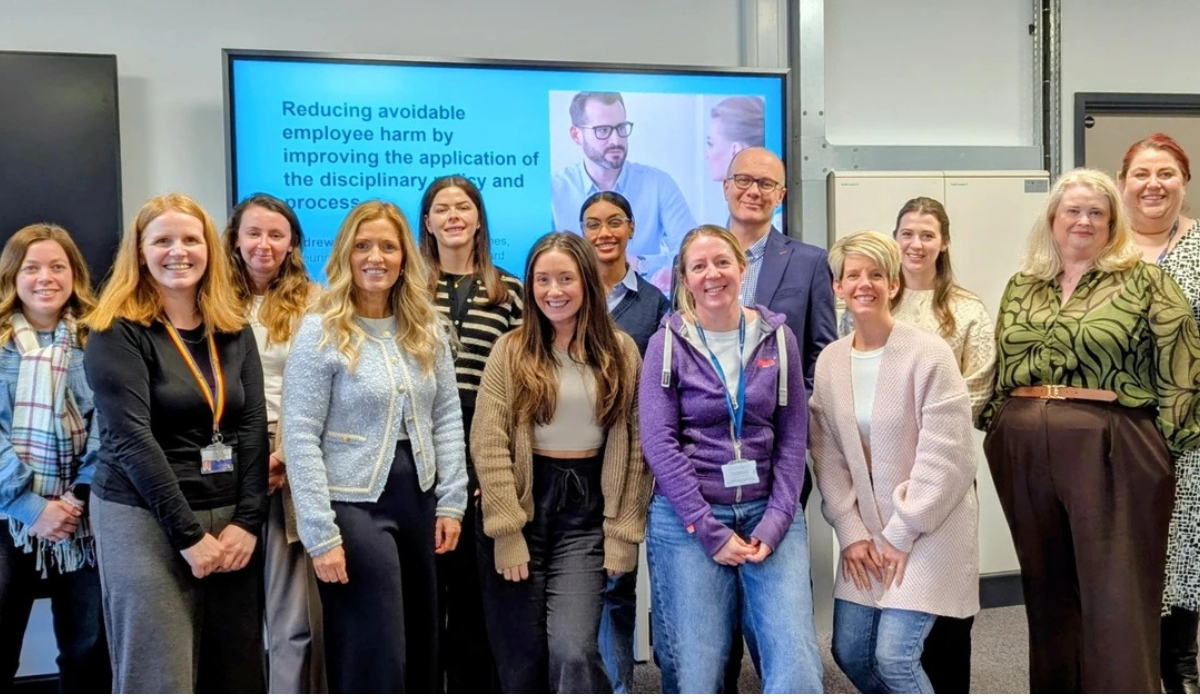
The University of Wales Trinity Saint David (UWTSD) is embedding the concept of avoidable employee harm into its HR and business management programmes as part of a wider effort to prepare future HR professionals and managers to create healthier workplaces.
The development comes amid an increasing recognition of the issue at a national level. In a recent discussion paper, the Faculty of Public Health described poorly administered disciplinary procedures as a public health concern and called for urgent action to reduce harm caused to employees during workplace investigations.
The paper highlighted the scale of the challenge, citing Acas research that estimates around 1.7 million formal disciplinary cases are initiated annually in UK workplaces, while workplace conflict costs employers an estimated £28.5 billion a year.
Over the past academic year, UWTSD has worked closely with Andrew Cooper, lead editor of ‘Under Investigation: Transforming Disciplinary Practice in the Workplace’ and Head of Programmes for Employee Wellbeing at Aneurin Bevan University Health Board, to introduce students to the concept across a range of professional and degree-level programmes.
Guest lectures with Andrew and Rhiannon Windsor, Deputy Director of People & OD at NHS Wales, have been delivered to students studying the postgraduate and the CIPD Strategic People Management (MA) programmes, as well as those on Business Management (BA) courses. Postgraduate students have also been given the opportunity to deepen their understanding by completing a formal review of ‘Under Investigation’, which contributes ten per cent towards one of their module assessments. The initiative forms part of a broader programme of work aimed at ensuring UWTSD’s courses remain relevant to modern workplace challenges and aligned with employer expectations.
Alongside teaching the concept of avoidable employee harm, the university has embedded employee wellbeing throughout a number of its business management programmes. A dedicated Wellbeing at Work module has been introduced to the CIPD – People Management (Level 5 Associate Diploma) course delivered at the university’s Carmarthen campus.
Beyond the classroom, UWTSD has helped raise awareness of the issue among HR practitioners and employers by hosting a specialist session on avoidable employee harm for the local CIPD branch. The event attracted professionals from both public and private sector organisations, alongside independent consultants and focused on practical measures organisations can take to minimise harm during workplace investigations and disciplinary procedures. According to academic staff, the topic has generated significant engagement among students, many of whom have either witnessed or personally experienced the negative consequences of workplace processes. Feedback suggests the sessions have encouraged students to challenge long-held assumptions around disciplinary processes and consider alternative approaches that better balance organisational requirements with employee wellbeing.
Many have subsequently taken the conversation back to their workplaces, engaging employers in discussions about how investigations and disciplinary procedures can be conducted in ways that reduce unnecessary harm.
Sarah Barnes, UWTSD student and Senior Workforce Manager for Systems and Workforce Intelligence at Hywel Dda University Health Board, emphasised the importance of maintaining a people-centred approach in HR practice, saying:
“It should not always be just about the process. We are a people profession so why would it be ok for us to forget about the people because the process takes over?”
Carly Butler, UWTSD student, said:
“Humans interact everyday with one another and inadvertently within systems and policies that are not always designed with them in mind.”
Julie Thomas, Senior Lecturer and Programme Manager at UWTSD, said the response from students demonstrated the growing importance of the issue within the profession.
“Student reactions to our discussions on avoidable employee harm says it all. They feel strongly that it’s high time that wellbeing was prioritised and processes redesigned to minimise employee harm.
The focus on improving employee investigations has inspired a new generation of HR professionals, managers and leaders to do things differently and the university will continue to work with them to further this cause.”