GUEST COLUMN:
Phil Jones
Chief Executive
Business in Focus

Wales should be looking at defence, security and resilience not only as a procurement opportunity, but as a national economic opportunity. We already have many of the ingredients needed to be a serious centre of excellence in this field: major primes, skilled SMEs, strong universities, enterprise, advanced manufacturing, cyber capability, compound semiconductors and a history of service that gives this agenda real resonance.
The task now is to bring those strengths together with greater confidence and purpose.
We live in an increasingly insecure global environment in which the UK remains an important player. The threats we face are multifaceted. They are geographic, as we see in Russia’s invasion of Ukraine. They are informational, through the propaganda of malign actors that is part of daily life. They are technical, through cyber attacks affecting businesses and public bodies. They are also political and economic, creating uncertainty that reaches far beyond the battlefield.
The Strategic Defence Review set out many of those threats and the capabilities the UK will need to counter them over the next decade. The Defence Investment Plan then provided the resources to help build those capabilities, with £298 billion committed to defence over the next 10 years. For businesses, this creates a clear choice. Do we simply accept this more uncertain world and try to mitigate its effects, or do we go on the front foot and ask what role we can play in helping to counter the risks?
For business leaders, that should form part of the same thinking they already apply to risk and opportunity. Every serious business plan will include a risk matrix and an opportunity matrix. Both should now take account of the global situation. Businesses need to consider how they protect themselves, including through cyber security and resilience measures, but they should also consider how they can contribute to a wider national effort.
That contribution can also support growth. There are contracts to be won, investments to be made, skills to be developed and brilliant people to be employed. This is not only about responsibility, although that is important. It is also about building companies that are stronger, more capable and better connected to markets that will be increasingly important over the coming years.
For many SMEs, the defence procurement cycle can appear complex and difficult to penetrate. That perception is understandable, but it is not always a complete picture. Government identifies the threats the UK faces, determines the capabilities needed to counter them, allocates resources and then moves through concept, development, production, procurement and disposal phases. Businesses in Wales need to understand where their entry points might be.
Some may have a role in research and development, working with universities on ideas that sit at the concept stage. Others may support production, logistics, technology, facilities, cyber security or services. A business does not have to describe itself as a defence company to contribute to defence. A catering company, cleaning company, engineering firm, technology business or professional services provider may all be part of the wider team.
That is why demystifying the process is so important. If we want Wales to compete, businesses need to understand how procurement works, what buyers need, how primes operate and where support is available. They also need access to the right conversations, because opportunity in this market often begins with understanding the requirement properly.
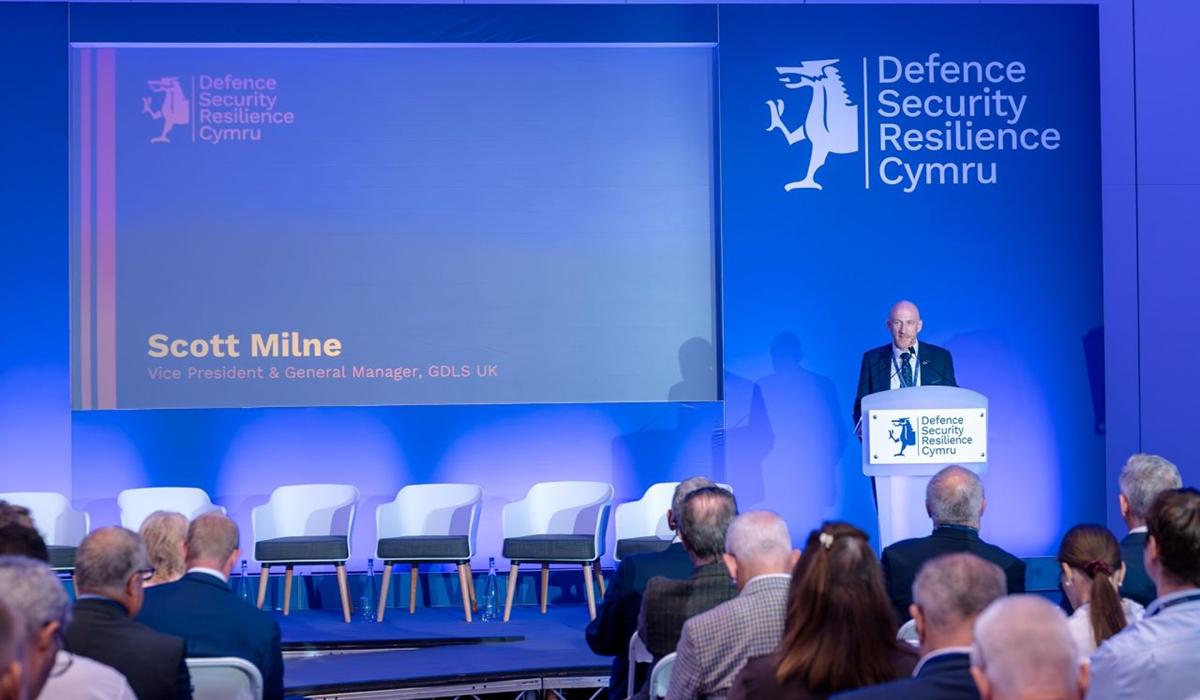
Defence Security Resilience Cymru, taking place at ICC Wales on September 3 and 4, is designed to help create that clarity. It will provide strategic context, practical advice and direct engagement with buyers, primes, government, investors, academia and international partners. ADS will run a Meet the Buyer element, there will be an investor pitch opportunity for startups and SMEs, and young people from across Wales will be able to meet employers working in defence, security and resilience.
The presence of NATO procurement representatives is especially significant. UK defence procurement is one route, but every allied nation has its own requirements and opportunities. Initiatives such as the NATO Defence Innovation Accelerator for the North Atlantic, known as DIANA, are also connecting startups and SMEs more closely to NATO requirements, and Wales is already part of that ecosystem.
This is where the wider ambition for Wales becomes clear. We have major defence employers, we have high-value engineering and manufacturing capability, and we have universities and research institutions that can support future technologies. We also have real strengths in areas such as compound semiconductors, with businesses around Newport forming part of a cluster of UK significance.
Wales should, could and I believe will be a centre for defence, security and resilience excellence. That will not happen through one event or one announcement, but September can be a launchpad for a more confident approach. If we bring together primes, SMEs, academia, skills, investors and government with the right level of ambition, Wales can become an even more significant and positively impactful player in this field.
The opportunity is strategic, not narrow. It is about contracts, but also about skills, exports, innovation, resilience and the economic future of Welsh businesses. Wales already has a strong start. The next step is to act as though we recognise the scale of what is in front of us.
Phil talks about this and more on the Defence Security Resilience Cymru podcast. Listen here:

Find out more about Defence Security Resilience Cymru, being held at ICC Wales in Newport on September 3 and 4 2026, here: https://www.dsr.cymru/