
GUEST COLUMN:
Rhys Owen
Executive Director
General Dynamics Land Systems
The UK can commit more money to defence, but investment only becomes capability when industry is able to deliver. That means looking beyond the headline programmes and recognising the supply chains that sit behind them, because the pace and resilience the country now needs will depend not only on the primes, but on the SMEs whose skills, products and innovation strengthen those programmes.
General Dynamics is a large global corporation headquartered in the United States, but our presence in the UK is long established. We have been here for more than 60 years, with two UK business units and a significant footprint in Wales. General Dynamics Mission Systems is based in Oakdale, just north of Newport, where we co-locate through a joint engineering office and system integration laboratories. Land Systems, the business unit I work for, has its manufacturing centre of excellence in Merthyr Tydfil and an engineering centre in Oakdale.
Through programmes such as Foxhound and Ajax, we know what it takes to deliver complex defence capability for the British Army. There are 400 Foxhound vehicles in service, with 589 Ajax platforms due to come into service. Ajax is a major transformational programme for the UK Armed Forces and will be part of the backbone of the British Army as we go forward.
It is highly complex and built around an electronic architecture designed to be digital, upgradable and updateable in days and weeks rather than months and years. That brings a very different skills requirement into the land sector, at a time when parts of the defence industrial base had atrophied over many years. In that sense, Ajax is not only a military capability; it has also helped bring back high-end industrial skills that the UK had lost.
The UK Government’s Defence Investment Plan is timely, but the opportunity is not confined to the UK. Across Europe, our partners are looking at the same threat environment and asking similar questions about capability, resilience and readiness. There is also an export opportunity, and this is a moment to put Wales firmly on the map.
For that to happen, SMEs must be part of the answer. The role of the primes is not simply to win large contracts and then look inward. Tier one businesses have an obligation to be active in looking for SMEs and innovation across the supply chain, including outside traditional defence circles. The technology that strengthens defence may come from automotive, advanced manufacturing, digital or other sectors that do not yet see themselves as part of this market.
Defence is difficult for good reasons. The products going to those who protect us must be safe, secure and stable, and the benchmark is sometimes the difference between bringing people home or not. The margin for failure is extremely small, which is why standards, assurance, qualification and security are so demanding.
But that should not become a reason for shutting SMEs out. What primes can do is help SMEs climb that learning curve more quickly, bringing experience in safety, security, qualification and delivery to support the innovation and speed that smaller businesses often provide. When that relationship works well, the SME brings agility and fresh thinking, while the prime brings robustness, resilience and knowledge of the defence environment.
We have seen that on Ajax. A number of SMEs have been brought into the programme’s supply chain, and some have used that experience to grow significantly. Analogue & Micro in Cwmbran is one example. It was a very small business at the start, but over 30 years it has grown from a team of three to more than 30 people, and it is now exporting into defence more broadly. In the early stages, our role was to help with the safety standards, electromagnetic compatibility and qualification requirements that are essential in defence.
That is how pace, industrial capability and exportable skills are built. It is not achieved by asking SMEs to navigate the whole system alone, nor by assuming that innovation will find its own route into complex programmes. It requires structured engagement, honest gap analysis and practical improvement plans.
Within General Dynamics, we have teams actively looking at technologies from other environments and considering how they could enrich defence. We also have an SME engagement team within our supply chain function, working with businesses to diagnose where they are, identify gaps and explain what they need to do to access opportunities, whether that involves Official Sensitive, Secret or other requirements. The aim is to open the envelope of opportunity in a way that is realistic and useful.
I am confident industry can respond, but the demand signal from government has to come at the right time and with enough continuity to allow businesses to plan. One advantage now is that some major programmes are at the right point in their life cycle, with hot production lines in place in a way we have not seen for years. The supply chain is there and ready to support, but sustainability into the future will be crucial.
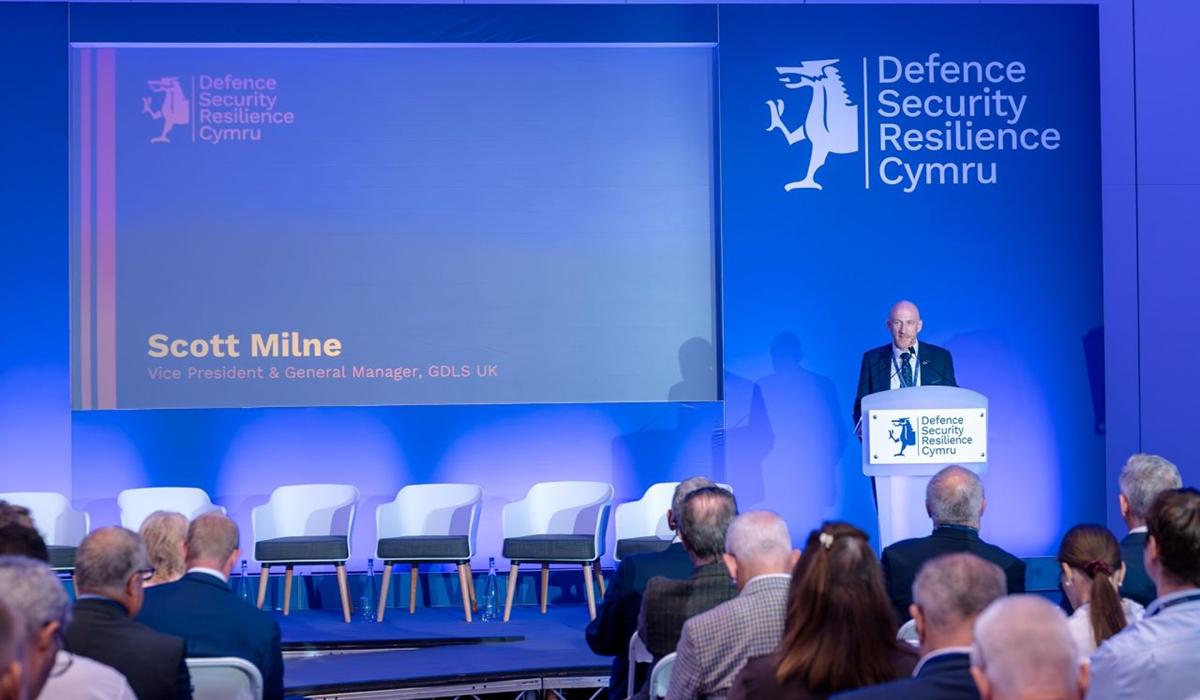
That is why I am passionate about the Defence Security Resilience Cymru event in September. It is genuinely accessible for SMEs and gives them a practical route into conversations with primes, buyers and other organisations across defence, security and resilience. My advice to SMEs is simple: do not be shy. Use the event, come and speak to us, and find out where your capability could fit.
Rhys talks about this and more on the Defence Security Resilience Cymru podcast. Listen here:

Find out more about Defence Security Resilience Cymru, being held at ICC Wales in Newport on September 3 and 4 2026, here: https://www.dsr.cymru/