

GUEST COLUMN:
Gary Cheers
Founder
North Wales.ai
Most small businesses in North Wales have already heard enough about artificial intelligence to know they should probably be doing something with it. The difficulty is that “something” has become the problem. AI is being talked about as if every business is expected to leap straight from curiosity to transformation, when many owners and managers have not yet been shown how to use AI properly in the first place.
It is not that SMEs lack ambition, or that they are unwilling to adapt. In many cases, they are being given the wrong starting point.
Recent British Chambers of Commerce research puts SME adoption at 54%, up from 25% just two years earlier. Yet the same research points to skills, not budget, as the main barrier: around 60% of businesses cite a lack of AI expertise, and fewer than one in five have begun any genuinely strategic use. The appetite is clearly there. What is missing is the know-how.

I see this constantly in my work with businesses through Wingenious and northwales.ai. People have tried AI, asked it a few questions, received a generic answer and quietly decided it is not as useful as everyone says it is. Others use it once or twice a week for emails or basic drafting, but still default to Google for most tasks. Then there is a smaller group which has properly embraced it. They are building saved prompts, assistants and internal processes, and they are already seeing real benefits.
AI responds much better when it is treated more like a consultant than a search engine. If you had access to a very experienced adviser in your sector, you would not give them a vague sentence and expect a serious strategy. You would explain the problem, the context, the audience, the constraints and what a good outcome looks like.
The same applies with AI. A good prompt starts by setting out what role AI should take on, what you are trying to achieve, who you are, who the work is for and in what format you want the answer delivered. One of the simplest improvements anyone can start with is to ask AI to interview you before it begins. Ask it to pose ten clarifying questions about your objective. That single step can move a business from poor use of AI to something much more practical, because it forces the right information into the process before any output is produced.
North Wales has a business base with distinctive strengths, from tourism and hospitality to agriculture, construction, trades, manufacturing, engineering, retail, ecommerce, education, training, healthcare and wellbeing. Each of those sectors will have different use cases, but the first principle is the same: understand how AI could be used in your business before anyone tries to dictate how it should be used.
A tourism business might use AI and automation to handle guest queries, respond to reviews or help create content for listings. A construction or trades business might use it to draft quotes, manage customer follow-ups or turn rough job notes into clearer communications. A manufacturer or engineering business might begin with internal documentation, process mapping, training materials or customer communications before moving towards more advanced automation. A rural business might find value in reducing administrative time, improving marketing or making better use of the customer language already sitting in reviews, emails and enquiries.
For many businesses here there is a bilingual dimension too. AI can help draft and translate Welsh-language content, respond to customers in their preferred language, and meet Welsh language expectations without outsourcing every piece of work.
None of this requires a business to begin with a grand transformation programme. In fact, for many SMEs, that would be the wrong place to start. A sole trader and a 20-person plumbing and heating company do not need the same AI adoption plan. The size, structure and pressure points of the business should shape the advice.
That is why education has to come first. Business owners need to see AI in the context of their own work, not as a generic technology trend. They need to understand where it genuinely saves time, improves output or reduces friction, and where it is simply a distraction dressed up as innovation.
SMEs should also be much more willing to use material they already have. Customer reviews, testimonials and support emails are a rich source of insight. AI can identify the phrases customers use most often, the problems they say you solve and the words your marketing uses that your customers never use. For a small business trying to sharpen its positioning, that can be more useful than another generic marketing exercise.
Once a business has learned to prompt properly, it can begin to look at more structured uses. Saved prompts, custom assistants and project spaces can stop teams from recreating the same instructions again and again. From there, AI can be combined with automation. It can help nurture leads, organise enquiries, connect information across email, accounting software, CRM systems and calendars, and reduce the manual, often labour-intensive movement of data between fragmented systems.
Targeted in the right places, AI removes friction by taking the mundane and repetitive work off people’s hands. That frees up human resource for the more meaningful and important work that is distinctly human, the judgement, relationships and ideas that help a business stay stable and grow.
That stage should still have human oversight. AI is powerful, but it is not a licence to switch off judgement. It works best, and most safely, when it supports people who understand the business, the customer and the risks.
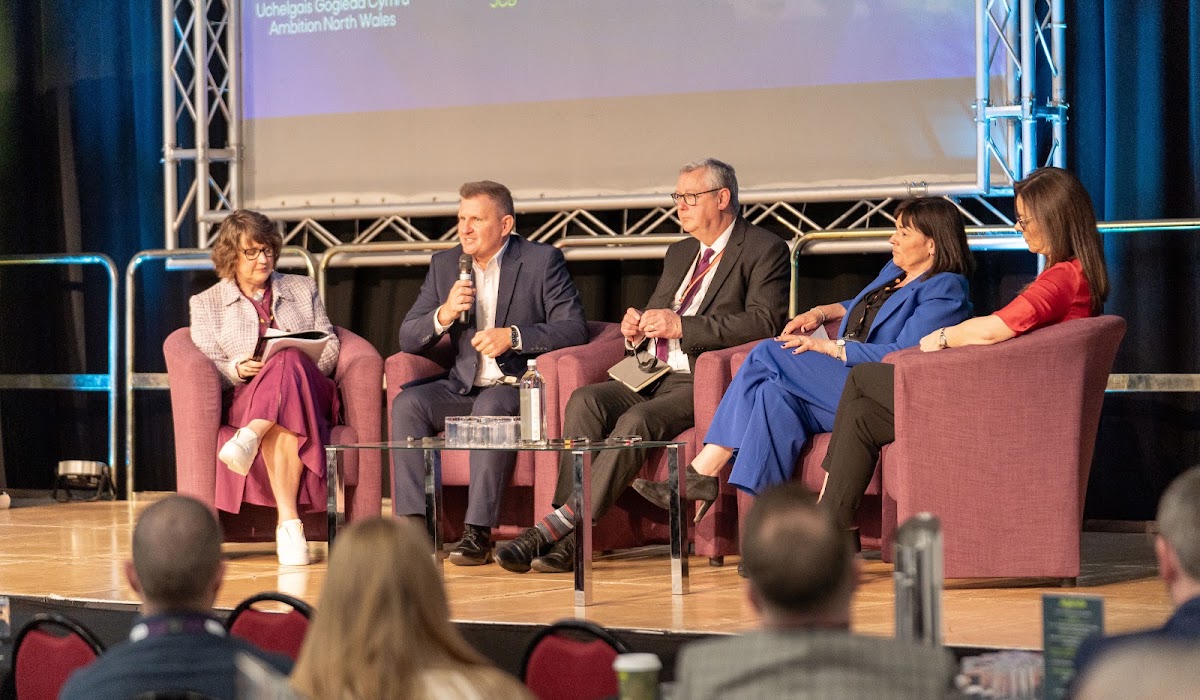
At the FSB North Wales Small Business Conference at Venue Cymru in Llandudno, I will be speaking about where small businesses can start with AI in a practical way. My aim is not to overwhelm people with what AI might one day become, but to show them how to get better results from it now, including AI prompting techniques they can use immediately and the steps that help AI move from occasional experiment to useful business tool. For those who want to go further, I also run the AI Breakfast Club, a half-day, hands-on session at Theatr Clwyd in Mold where business owners learn this in person.
After 30 years working in IT, digital, ecommerce and online strategy, I do believe AI is the most significant and transformational technology I have ever seen. I am also very optimistic about its overall likely impact. Yet for SMEs in North Wales, the opportunity will not be realised through noise, fear or vague promises. It will come from learning how to use AI properly, applying it to real work, and building confidence one practical use case at a time.
Gary Cheers will be one of the keynote speakers at the FSB North Wales Small Business Conference at Venue Cymru in Llandudno on July 8 2026 from 9.30am to 2.30pm. For more information and tickets visit Overview ⋮ FSB North Wales Small Business Conference ⋮ The Federation of Small Businesses ⋮ Events