GUEST COLUMN:
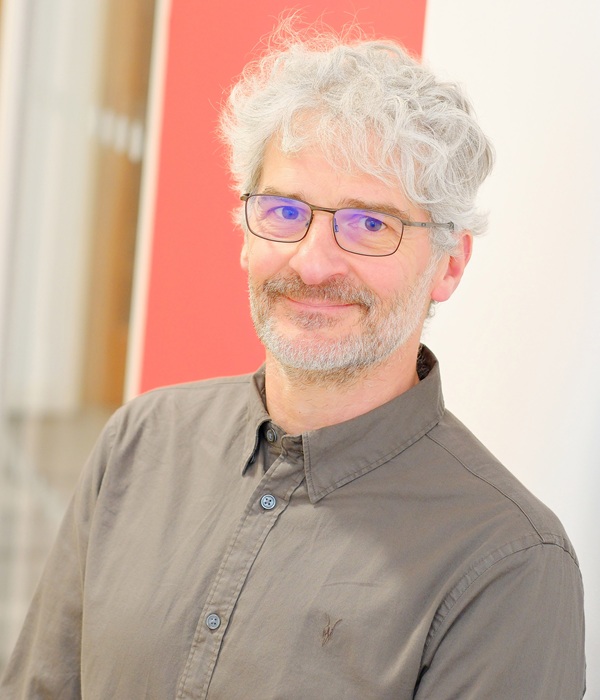
Dr Dan Heggs
Associate Dean – Partnerships
Cardiff Metropolitan University
A learner’s route through education is rarely as neat as the system makes it look on paper. Someone may be working part-time, raising children, managing caring responsibilities, returning to study after years away, or trying to build confidence after a difficult previous experience of education. Another learner may be ready to move from college to university, but unsure what that step will really feel like or whether it is for them.
If we want more people to benefit from education, we have to design routes that reflect the lives they are actually living.
At Cardiff Metropolitan University, my role is focused on partnerships and external educational relationships. Across the university’s schools, we work with partners locally and internationally, but in the Welsh context our relationships with colleges such as Cardiff and Vale College and Bridgend College are especially important. Those partnerships allow us to think differently about progression, qualifications and how learners are supported into and through education.
Learners can move through school, further education, higher education, apprenticeships, degree apprenticeships and other forms of training. The difficulty is often how those learners understand and navigate the opportunities available to them.
Too often, the relationship between parts of the education system has become transactional. A learner completes two years of a course in one place and then moves to the next stage somewhere else. Institutions may understand the arrangement, but that does not mean the learner experiences it as a coherent pathway.
We need to make those relationships more permeable. That might mean university staff delivering more in colleges, college staff bringing learners onto university campuses, or partners designing provision together so that learners can see and feel the connection between different stages of their education. Progression should not simply be an administrative process. It should build confidence, belonging and ambition.
That is where flexible learning becomes so important. Micro-credentials, short courses, foundation programmes, apprenticeships and higher apprenticeships can all help learners build skills over time. Not everyone is ready, able or willing to commit immediately to a long qualification. Some people need a smaller step back into learning, a way to test their confidence, or a route that fits around work and family life.
This is especially important for parents. If a parent has had limited opportunity in education, or has not seen higher education as something for people like them, that can shape their experience and confidence while they are juggling their education and home life. It also shapes what their children believe is possible. We have seen through foundation programmes and partnership work that when adults return to education, the impact can reach beyond the individual learner. Students often talk about what it means for their children to see them studying, achieving and opening up new possibilities. That example can change the way education is viewed in a household.
To achieve that, learning has to reach people where they are. Taster courses, community-based provision and flexible routes into education can help people take the first step. A system that only works for those who can already navigate it confidently will not widen opportunity in the way Wales needs.
We also have to be honest about learner poverty. Digital poverty is a real barrier. It is easy to assume that because people have smartphones, they have meaningful digital access. Sharing a laptop can be hard and some learners are trying to write reports, access virtual learning environments and complete assessments on a mobile phone, sometimes with limited data and no reliable Wi-Fi at home.
If a learner cannot access the tools needed to complete the work, then the system has put a barrier in front of them. Tackling digital poverty is therefore part of widening access, not a separate concern. The same principle applies to the wider support learners need if they are to stay engaged and succeed.
Flexibility also has to apply to how we value qualifications. I do not think this is only about parity in the abstract; it is about the value each route offers in developing skills. An English degree has value, just as a degree apprenticeship has value. A more traditional degree route and an apprenticeship route should be judged by the skills, confidence and opportunities they help someone develop. Learners should be supported to recognise the transferable skills they are building and think carefully about what they want to do with them.
For universities, colleges, apprenticeship providers and schools, this points to the need for deeper partnership. Funding stability is part of that, but so is agility. Developing new qualifications, adapting provision and responding to local need can still be too slow and difficult. If Wales wants a skills system that can respond to learners and employers, it has to support organisations to work together with shared goals rather than narrow institutional interests.
Flexible learning is not a softer version of education. It is a practical response to real lives, real communities and a changing economy. If Wales can create routes that are easier to understand, easier to access and more responsive to different learners, more people will be able to build skills in a way that works for them.