

An innovative technology developed in Cardiff’s University Hospital of Wales to reduce nitrous oxide emissions in maternity care is now available to hospitals across the UK and Ireland, following collaboration between the NHS, Welsh Government and industry.
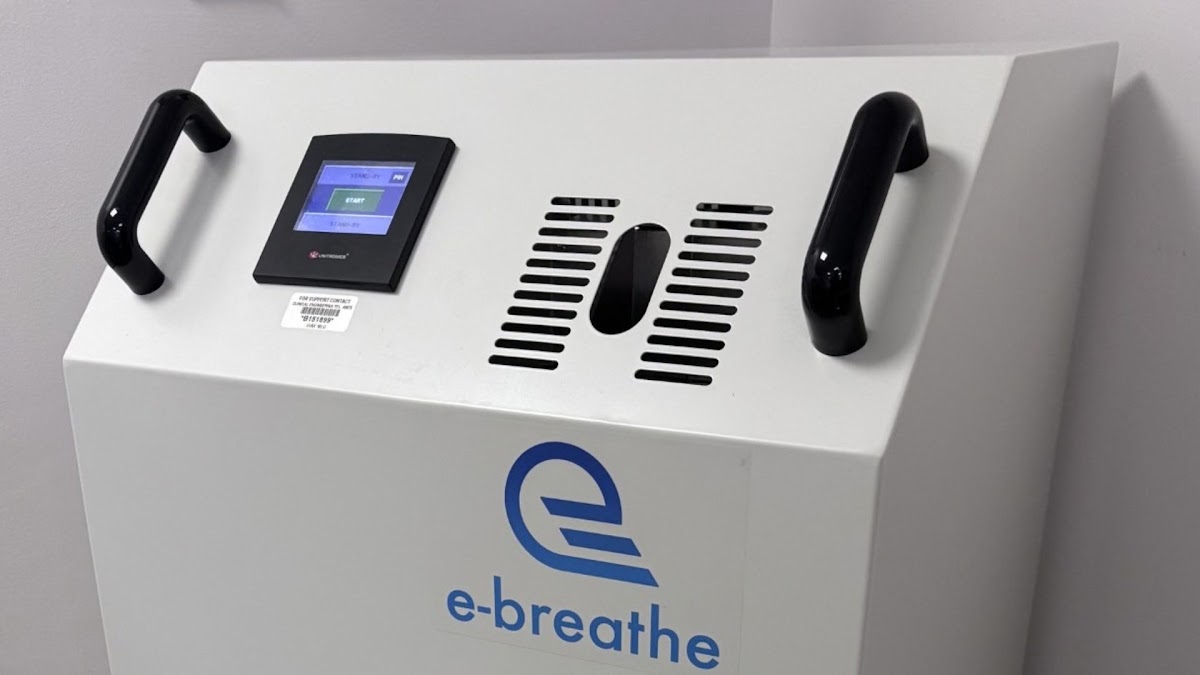
The N2O Clear technology, also known as the Nitrous Oxide Cracker, was developed through collaboration between Cardiff and Vale University Health Board, Contracts for Innovation Cymru and E-Breathe. It will now be marketed and distributed by BOC, bringing the technology to healthcare organisations across the UK and Ireland.
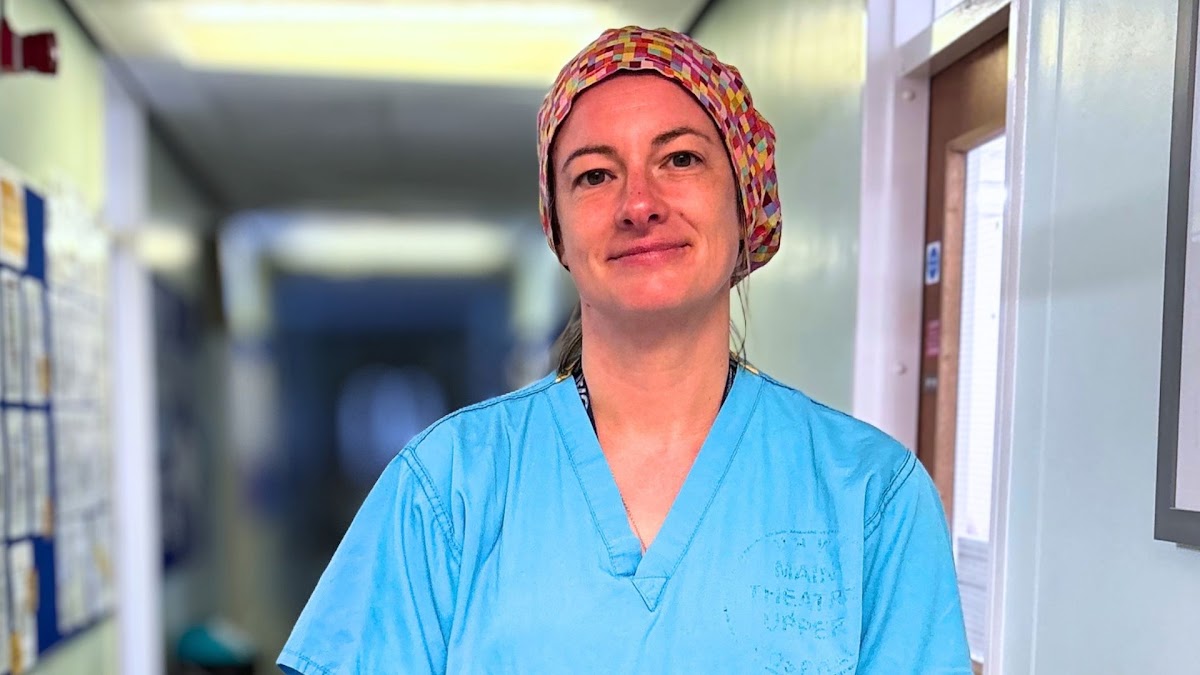
In 2021, Consultant Anaesthetist Dr Charlotte Oliver and her team at the University Hospital of Wales took part in the Dragon’s Heart Institute Spread & Scale Academy, keen to tackle the problem of leaks in the system used to provide Entonox (gas and air) to women in labour. After exploring the issue in greater depth, they identified a new challenge: reducing the nitrous oxide released into the atmosphere from Entonox used during labour.
Entonox, commonly known as gas and air, is widely used for pain relief during labour. However, the nitrous oxide it contains is a powerful greenhouse gas when released into the atmosphere.
Dr Charlotte Oliver said:
“When we first walked into the Spread and Scale Academy, none of us could have imagined we would end up here. We came in hoping to reduce waste on our own labour wards, and the technology that grew out of that work is now heading to hospitals across the UK and Ireland. To see it reach this scale is genuinely humbling, and it is proof of what a team can achieve when it is given the confidence and the tools to think bigger.”
The team started by approaching Contracts for Innovation Cymru, the Welsh Government’s challenge-led innovation programme. They launched an open innovation challenge to identify and develop a solution, ultimately contracting Northern Ireland-based E-Breathe to design, develop and test the technology.
The result was N2O Clear, an innovative system that breaks nitrous oxide down into harmless nitrogen and oxygen after use. The technology reduces emissions by 95% to 99% without affecting the pain relief or care women receive during labour.
Dr Oliver added:
“The Spread & Scale Academy was transformative for us. Before participating, the scope of implementing such a significant change felt daunting. The Academy provided us with both the confidence and the practical tools necessary to bring our vision to life. We joined with the idea of shutting down the old leaky manifolds, but the Academy taught us to focus more on the problem than our proposed solution, so tackling the waste from Entonox was our natural next step.”
Following successful testing at the Maternity Unit at the University Hospital of Wales, the technology has continued to gain momentum. Welsh Government has secured funding to supply units to every health board in Wales, while deployments have also taken place in NHS Lothian and NHS England sites in Hull and Walsall. Interest has extended internationally, with units supplied to Germany and discussions taking place with organisations in Northern Ireland and the Republic of Ireland.
E-Breathe has since received the INVENT 2024 Green Horizons Award and was shortlisted for an NHS Sustainability Award in 2025.
The agreement with BOC marks the next stage in the innovation’s journey. Through this agreement, hospitals across UK and Ireland will have access to this technology, helping NHS organisations reduce carbon emissions while maintaining high-quality maternity care.
Cabinet Minister for Health and Care, Mabon ap Gwynfor, said:
“The E-Breathe solution is a compelling example of what our Innovation, Technology and Partnerships (ITP) programme exists to deliver.
“There was no readily available market solution to the environmental harm caused by exhaled Entonox in our maternity units. With the support of our ITP funded delivery partners, the Intensive Learning Academy’s Spread and Scale Academy and Contracts for Innovation Cymru, the E-breathe technology was designed, rigorously tested and successfully scaled to meet a genuine unmet need in our health system.
“The fact that this innovation has now reached hospitals across the UK and Ireland is testament to what can be achieved when Welsh Government, the NHS and industry work together with the right support behind them.”
Faye Williams, Project Manager at Contracts for Innovation Cymru, said:
“This project demonstrates the value of bringing together different expertise at different stages of the innovation journey. The Spread & Scale Academy helped Charlotte and her team develop and refine the challenge, while we provided the challenge-led innovation route to identify, develop and test a solution before supporting its progression through to commercialisation.
“It’s fantastic to see an idea that originated from a frontline clinical challenge evolve into a commercially available product with the potential to benefit maternity services across the UK and beyond. It’s a great example of how collaboration across Wales’ innovation ecosystem can help turn ambitious ideas into real-world solutions.”
David McLaughlin, Chief Executive of E-Breathe, said:
“The support received from the Welsh team was first class. From identifying and clarifying the problem, critiquing the product design, in situ testing, ongoing support and encouragement. We are delighted that what was once an idea is now a physical product available throughout the UK and beyond to help address the climate impact of nitrous oxide – it simply wouldn’t exist without initiatives like this one.”