

GUEST COLUMN:
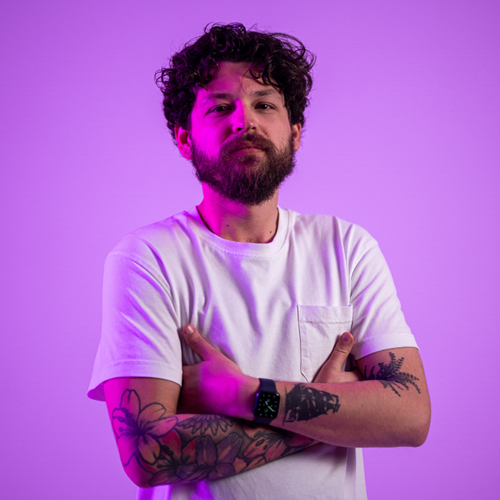
Tomas Phillips
CEO & Co-Founder
Blackline Academy
We keep telling Welsh businesses to grow. Nobody asks what growth costs the Founder.
Wales measures growth in turnover, jobs and productivity. It almost never counts the human cost carried by the one person holding the whole thing together.
We are very good in Wales at telling businesses to grow.
Grow your turnover. Grow your headcount. Grow your exports. Grow your productivity.
Set up. Scale up. Level up.
These words are in amongst the ramblings of almost every strategy document, every funding call, every “economic mission” published somewhere near Cardiff Bay.
And I understand why. Wales needs growth. Productivity here, measured as the value produced for every hour worked, sits at around 85% of the UK average, and it has been stuck in that range for the best part of twenty years. If lifting the economy is the
goal, the logic is hard to argue with.
But I want to ask a question that almost never gets asked in the rooms where decisions are made.
What does growth cost the person carrying it?
Not the company. The person.
Because here is something I have seen again and again and I suspect you have too if you have ever run anything.
Behind almost every growing business in Wales, there is one human being quietly absorbing the chaos.
Let me describe the chaos.
Growth is sold to founders as momentum. Bigger orders. More staff. A busier diary. On paper it looks like everything is going right.
What the paper never shows is what happens underneath.
The bigger orders arrive before the cash to fulfil them does. The new staff need to be managed by someone who has never managed anyone. The systems that worked for four people start breaking at fourteen. Quality slips in places the founder cannot see. A key customer gets nervous. A supplier lets you down. And every one of those problems, every single one, lands on the same desk.
The founder becomes the emotional chaos absorber for the entire organisation.
They are the last line of defence when something fails and the first person blamed when it does. They carry the payroll in their chest at 03:00AM. They stop sleeping properly. They stop seeing friends. They start to feel that the thing they built to give them freedom now owns them completely.
And they tell almost no one, because admitting the strain feels like admitting they are not built for this.
This is not a soft observation. It is one of the most consistent findings in the research of founders.
When the psychiatrist and academic Michael Freeman surveyed entrepreneurs against a comparison group, 72% of the founders reported a lifetime history of mental health difficulty. Roughly twice the rate of depression. Higher rates of anxiety. A separate body of work on UK founders keeps surfacing the same lonely number: more than three quarters report isolation as part of the journey.
Now you could dismiss that as a Silicon Valley problem, a long way from Tredegar or Tonypandy.
Except we have the Welsh evidence too.
A study published in the journal Small Business Economics looked directly at a publicly funded Welsh accelerator, the Business Wales Accelerated Growth Programme, and the founders it was built to help. The researchers called it “Learning to Ride the High Growth Rollercoaster”. They found that the mental wellbeing and psychological resilience of founders was, in their words, “acutely and detrimentally
affected during periods of rapid growth.”
They found something else and this is the part I cannot stop thinking about.
There was a clear disconnect between what high-growth founders actually needed and what the programme was designed to give them.
Read that again. A Welsh programme, built specifically for our fastest growing firms and the support on offer did not match the pressure the founders were under.
That is not a criticism of the people delivering it. It is a description of a blind spot we all share.
We have decided, collectively, that a founder’s capacity is infinite.
We treat the founder as a fixed point, a constant, an input that does not fatigue. We design growth support around the business as if the human running it has unlimited reserves of energy, judgment and nerve.
They do not. Nobody does.
Here is where it stops being a personal problem and becomes an economic one.
You cannot build a more productive Wales on exhausted people.
A founder who burns out does not scale. They stall. They shrink back to a size they can survive at. They sell too early, to the wrong buyer, for the wrong reasons. Or they walk away entirely and take every job and every pound of turnover with them.
When that happens, we chalk it down as business failure. A market outcome. Bad luck, maybe bad management.
We almost never mark it down for what it often is: a person who ran out of fuel because nobody ever asked how much fuel they had left.
So when the next Welsh growth strategy is written, and another one will be, I would ask the people writing it to widen the definition of readiness.
We assess whether business is ready to grow. We look at the balance sheet, the market, the margins. We rarely assess whether the founder is ready, or what happens to them when the growth arrives faster than they can manage it.
Growth readiness has to mean more than a strong pipeline.
It has to mean building leadership capacity before chaos hits, not after. It has to mean support with the unglamorous work of installing systems, delegating and getting out from under the daily firefight. It has to mean treating psychological resilience as a legitimate part of business support, not a wellness add-on for the founder to sort out in their own time.
It has to mean support that is relational, from people who know the founder and stay with them, rather than transactional, a form filled and a box ticked.
None of this is an argument against growth. Wales needs its businesses to grow and
I want them to. This is an argument for growth that the founder and the organisation can actually survive.
Because the question at the heart of our economy is not really whether Welsh businesses can grow.
It is whether the people inside them can survive the growth.
And right now, we are not even asking.