






Road users should not expect a quick fix to the condition of roads in Wales despite reported increases in funding, says this year’s Annual Local Authority Road Maintenance (ALARM) survey report.
Significant investment in highways maintenance from both the Welsh Government, via the Local Government Borrowing Initiative (LGBI), plus local authorities’ own sources, has seen budgets increase by 35% on last year. However, this has only resulted in marginal improvements in road conditions to date and vital resurfacing takes place less frequently – now reportedly once every 132 years on average.
“I think all road users would agree that the condition of our local roads has become a national disgrace,” said David Giles, Chair of the Asphalt Industry Alliance (AIA), which commissions the ALARM survey.
“We can see from tracking ALARM data over the last decade that inconsistent funding levels, coupled with the impact of frequent adverse weather events on a consistently underfunded – and increasingly fragile network – means a well maintained network still lies a long way off.”
Highway maintenance budgets in Wales for 2025-26 are reported to have increased to an average £11.5 million per authority, with 51% of that spent on the surface and structure of the road.
Welsh authorities report that this has helped the percentage of the network classified as RED – likely to require maintenance over the next 12 months – fall by 2%. Nevertheless, 7% of Welsh roads – equivalent to over 1,400 miles – will still need intervention over the next year to keep roads serviceable and safe.
The ALARM survey reports local road funding and conditions in England and Wales based on information provided directly by those responsible for the maintenance of the network.
Findings of ALARM 2026, which relate to the 2025/26 financial year, also show that in Wales:
- Local authorities in Wales would have needed, on average, an extra £2.4 million each last year to maintain their network to their own target conditions and prevent further decline.
- The backlog of carriageway repairs in Wales is now £623.2 million. This is the amount that is reported to be required, as a one-off, for local authorities in Wales to bring the network up to their ideal conditions – £28.3 million per authority.
- Funding from central sources has increased from 26% of the total spent on highway maintenance (ALARM 2024/2025) to 45% this year. The additional investment forms part of the Welsh Government’s LGBI.
- More than 9,600 miles (48%) of local roads in Wales are now reported to have less than 15 years’ structural life remaining.
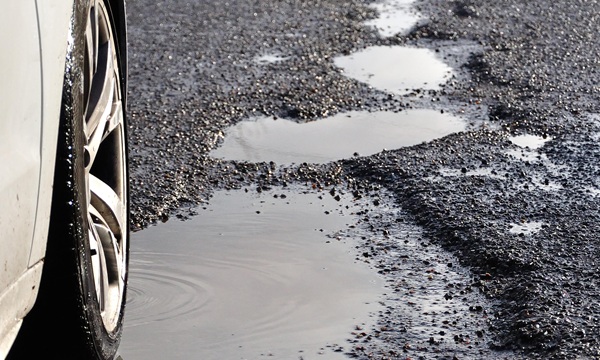
- 111,342 potholes were filled over the last year – up 12% on last year – at a cost of £8.8 million.
AA President Edmund King OBE said:
“The ALARM 2026 report starkly warns us how much more needs to be done to eradicate this plague of potholes. We have been seeing with our own eyes, and feeling with our wheels, how record wet weather linked to substandard roads has led to many local roads becoming patchwork obstacle courses.
“The AA has been called out to 4,680 pothole related incidents in Wales in January and February this year. Extra funding needs to be maintained and spent on more permanent repairs to prevent extensive vehicle damage and potentially fatal injuries to those on two wheels.”
AIA Chair David Giles added:
“Welsh authorities report that they are cautiously optimistic that the increased funding available over this year and next should help them stem further decline.
“However, with an in-year shortfall of over £52 million, it’s not the silver bullet that will enable them to clear the backlog of repairs any time soon and the public is unlikely to see lasting improvements unless the additional investment is sustained over a longer period.
“And, sadly we’ve been here before in Wales as improvements in conditions achieved in the early 2010s were soon lost as incremental funding proved short-lived.”