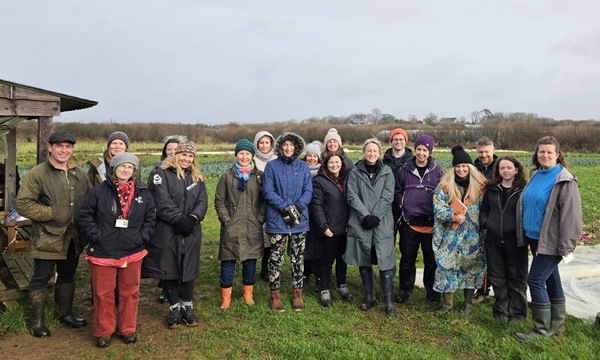





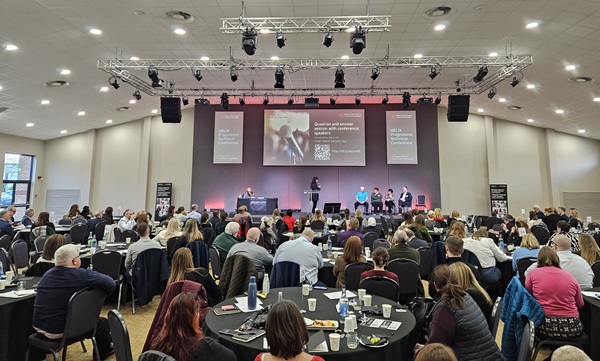
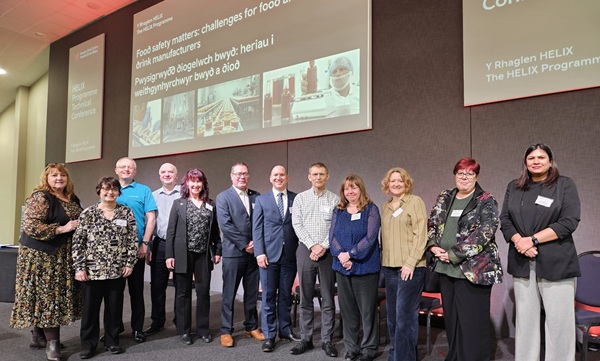
More than 160 representatives from the Welsh food and drink industry have gathered to discuss food safety challenges facing the sector.
Organised by Cardiff Metropolitan University’s ZERO2FIVE Food Industry Centre, the HELIX Programme Technical Conference took place in Cardiff. The HELIX Programme is a Welsh Government funded project which enables knowledge transfer to food and drink manufacturers in Wales.
Delegates heard from a range of expert speakers, including Keith Smyton, Deputy Director of the Food Division at Welsh Government, who opened the conference. Neil Arbery, Head of Local Authority Delivery from the Food Standards Agency in Wales, shared the regulator’s perspective on key challenges within the food system and how they respond to them in a way that helps to keep consumers safe.
Liz Preston, Food Safety Manager at Asda, discussed why the supermarket has developed a rigorous second-party food safety audit model, a move that reflects its commitment to deeper supplier engagement and continuous improvement. An interactive session led by Bertrand Emond from Campden BRI encouraged delegates to understand what drives people’s behaviours and how to develop effective food safety and quality culture strategies.
Allergens were another key topic, and Barbara Hirst from Reading Scientific Services Limited discussed how and when allergen reference doses can be used to make decisions about the appropriate use of precautionary allergen labelling like ‘may contain’. This was followed by a question-and-answer session with Gareth Snook from FEI Foods and Sabina Jones from ANR-Probake, focusing on the allergen management challenges they face as Welsh food and drink manufacturers.
Sarah Hall, Certification Manager at SALSA, shared insights on how SALSA food safety certification compliance supports safe growth for food and drink SMEs, including the launch of Issue 7 in Autumn 2026. John Figgins, Senior Technical Manager at BRCGS, gave an update on key learnings from the BRCGS Global Standard Food Safety Issue 9, covering common non-conformances.
Dr John Holah from Pendennis Food Hygiene Ltd, discussed how hygienic practices are fundamental to control the introduction and growth of Listeria in factory settings. Emeritus Professor Carol Wallace from the University of Lancashire shared her thoughts and reflections on food safety organisational culture from over the last 20 years. The speaker line-up concluded with Simon Burns from ZERO2FIVE Food Industry Centre discussing and emphasising the impact and importance of hygienic design on food safety in the food and drink manufacturing sector.
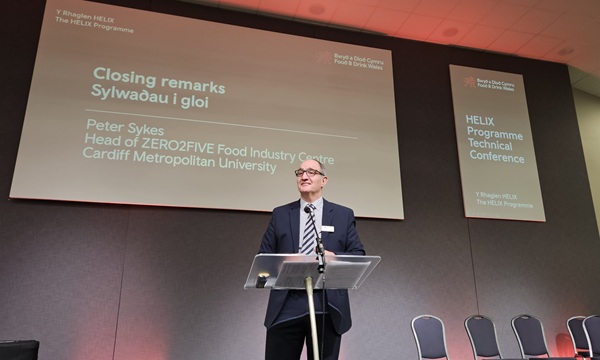
Professor Peter Sykes, Head of ZERO2FIVE Food Industry Centre, said:
“Welsh food and drink manufacturers continue to face a number of pressing food safety challenges, from foodborne illness incidents and rising consumer hypersensitivity to allergens to the heightened risks of food fraud within complex supply chains. Staying on top of these developments is crucial, not only to safeguard consumers but also to maintain market access through compliance with evolving regulations and food safety standards. Many of these important issues were highlighted at this year's HELIX Programme Technical Conference and I’m sure the outputs of these discussions will support best practice in Wales’s food and drink industry.”
A poster competition for students and early-career scientists offered a platform for emerging researchers to present their food safety research. The first prize was won by Blessing Okonji with their poster titled “Food Fraud Awareness and Perception in Nigeria”.
Delivered by four organisations across Wales, the Welsh Government’s HELIX Programme provides a range of funded technical and innovation support to food and drink companies. The HELIX Programme Technical Conference’s scientific programme was supported by the UK Association of Food Protection Committee.
The presentations from this year’s conference will be available to download soon for free at:
www.zero2five.org.uk/HELIXConference2026