
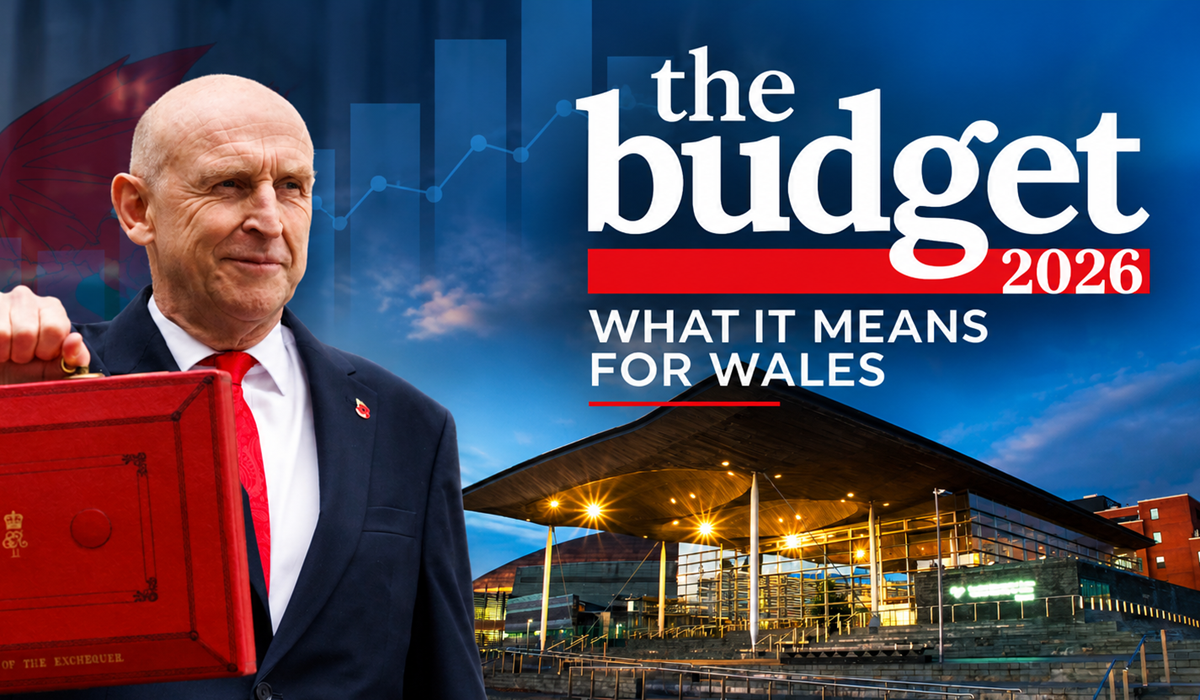
The UK Government has unveiled a series of measures covering business rates, employment costs, energy bills, taxation and investment, alongside plans to give English mayors greater control over locally generated tax revenues.
Chancellor John Healey’s first Budget under Prime Minister Andy Burnham includes measures intended to reduce household costs, support high streets, improve industrial competitiveness and encourage business investment.
For Welsh businesses, the announcements present a combination of opportunities and challenges. While UK-wide measures on wages, taxation and industrial support will have direct implications, changes to business rates and regional funding in England raise questions about how Wales will respond.
Business News Wales examines the principal announcements and their potential implications for the Welsh economy.
Business Rates Relief for Retail, Hospitality and Leisure
The Chancellor announced an increase in the Small Business Rates Relief threshold for eligible retail, hospitality and leisure properties in England, from £12,000 to £18,000 in rateable value, with tapered support extending to £21,000.
The Treasury estimates that approximately 70,000 additional properties will no longer pay business rates. Further measures include a two-year real-terms freeze for qualifying businesses and additional support for pubs and live music venues.
What This Means for Wales
Business rates are devolved, meaning these changes will not automatically apply to Welsh businesses. The Welsh Government has already announced plans for a permanent 30% reduction in rates bills for eligible hospitality and leisure properties with rateable values below £51,000 from April 2027, subject to Senedd approval.
Attention will now turn to whether Welsh ministers introduce further measures following the UK Budget.
Greater Tax-Raising Powers for English Mayors
One of the Budget’s potentially significant long-term announcements is a roadmap towards greater fiscal devolution in England.
The UK Government intends to move towards 100% local retention of business rates by the end of the decade. From April 2027, mayoral authorities will receive a share of business rates revenues, with a 20% share announced as part of the reforms.
From April 2028, mayors will also begin receiving a share of income tax receipts, creating a stronger connection between local economic activity and the funding available for regional development.
The reforms are intended to give local leaders greater financial incentives to encourage investment, commercial development and economic growth
What This Means for Wales
The changes raise questions about whether Wales could face a competitive disadvantage when attracting major investment. Welsh business rates are generally pooled and redistributed, although special retention arrangements exist for Freeports and Investment Zones.
If English regions can retain more of the revenues generated by new developments, they may have greater flexibility to support infrastructure and regeneration projects.
The Welsh Government could face increasing pressure to consider whether its existing arrangements provide comparable investment incentives.
National Living Wage to Rise
The National Living Wage will increase by 3.9% to £13.21 an hour from April 2027.
The increase will provide additional income for eligible workers but will also raise employment costs for businesses paying staff at or close to the statutory minimum.
Labour-intensive industries, including hospitality, retail and social care, will need to assess the impact on payroll expenditure and wider wage structures.
What This Means for Wales
The increase applies across the UK and will directly affect Welsh employers. Businesses operating with relatively high staffing costs may face additional financial pressures, particularly where increases cannot easily be passed on to customers.
Employers will need to factor the new rates into recruitment, pricing and workforce planning for 2027.
Industrial Electricity Costs to Be Reduced
The government has announced further support for electricity-intensive businesses through the British Industrial Competitiveness Scheme, scheduled to begin in April 2027.
More than 10,000 eligible businesses across the UK could benefit from electricity bill reductions of up to 25%.
The initiative is intended to improve the competitiveness of British industry by reducing the gap between domestic industrial electricity prices and those faced by international competitors.
What This Means for Wales
The announcement could be particularly relevant to Wales’s manufacturing and industrial sectors, including steel, advanced materials, engineering and associated supply chains.
Lower electricity costs could support investment and competitiveness, although individual businesses will need to establish whether they qualify and how much support they can receive.
Additional Support for Household Energy Bills
The Budget includes further measures intended to reduce household energy costs.
The temporary reduction in VAT on electricity bills has been extended until July 2027, while changes to gas standing charges are intended to reduce fixed charges for millions of households.
A new £100 energy payment will also be provided to approximately 20 million households in council tax bands A to D.
What This Means for Wales
Measures applying across Great Britain could provide financial relief to Welsh households, although eligibility and actual savings will vary. Lower household energy costs could also support consumer spending, which would be relevant to businesses in retail, hospitality and other consumer-facing sectors.
Tax Changes for Banks, Entrepreneurs and Online Businesses
The Chancellor announced an increase in the Bank Corporation Tax Surcharge from 3% to 6% for 15 months, beginning in January 2027.
The Budget also includes changes to taxation affecting entrepreneurs, investment incentives and online marketplaces.
The Income Tax Trading Allowance will increase from £1,000 to £3,000 from April 2027, while online marketplaces will face strengthened responsibilities for collecting VAT on qualifying transactions.
The government is also introducing measures intended to encourage investment in innovative and growing businesses.
What This Means for Wales
These measures will affect Welsh businesses according to their activities and tax arrangements. The higher trading allowance could benefit some smaller traders, while changes to investment reliefs may influence entrepreneurs and growing companies.
Online retailers and marketplace sellers will need to review the practical implications of the VAT changes.
Investment, Artificial Intelligence and Business Growth
The Budget includes additional investment in artificial intelligence, industrial innovation and business finance.
Funding is being directed towards AI security, technological capability and adoption, alongside support for strategic industries and innovation.
The government has also outlined measures to increase investment capacity through institutions including the National Wealth Fund and British Business Bank.
The intention is to encourage business expansion, support new technologies and improve access to finance for growing companies.
What This Means for Wales
Wales has established strengths in advanced manufacturing, compound semiconductors, research and digital technology. These programmes could provide opportunities for Welsh businesses and universities, particularly where investment supports commercialisation and industrial adoption.
The extent of the benefits will depend on eligibility, funding allocation and access to the relevant programmes.
Housing, Construction and Infrastructure
The government has announced further measures intended to support housing delivery, regeneration and infrastructure development.
These include an additional £1.5 billion for social and affordable housing programmes and changes intended to make more development sites available.
The Budget also includes measures designed to encourage construction activity and improve the delivery of new homes.
What This Means for Wales
Housing policy and planning are substantially devolved, meaning some measures will apply specifically to England. Welsh construction businesses could nevertheless benefit from wider UK investment and supply-chain opportunities.
The Welsh Government will determine how any relevant consequential funding is allocated, while decisions on housing delivery and planning arrangements remain important to the sector.
Transport and Regional Investment in Wales
The Budget includes specific funding announcements relevant to Welsh infrastructure and regional economic development.
These include £30 million towards progressing Cardiff Parkway railway station, £11 million for the replacement of the Port Talbot Aberavon Bridge and £2.5 million to support the expansion of the M-SParc science park on Anglesey.
The announcements are intended to improve connectivity, support commercial development and strengthen innovation infrastructure, with some projects subject to further business case approval.
What This Means for Wales
These investments could support local economic development and create opportunities for businesses involved in construction, engineering and related supply chains. Their longer-term impact will depend on delivery timetables, additional investment and the extent to which projects unlock commercial activity.
Fuel Duty and Transport Costs
The Chancellor has extended the existing 5p reduction in fuel duty and deferred a planned increase until July 2027.
The decision maintains temporary support for motorists and businesses facing fuel costs.
What This Means for Wales
The extension will be relevant to Welsh logistics operators, transport businesses, tradespeople and companies dependent on road travel. It may provide some short-term cost certainty, although wider operating expenses and future fuel duty decisions will remain important for business planning.
What Happens Next for Wales?
The Welsh Government is expected to publish its Draft Budget for 2027–28 on 17 November, providing further clarity on devolved spending priorities and business rates arrangements.
While many UK-wide measures will apply directly to Welsh businesses, decisions on devolved taxation, regional development and the allocation of additional funding will rest with Welsh ministers.
The expansion of fiscal devolution in England could become an increasingly important issue, particularly if mayoral authorities gain greater flexibility to retain and reinvest tax revenues generated by economic growth.
For Wales, the central challenge will be ensuring that businesses can access investment opportunities, remain competitive on operating costs and benefit from infrastructure and innovation programmes.
The coming weeks will therefore be important in establishing how the UK Budget’s announcements translate into practical support for Welsh businesses and the wider economy.