
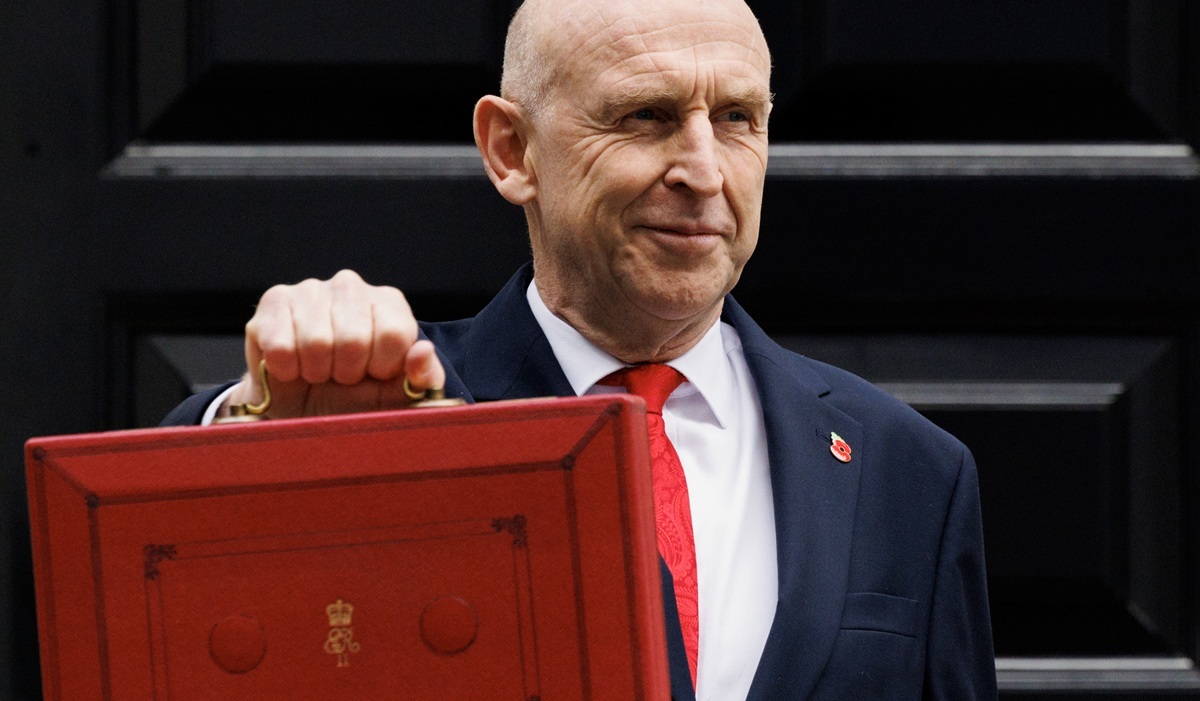
Business leaders from across Wales have been sharing their reactions to the UK Government’s 2026 Budget, assessing what the Chancellor’s announcements could mean for investment, employment, business costs and future economic growth.
With measures covering taxation, business rates, energy costs and regional investment, attention is turning to how the changes will affect Welsh companies and the wider economy.
Business News Wales brings together views from across the business community on the opportunities, challenges and priorities emerging from the Budget.
Rain Newton-Smith, CBI Chief Executive, said:
“Our economy faces big global challenges, and the government has set out big ambitions to boost prosperity – today’s Budget does not meet the scale of that ambition. On the face of it, this Budget lacks the bold moves that would have made it easier for firms to invest, hire and grow.
“Fiscal discipline matters, and the Chancellor is charting a path through difficult circumstances. At a time of exceptional geopolitical pressures, using some fiscal headroom to absorb genuine short-term shocks is preferable to loading additional permanent costs onto business and weakening investment.
“Slowing the convergence of youth rates with the National Living Wage is a sensible move in face of the NEETs crisis and current labour market pressures. But the Chancellor could have gone further. Reducing the cost of hiring by increasing the employer NICs threshold would have given firms more space to create entry-level jobs and boost employment.
“Relief for business rates for retail, hospitality and leisure firms will be welcomed but misses the chance to deliver the wholesale reform to the system we desperately need.
“Financial Services firms in the UK already face a higher tax burden than those based overseas. The surcharge makes the UK less attractive to investors, and ultimately the cost will be paid by ordinary people through higher borrowing costs. The banking levy must be time-limited and the government must work with the sector on how to keep the UK ahead in a global competition.
“Households will be grateful for some relief on energy bills, but there is nothing concrete to provide breathing space for the vast majority of businesses who are already dealing with energy bills a third higher than their European counterparts, and with prices due to escalate further next year. Pledged future action to help business energy costs must be followed through in the government’s upcoming 10-year plan.
“It’s reassuring to see the government sticking to the corporation tax roadmap, and providing support for start-ups that nurtures innovative businesses to scale and grow in the UK is important for our long-term growth. More funding through the British Business Bank is a welcome step that can help unlock private investment, giving growing firms the backing they need to invest, innovate and create jobs.”
Dr Edward Thomas Jones, Senior Lecturer in Economics, Bangor University
“The Budget provides some immediate relief, but the latest economic forecasts show just how difficult the outlook has become. With inflation expected to average 3.4 per cent next year and economic growth forecast at just 1 per cent, households and businesses will continue to face considerable financial pressure.
“The increase in the National Living Wage to £13.21 is particularly important for Wales, where a higher proportion of workers earn at or close to the minimum wage. While this will help support household incomes, it will also increase costs for businesses already struggling with higher energy prices and weaker demand.
“The additional £450 million for the Welsh Government will provide some welcome support, although inflation will reduce its purchasing power. The longer-term investment announcements also offer opportunities, but the challenge for Wales remains turning that investment into more productive businesses, stronger economic growth and better-paid employment.”
Joshua Miles, Head of FSB Wales
“This Budget should have been an opportunity to give small businesses the support they need to cope with rising costs and economic uncertainty. Instead, many firms in Wales are still waiting for meaningful help with the everyday pressures holding back investment, growth and job creation.
“The Welsh Government must now use Budget consequentials, including those arising from business rates changes in England, to increase the Small Business Rates Relief threshold in Wales.
“Expanding eligibility for relief would bring more small firms into scope for support, giving them vital breathing space.
“This is a clear opportunity for the Welsh Government to back small businesses and create the conditions that help entrepreneurs start, sustain, scale and succeed.”
Lianne Richards, Membership Director WalesMembership, Make UK
“The Autumn Budget presented an opportunity to demonstrate real ambition for the future of British and Welsh manufacturing. While there are measures to welcome, particularly around investment, defence (UK), and infrastructure; I had hoped to see a more substantial response to the challenges affecting industrial competitiveness.
“We cannot overlook the decline in manufacturing employment in Wales. This is a concerning trend, and without meaningful improvements in the conditions facing manufacturers, we risk further job losses, lost investment, and the erosion of industrial capability.
“Across Wales, I meet businesses with ambitions to expand, invest in technology, and create skilled employment. The ambition is already there within industry; what we need is an economic environment that gives manufacturers the confidence to act on it.
“We rightly focus on attracting new investment, but we must be equally ambitious about retaining and expanding the manufacturing capability we already have. Once specialist skills, production capacity and established supply chains are lost, rebuilding them is far from straightforward.
“The question now is whether the measures announced will genuinely influence investment decisions. We need to see progress on industrial energy costs, infrastructure, skills, and access to finance, supported by clear delivery plans and measurable outcomes.
“We had an opportunity to match the ambition of our manufacturers with an equally ambitious economic response; my concern is that the gap between the two remains.”
John Cullen, President of Chambers Wales SESWM comments on today’s budget:
“The 3.9% increase in the National Minimum Wage will present an unwelcome challenge for many smaller businesses. While larger organisations may be better placed to absorb rising employment costs, smaller employers could well be facing difficult decisions about recruitment and job creation following today’s announcement.
“In contrast, the increase in Business Rates Relief from £12k to £18k should offer some welcome breathing space for sectors such as hospitality, which continue to face significant pressures.
“For the start-up community, Healey’s proposed Founder’s Relief could be a significant step forward, with the potential for additional funding available for entrepreneurs in their first year of trading. Alongside improvements to the Enterprise Management Incentives (EMI) scheme, which should help growing businesses attract and retain talent, these measures have the potential to support entrepreneurship and growth across Wales which is encouraging to see.
“Ultimately, while there are positive takeaways in supporting growth and entrepreneurship, these are in stark contrast to the immediate pressures facing Welsh businesses, many of which are already operating on tight margins and will find it increasingly difficult to absorb rising costs while continuing to invest, recruit and grow.”
Laura Doel, General Secretary of TUC Cymru said:
“Times are tough for working people across Wales. With cost-of-living pressures continuing to bite it is right that the UK Government has taken steps to alleviate those challenges with targeted support on energy bills. We hope this is just the beginning of what should be a relentless focus on living standards.
“Additional funding for Welsh public services is always welcomed and it is now incumbent upon the Welsh Government to use that additional headroom to do the right thing. They must give public sector workers the pay rises they deserve, and use the powers they have to reduce the cost of living for people in Wales.”
Lloyd Powell, Head of ACCA Cymru/Wales
“ACCA’s latest survey suggested a modest uptick in business confidence; it was important for the Chancellor to strike the right tone and build on this emerging optimism.
“We had urged the Chancellor to focus on tax simplification, reduce unnecessary compliance costs, improve HMRC services and make better use of professionally qualified accountants and tax agents. Although there was more funding for HMRC’s tax recovery work, we didn’t see hoped-for investment in improving HMRC’s services.
“While there was a raft of tax changes announced, there was little sign of tax simplification – quite the opposite, while fiscal drag remains. Proposals for more regular payments to manage self-employed income tax liabilities represent a significant change and potential burden for many small businesses.
“Whilst the funding for Welsh projects is to be welcomed, a large amount of the focus and the announcements related to England, and therefore additional funding will be due to the Welsh Government through the Barnett Formula.
“Businesses in Wales will now hope the Welsh Government remains alert to fragile business optimism, by doing what it can to support businesses when it publishes its draft 27/28 budget in mid-November.”
David Chapman, Executive Director of UKHospitality Cymru, said:
“It’s a welcome and positive step to see the Government recognise some of the challenges facing hospitality, but today’s measures do not go far enough to significantly reduce the tax burden the sector faces.
“With support confirmed on business rates for hospitality in England, the Welsh Government now has the opportunity to use the additional funding to go further and bring additional business rate support for the sector in Wales.
“We need much deeper and wider support to allow growth, investment and employment opportunities and a VAT cut to 10% remains the single biggest act of support the UK Government could deliver to the industry across the UK.”
Haydn Thomas, CEO of Cornerstone Finance Group.
“This was a broadly underwhelming Budget with little in there which will cheer the SME owner – the foundation of the UK economy. Nor does it seem to have delivered anything of any real significance for the mortgage sector.
“Support for start-ups by young founders and for female founders is to be welcomed, but there wasn’t much to be celebrated by established businesses. The Chancellor reduced the threshold for business asset disposal relief in capital gains tax from £1 million to £500,000, a move which will be seen as a disincentive to entrepreneurial risk-taking and success.
“The increase in the bank levy was lower than had been anticipated and should have little to no impact overall, including no impact on lending appetite or on mortgage rates. If it does it will be very disappointing, as banks shouldn’t be pricing in this tax rise to mortgage rates.
“In fact we could see more impact on banks as a result of the announced 2% tax rise on income from savings, as investors may look to move their savings away from traditional savings products into riskier investments such as stocks and shares ISAs.
“In terms of the mortgage sector, there were several minor changes which will support with cost of living, such as the £100 energy payment for households in council tax bands A to D in England. Taken together, the measures announced will help affordability to a small extent.
“But the good news was countered by more punitive measures. The reversal of plans to cut the annual cash ISA allowance from £20,000 to £12,000 is to be welcomed, but the tax rise on income from savings is not good news for anyone saving for a deposit outside of an ISA.
“The new scheme to support first-time buyers in England is also good news – but it would have far more impact if it were not restricted to new-builds. There is housing stock stuck in rental markets with landlords trying to dispose of them, and first-time buyers would be natural purchasers of such properties. If the new support package extended to such properties it could help to unblock a key bottleneck in the housing market.”
David Hourican, Interim Chief Executive, British Business Bank
“Today’s measures announced by the Chancellor are a significant boost to the Bank’s firepower, enabling us to unlock more finance for smaller businesses, innovative scale-ups and strategically important sectors across the UK. This increased capacity will help more ambitious businesses start, scale and stay in the UK, driving economic growth and creating jobs across the country.”
Lauren Caley, Senior Policy Officer for Crisis Cymru
“There is much for England to welcome in today’s UK Budget, particularly on making progress against the pledge to end rough sleeping. Sadly, however, today makes clear that the freeze on housing benefit will continue across the UK.
“The decision to keep housing benefit frozen will undoubtedly hinder efforts by the Welsh Government to reduce homelessness. Incoming changes intended to strengthen homelessness prevention in Wales will face additional challenges while housing benefit remains out of pace with the real cost of renting privately.
“Re-aligning housing benefit so that it covers at least the lowest 30% of rents would protect people in Wales, and across the UK, from the impossible choice of keeping a roof over their head or paying for life’s other essentials.
“Today’s Budget evidenced the Prime Minister’s commitment to delivering social homes at scale and pace in England. We encourage the Welsh Government to echo this in their upcoming Welsh budget, to realise their pledge of delivering 20,000 social homes in this Senedd term. Next month, they have the same opportunity as Andy Burnham: to demonstrate that social housing is a genuine priority backed by meaningful investment.”
Pete Dockar, Chief Commercial Officer at Principality Building Society
“We welcome the Chancellor’s decision to reverse the proposed limit on Cash ISAs, in response to calls from the sector. This is good news for savers, giving people continued choice and flexibility over how they build their financial security. Cash ISAs are a trusted and practical way for millions of people to save tax-free, whether that’s towards saving for their first home, preparing for retirement or building a financial cushion, Cash ISAs have an important role to play.”
Kristy Maloney, Head of Savings, Monmouthshire Building Society
“This is positive news for savers. Reducing the annual Cash ISA allowance could have had a significant impact on customers who value the simplicity, security and tax-free benefits that Cash ISAs provide. For many customers, particularly those who are cautious about investment risk, Cash ISAs are an accessible and well-understood way to build their savings. Stocks and Shares ISAs can play an important role for those comfortable with investment risk, but they won’t be the right choice for everyone.
“Reversing the decision protects customer choice and allows people to save in the way that is right for their personal circumstances. It is also positive for building societies, as savings deposits provide an important source of funding that enables societies like ours to support home ownership through mortgage lending and invest in the communities we serve.”
Ann Watson MBE, CEO of Enginuity Group:
“The Chancellor was correct to recognise the significant pressures facing businesses. Our most recent Snapshot Survey revealed that 80% of engineering and manufacturing SMEs faced pressure to raise prices due to increasing labour and raw material costs.
“The number of SMEs in the sector under pressure to raise prices due to energy costs had also more than doubled since the previous survey. The Chancellor’s actions to reduce energy costs facing employers is therefore certainly a welcome step. However, greater emphasis must now be placed on reducing the wider costs SMEs face, so they are able to create more jobs and invest increasing amounts in training the next generation.
“Over the coming months, we look forward to greater clarity on the Government’s commitment to tackling youth unemployment. Right across the UK, many young people are struggling to find pathways into work. Meanwhile, around two-thirds of engineering and manufacturing SMEs say they are not running at full capacity.
“If Alan Milburn’s final recommendations are to create more workplace opportunities for young people, government policy must also support SMEs to offer more workplace opportunities. Policymakers should explore targeted financial incentives to directly encourage greater employer investment in skills and training, offsetting those costs that currently hold employers back.”
Rachel Bedgood, CEO of CBS
“Businesses are being asked to invest, recruit and grow, but every additional employee represents a significant financial commitment. For smaller employers in particular, recruitment decisions are influenced by much more than whether there’s demand for their services. Employment costs, uncertainty and the resources needed to bring someone into a business all play a part. If the Budget is intended to encourage growth, the Chancellor needs to consider what will actually give employers the confidence to take on more staff. I don’t think this Budget has really moved that dial.”
Ravi Anand, founder of Ignite Funding Partners
“The Chancellor’s promise to back growth delivered very little. Instead, we got tinkering at the edges, plus an uncertain outcome from handing control of tax receipts to local mayors.
The cut in business rates will help many hospitality businesses, and the new Founders’ Relief is welcome, but halving Business Asset Disposal Relief takes back much of that benefit. Backing AI initiatives and data centres, and cutting regulation, are token gestures, not a growth strategy.
No rise in CGT or other headline taxes is a relief, but overall, this was a lost opportunity for Labour to show it truly understands the challenges businesses face.”