A total of 75% of Wrexham University graduates are now in high-skilled employment, rising to 80% for post- graduates.
The UK Graduate Outcomes Survey, run by HESA (Higher Education Statistics Agency), gathered results from 353,755 people from the 23/24 cohort of UK graduates 15 months following their graduation.
Results from Wrexham University’s graduates reveal the majority are now in ‘high-skilled’ roles in areas including health care, engineering, policing, the legal sector, education, and civil service.
Deputy Vice-Chancellor of Wrexham University, Paul Davies, said:
“We know that finding good quality work in your chosen field can be challenging, which is why employability is firmly embedded throughout the student experience at Wrexham University. Our courses are designed in partnership with industry and focused on developing the skills, knowledge and practical experience employers are looking for to give students the best possible opportunity to move straight into employment when they graduate.
“We're delighted that the latest Graduate Outcomes Survey shows that 75% of our graduates are in high-skilled employment, rising to 80% of postgraduates. These results reflect the hard work of our students, staff and employer partners, and demonstrate the real value of a Wrexham University degree in preparing graduates for successful careers.”
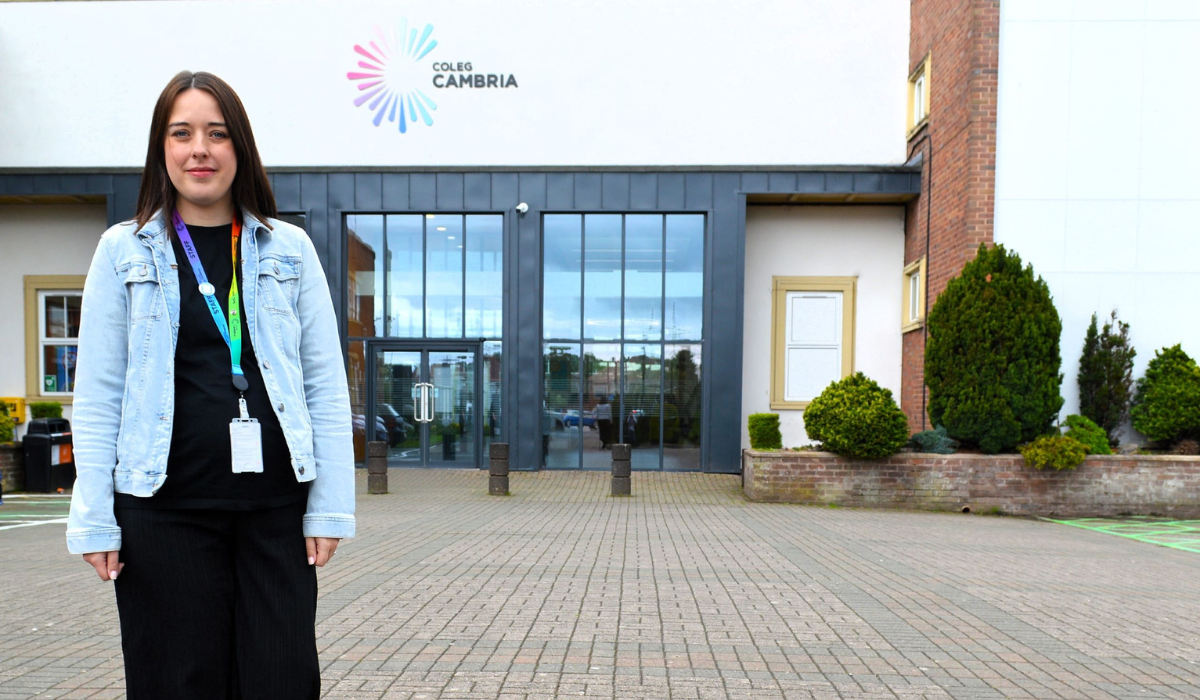
Maham Munawwar, 22, graduated from Wrexham University’s Professional Policing degree in 2025. She is now in her final weeks of training with West Yorkshire Police to become a full-time police officer in her home city of Leeds.
“I wasn’t sure what I wanted to do after my A-Levels,” said Maham, “But I looked at the policing course at Wrexham and thought that it looked right for me.
“I really enjoyed it, and I’m so glad I chose it. Many of the lecturers are former police officers, so whenever we were discussing the theory of something, they gave an example from their own careers, so it really helped the information stick.
“We also had a lot of guest speakers from the police who could give a real insight into what the career was like.
“It was this teaching from real-life experience that made the course so great. We did a lot of role play and practical tasks, but it was hearing from the lecturers that I enjoyed the most.
“I loved studying at Wrexham because of how small the class sizes were. It meant I could really get to know the tutors, and they got to know me. They could properly focus on each of us and give us the time, resources, and attention we needed to succeed.”
Once Maham graduated, she undertook the 12-month interview process to apply for West Yorkshire Police, as she was keen to be on patrol in her own community.
“There aren’t many Muslim women in the police, or women from Indian backgrounds,” she added.
“I speak Punjabi, Urdu, Hindi and English, so I hope that I can break down language barriers, and show that people from all backgrounds can be police officers. I want to be someone that young girls and women from my community can trust. I’m also interested in the public order side of policing, and want to train to become a mounted officer.
“I’m excited and nervous about going on patrol, but I’m really looking forward to it. I’ve been training to be in the police for years, and now that I’m here it doesn’t feel real. I love it!”
Sarah Jones, 39, from Chester graduated from Wrexham University’s MSc in Mental Health Nursing in 2025, and now works as a senior CAMHS (Child and Adolescent Mental Health Services) practitioner in Flintshire.
“I graduated in 2007 with a degree in Psychology and worked for years as a support worker in a brain rehabilitation centre. I then moved to a role as an assistant psychologist. I enjoyed it, but without a ‘core profession’ such as nursing, social care, occupational therapy, or physiotherapy, where you're able to register with a governing body, I couldn’t progress with my career.
“I did some research and found that Wrexham University offered a funded Masters in Mental Health Nursing, and I was eligible for a means-tested bursary as well.
“It had been a while since I had studied, so I completed a short ‘returning to education’ course before I began. I was one of the oldest in my cohort, but I was never made to feel like it was a barrier. I studied with a really nice, diverse bunch of people, who all had different work experience backgrounds.
“The course was split 50/50 between teaching and placements, and all the staff were really knowledgeable and friendly. It was well structured, and I felt well supported. Even when you were out on placement, you'd have regular visits from staff to support you.
“Completing the master’s degree at Wrexham meant I could get the core profession I needed, and return to CAMHS at a higher band. Within six months I was also eligible for a promotion. I wouldn't have been able to get the job I'm doing now, or progress from a band 5 to a band 6 nurse, without this qualification.
“For me, it was stepping stone to advance into roles that reflect my skills and experience, that weren’t available to me before.”