

GUEST COLUMN:
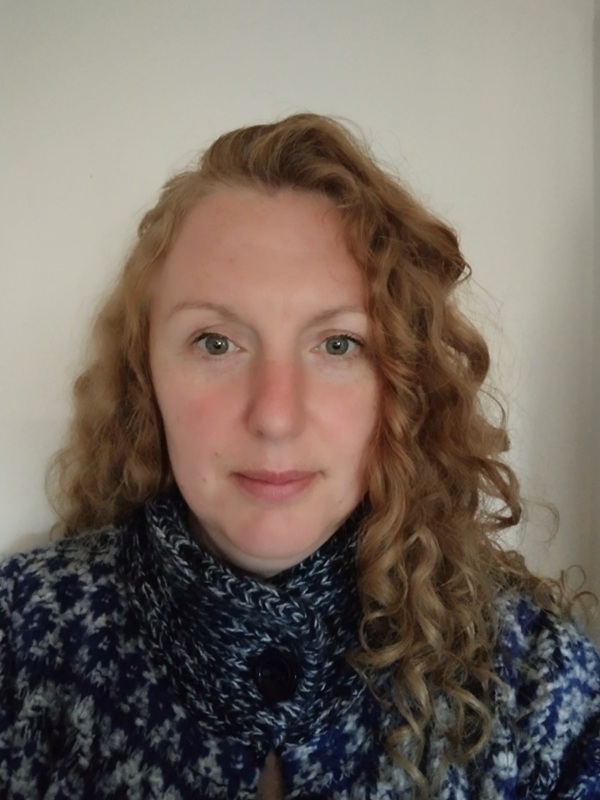
Mary Griffiths
Co-CEO of Mid and North Powys Mind
Chair of One Mind in Wales

At a time when public finances are under sustained pressure, the case for better integrated working with third sector organisations and recognition of the contribution they make to society has never been clearer. It’s also why Mind Cymru is calling on our new Welsh Government to improve relationships between public and voluntary sector providers, to help reach those most in need of mental health support at a local, regional, and national level.
For those of us providing services locally, we couldn’t agree more. We know first-hand that mental health is shaped by a range of other social factors – including debt, housing, domestic violence, sexual abuse and physical health problems, to caring responsibilities, relationship breakdowns, substance use, and more.
And when it comes to reflecting their true value, and investing in, community services covering all these areas we also know this – the new Senedd term must be a turning point.
Economic and health inequalities across the country are proving more challenging to address, with the latest research telling us things are getting worse, not better. And, the greater inequality is in society, the worse the mental health of the population becomes.
As co-CEO of Mid and North Powys Mind, a local Mind charity in Wales, I don’t need statistics to tell me that mental health services in Wales, both statutory and voluntary, are inundated and working hard to cope with rising demand. I see this with my own eyes, day to day.
And I can tell you that staff in both sectors are often too busy firefighting to think ahead about building better joint working relationships that could ease the burden on services and most importantly, create a better collective service offer to our communities.
Which is a shame, because there are many examples of excellent practice where this is happening, usually due to trusted relationships between key individuals or out of necessity. We need now to learn from these examples and work towards a place where better integrated statutory and voluntary sector services are delivered as standard.
And to achieve this we need a realistic and significant level of investment in our communities. This means conducting proper research into the underlying causes of poor mental health that can provide us with evidence-based solutions to ensure that investment is efficient and effective.
Improving the nation’s mental health and its wider economy doesn’t have to be about creating new services for our new Welsh Government either – much of it is about long-term funding for the community services we already have, and that we know work.
And one of the biggest opportunities to get this right lies in listening to people with lived experience of mental health problems and those delivering that crucial support too.
Consultation often happens at service design level but far less so during on-going service delivery. We hear it all the time from the people we support – ‘not another survey’ – and this is where the voice of lived experience comes in.
A lot of staff and volunteers involved in delivering services have experience of life altering mental health problems and, therefore, really valuable knowledge of receiving as well as delivering support. We need to be better at capturing these experiences and knowledge, and in making it central to how future services are delivered.
As the new chair of One Mind in Wales, Wales’ strategic forum for Mind leaders, listening to the needs of people with first-hand experience of mental health is also an area I believe the 15 local Mind charities that serve Wales today excel at too. And yet, wider consultations many of us participate in can feel long and sometimes excessive, while others can appear short and tokenistic. Often, the people we support that feed into them won’t hear back about what’s been done with their input.
Consulting with people using the services we are here to deliver and design them for is essential for them to be effective, but the system we’re working in at present isn’t set up to do this consistently. And at the heart of inconsistency, is a tendency for all parties to lose trust in one another.
For effective, jointly delivered services to be built, there has to be trust – enough even for us to acknowledge that sometimes we will get it wrong, learn from our mistakes and try again. And so, there’s also a need to recognise that building in the time for better trusting relationships between all sectors is an investment too. This is an action that needs to be mandated from the top, and at the start of any work – not via intermediary bodies, but with the people doing the work on the ground and the people they support.
Local Minds in Wales regularly hear from people desperately in need of mental health support, who have often approached several different agencies (statutory and voluntary) for help before they come to us. That takes energy, motivation and perseverance when people are often at one of the lowest points of their lives.
We try not to turn people away but sometimes we’re not the most appropriate service for people in crisis, some with very complex needs. If we had better integrated working relationships, across all areas of community service delivery, we could get people to the right service for them more quickly, reducing the impact on the individual, speeding up their recovery and ultimately costing less to deliver.
When we talk about improving access to mental health support for all in Wales – a pledge which came from every party ahead of the Senedd election, broadly speaking – we mean getting the right and most effective service to someone at the first time of asking, be it in the statutory or voluntary sector.
This should feel in practice like a seamless transition for the person asking for help, and where they remain at the centre while services coordinate around them, rather than a system that requires the individual to keep knocking on different doors and retelling their story over, and over again. And, this is why we ask for third-sector organisations like local Minds in Wales to be prioritised in budget commitments – and to be viewed with the same parity of esteem as public services – in recognition of the social but also the economic contribution that they make.
Because the staff and volunteers that work with us are as much a part of the critical infrastructure that exists to keep people well, employed, and housed in Wales today as anyone else, working in any other sector today.