GUEST COLUMN:
Councillor Rob Stewart
Leader
Swansea Council

South West Wales is as well placed as any region in the country to turn floating offshore wind into a long-term industrial and economic opportunity.
Our region has ports, manufacturing capability, universities, energy infrastructure and an established industrial base. Crucially, it also has a long history of responding to shifts in how energy is generated and used.
Coal and copper helped shape the region’s economy in earlier generations. Floating offshore wind represents a new chapter, with the capacity to support energy security, industrial decarbonisation and new supply chains across South West Wales.
The scale of the opportunity extends well beyond the turbines themselves. It includes assembly, marine operations, manufacturing, maintenance, digital technology, hydrogen production and the infrastructure needed to move or use the power generated.
Port Talbot, Swansea, Milford Haven and Pembroke Dock all have roles to play. Together, they create a regional proposition that would be difficult to replicate elsewhere in Wales.
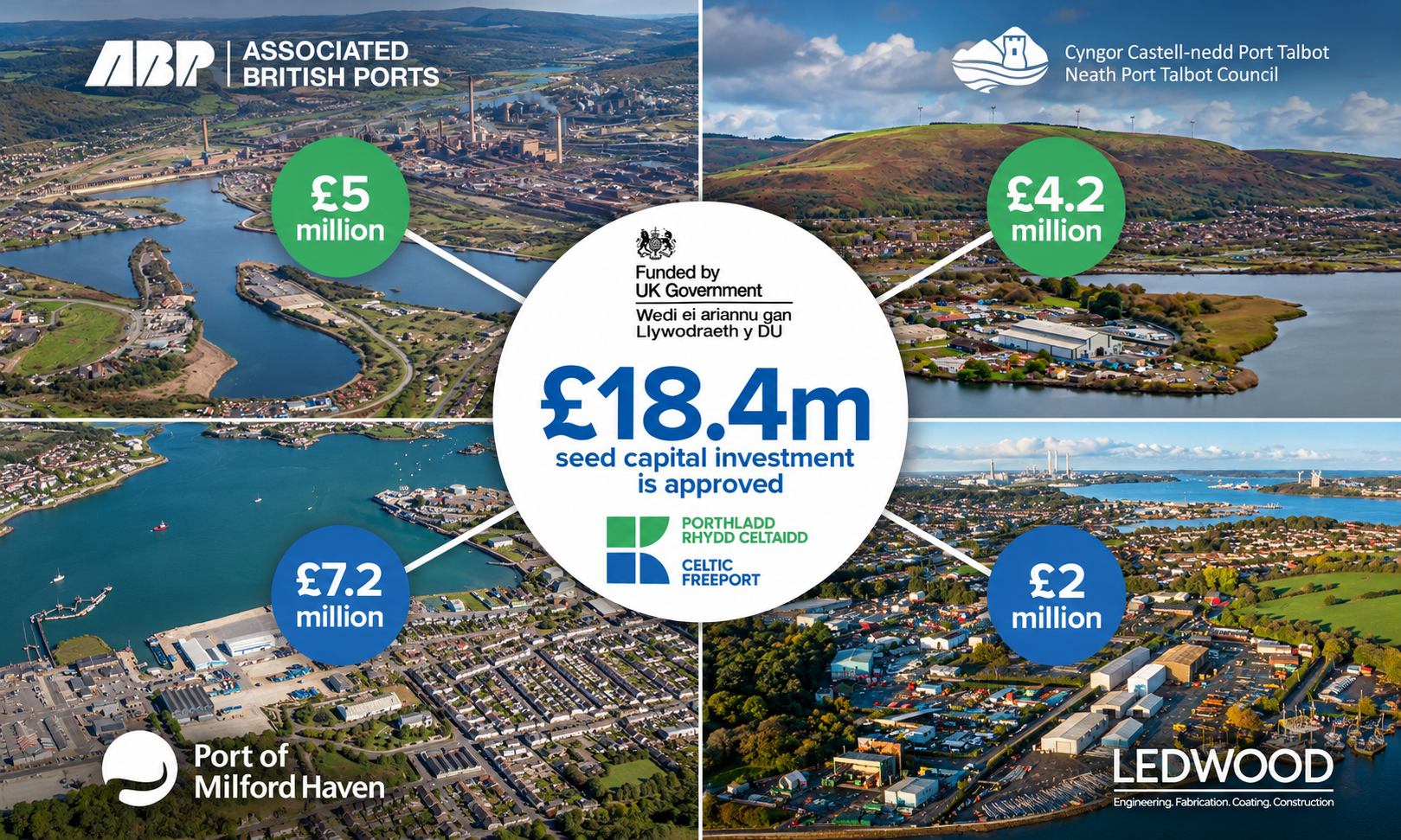
The Celtic Freeport adds another significant element, linking Neath Port Talbot and Pembrokeshire around investment, manufacturing and energy transition. The task is to make sure those benefits extend across the wider region and strengthen existing businesses rather than simply shifting activity from one place to another.
Much of the supporting infrastructure is already being developed. South West Wales has around £20 billion of energy assets, while projects across the region are strengthening port capacity, research, innovation and manufacturing capability.
The region can also operate as a testbed for the energy systems needed to meet net zero commitments and improve the UK’s energy resilience. Recent volatility has shown how exposed households and businesses become when energy supplies and prices are uncertain.
Locally generated renewable power offers the chance to approach that differently.
Transmission infrastructure will be important, but we should also consider how more energy can be used within the region. Electricity from floating offshore wind or future tidal generation could support industrial decarbonisation, hydrogen production and more energy-efficient housing.
Port Talbot is an obvious example of where renewable energy could help support the transition of an established industrial economy. Meanwhile, Swansea’s proposed tidal lagoon could also form part of a wider, integrated energy system around the city and its docks.
There is scope to explore social benefits as well, ensuring that communities close to major energy infrastructure see a direct return through lower costs or locally focused energy arrangements.
None of this will happen automatically. The region still needs to strengthen grid capacity, prepare its supply chains and ensure businesses can meet the scale and standards required by major contracts. Yet the building blocks are more advanced here than is sometimes recognised. The ports, industrial sites, skills partnerships and public sector relationships are already aligned around the same broad ambition.
The case for South West Wales is therefore not based on aspiration alone. It rests on assets, delivery and a region-wide understanding of what the energy transition could achieve.
Floating offshore wind is a major opportunity for Wales, but South West Wales brings a combination of industrial history, current capability and planned investment that places it at the front of that opportunity.