The University of Wales Trinity Saint David (UWTSD) and the University of Glasgow are empowering practitioners and informing politicians to realise the Curriculum for Wales, with the publication of final findings from a longitudinal research collaboration.
Funded by the Welsh Government, the Camau i'r Dyfodol research project was designed to support education professionals in Wales to advance practical understandings of progression in learning as they worked to realise Curriculum for Wales (CfW).
Findings from the fourth and final phase of the project have now been shared in a report that offers key recommendations to support the coherent and sustainable realisation of the CfW, across all schools in Wales.
The report is published at a time when all four UK nations are engaged in curriculum review, reform or development, making its findings relevant to wider discussions about curriculum design and implementation across the UK.
This is a major step forward in understanding how the Curriculum for Wales (CfW) can be realised in practice, with learning from previous phases attracting positive feedback from educators and policy makers.
Key findings from the report included:
- Uncertainty over accountability was seen as a barrier to change
- Language, volume and vagueness of the curriculum framework documents were barriers to realising CfW coherently.
- Curriculum design requires specific professional knowledge and skills that teachers may need to develop
- CfW has been realised across the system in very different ways, drawing on different curriculum models and underpinning philosophies
A representative from the Welsh Government said:
“The partnership with CAMAU has been an important part of our approach to Curriculum realisation, ensuring our approach is grounded in evidence and the experiences of schools. CAMAU's work continues to directly inform our professional learning support as we move as a system beyond initial Curriculum rollout into sustained continuous improvement.”
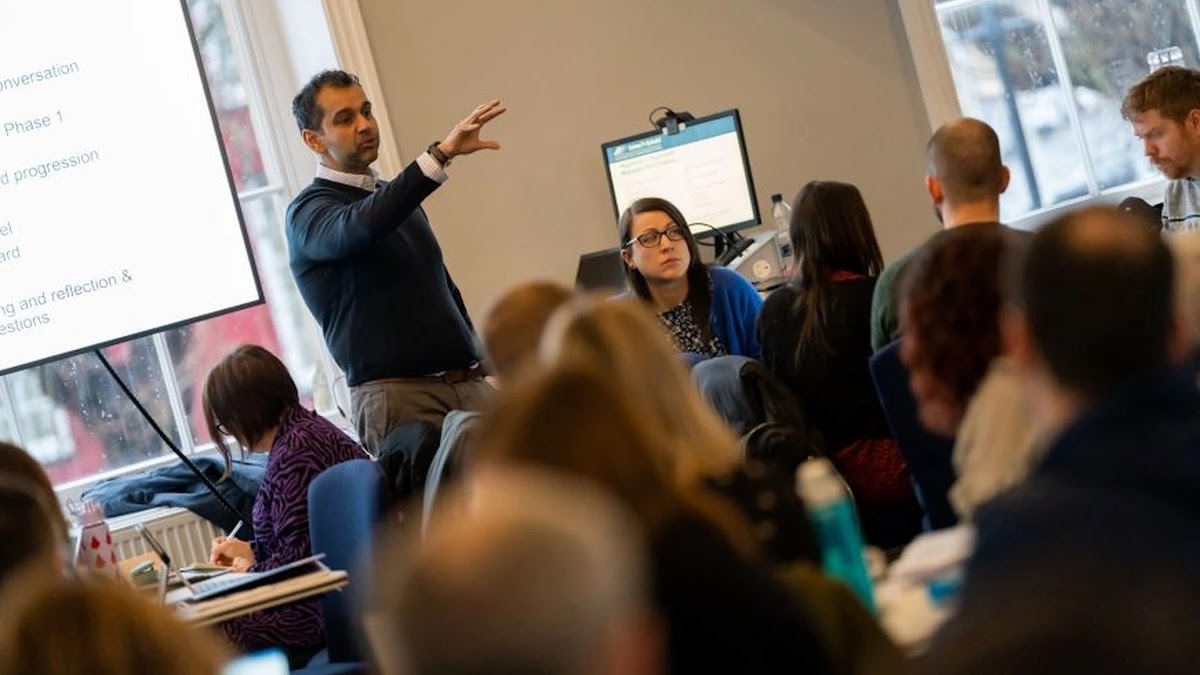
Dr Sonny Singh, Principal Investigator at the University of Wales Trinity Saint David, commented:
“Our Phase 4 findings show that the future of Welsh education depends on greater consistency and coherence across the system. By clearly recognising the Curriculum for Wales as a purpose-led process model and building trust-based accountability, we can support schools to deliver genuinely learner-centred education.”
David Morrison-Love, Principal Investigator at the University of Glasgow, added:
“The project enabled us to work with people from across the Welsh education system and has advanced our understanding of national curriculum reform. We would like to thank everyone who took part and we hope this work can help in realising the educational potential and possibilities this curriculum holds for the children, young people and teachers of Wales.”
The report sets out four recommendations for the Welsh Education system drawn from the evidence and findings across all four phases of the Camau i'r Dyfodol project, with the aim of providing Welsh Government with an evidence-base to support curriculum realisation:
Support consistent understanding of CfW as a process model of curriculum design
Clarification of the Curriculum for Wales framework to state explicitly that CfW aligns with a process (learner development) model and outline what this means for how knowledge, progression, assessment and pedagogy are considered during curriculum-making; offering a clear overview of how to work with the framework using a process approach to curriculum making and clarify that this approach does not mix with other curriculum models.
To strengthen system integrity, enable professional learning opportunities and ways of working that align with the nature of CfW
Aligning professional learning at all levels in the system with understanding of CfW as a process model of curriculum design to enable coherent realisation and consistent ways of working locally and across the system; considering how to provide time and space for system professionals to engage with coherent learning that supports development of the conceptual grounding needed for curriculum; and enabling Education Support Partners and teacher educators to provide professional learning that supports coherence across the system.
Reduce, refine and clarify the curriculum framework to create internal coherence
Situating the framework more fully in clear educational language that has professional meaning, and avoiding the use of vague metaphors that suggest defined end points or linear performance; consider revising the Progression Code to focus on the overarching principles of progression rather than also including principles at AoLE level. Clarify the term progression as progress in relation to the Four Purposes.
Provide clearer guidance on the integrated nature of curriculum, pedagogy and assessment
Creating a document that provides guidance on research-informed approaches to pedagogies and assessment that align with a process model of curriculum design; giving guidance on ways of teaching and assessing learning that align with a process approach, and signal more fully the shift from accountability-based forms of assessment.
The system at all levels should trust and encourage practitioners to communicate what children and young people have learned through forms of assessment that support learning and encourage children and young people to communicate their learning in a variety of ways.
Feedback on the project from educators has been positive, with on teacher commenting:
“I think that this is probably the closest we've got to so far in, what – five years of working on this?- to ‘ohh – we can define what our curriculum is. We've just developed the understanding of what the purpose of Curriculum for Wales is, you know, what the thinking behind it is – what we're trying to achieve by that as a nation, not just as a school.”