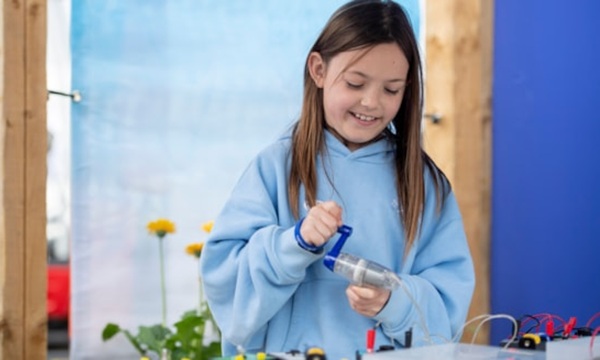
More than 91,000 children and young people have been introduced to electrical safety and STEM learning as National Grid looks to help build the future workforce needed to support Britain's changing energy system.
National Grid Electricity Distribution has been working with schools, families and community groups across South and Mid Wales, the Midlands and South West England, combining practical electrical safety education with greater awareness of careers in science, technology and engineering.
The programme comes as the electricity network is expected to play an increasingly important role in the transition to a lower-carbon economy, creating demand for engineers, technicians and other skilled workers capable of developing and maintaining the infrastructure required.
During the last financial year, National Grid teams delivered 6,852 education and STEM engagements through schools, community activities and major events.
A total of 91,598 children and young people were reached with electrical safety messages, exceeding the organisation's annual target of 80,000.
Activities included engagement at major events such as the Royal Welsh Show and National Eisteddfod in Wales, alongside the Lincolnshire Show and Royal Bath & West Show.
Andlyn White, Social Impact Manager at National Grid Electricity Distribution, said:
“Helping children and young people understand how to stay safe around electricity is one of the most important ways we can support the communities we serve.
“Throughout the year we work with schools, families and community groups across our regions to deliver practical safety education that can make a real difference.
“We're also helping young people understand the opportunities available in science, technology and engineering, and inspiring the next generation of engineers and technicians who will help power the communities and economy of the future.”
The education programme also extends into the classroom through National Grid's Power Discovery Zone, which provides free, curriculum-linked resources developed by teachers.
The materials combine electrical safety with activities designed to introduce pupils to the technologies, skills and careers associated with the electricity network and wider energy sector.
National Grid is also working with schools through its Solar on Schools programme, which supports schools to reduce carbon emissions and energy costs while giving pupils an opportunity to learn about renewable energy in practice.
With electricity infrastructure becoming increasingly important to economic growth, decarbonisation and the expansion of technologies including renewable generation, electric vehicles and heat pumps, developing awareness of energy careers among younger generations is becoming an important part of the longer-term skills challenge.
National Grid said its education activity is intended both to improve understanding of electrical safety today and encourage more young people to consider the technical careers that will be required to operate the energy system of the future.