Growing Mid Wales has confirmed that the Whole System Research for Innovation and Decarbonisation (WSRID) programme will continue, supported by Welsh Government funding.
Following successful feasibility work in Phase 1 at the start of 2025, several projects have now received support, with approximately £500,000 of Welsh Government climate innovation funding earmarked for progress into Phase 2, where they will combine efforts to develop prototypes and demonstrators. This will enable real-world testing, refinement, and the creation of scalable, commercially viable solutions for a low-carbon rural economy.
The three projects moving forward with Phase 2 funding are:
1.HARVEST (Holistic Agricultural and Rural Virtual Energy System Transition)
Led by the Centre for Energy Equality with partners Severn Wye Energy Agency, Challoch Energy, Cardiff University, Energy Local and Llanidloes Futures. HARVEST will demonstrate how rural communities can generate, share, and store renewable energy.
Key elements include:
- Developing a Social Virtual Power Plant to digitally connect and manage community energy use.
- Testing solar and battery solutions for business parks.
- Exploring hydrogen and smart microgrids in village settings.
- Creating advanced forecasting tools to balance supply and demand.
In addition, HARVEST is benefitting from separate funding of £660,000 from Ynni Cymru, awarded directly to the Llanidloes community group, to expand local generation and storage capacity.
2.LAFAN
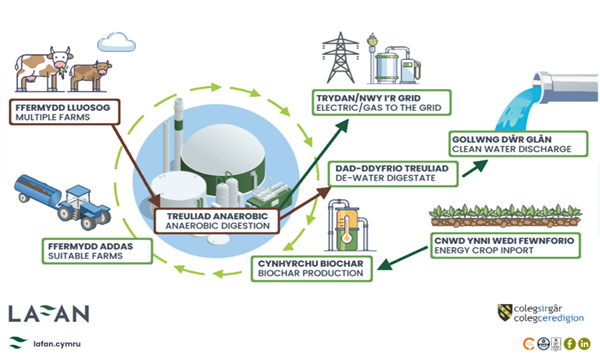
Led by Lafan CYF with Coleg Sir Gâr / Coleg Ceredigion, this project focuses on sustainable utilisation of livestock slurry for renewable energy generation and nutrient management.
Key elements include:
- Optimising slurry separation technologies to improve biogas yield.
- Quantifying the carbon impact of processes to support carbon trading.
- Designing systems to transport surplus farm nutrients to centralised treatment hubs.
- Producing low-carbon energy and biochar for local use and carbon sequestration.
- Sharing findings with the agricultural sector to support low-emission farming practices.
3.W2W (Water to Water)
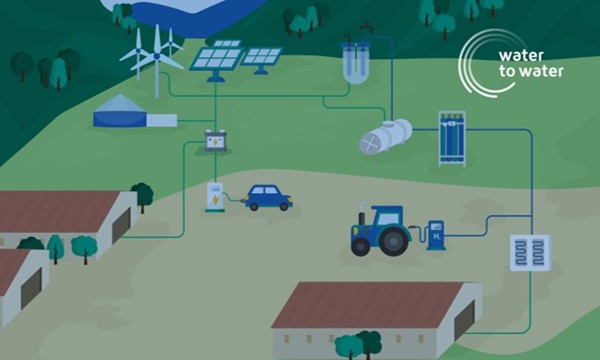
Delivered by W2W with First Milk, Thornton Tomasetti, OnGen and CamNesa Consulting, W2W is creating a free, user-friendly web tool to help dairy farmers achieve net zero.
Key elements include:
- Collecting real-time farm energy demand data to improve modelling accuracy.
- Piloting the tool with 14 farms in Mid Wales, with scalability to hundreds across Wales and the UK.
- Including technologies such as solar, batteries, micro-anaerobic digestion, and ice storage.
- Enabling farmers to design modular, scalable energy systems using standard components.
- Making renewable energy planning accessible to non-technical users, with clear, actionable reports.
All Phase 2 funding is provided by the Welsh Government via Growing Mid Wales. Over the next year these projects will begin building and testing prototypes, with results expected in 2026.
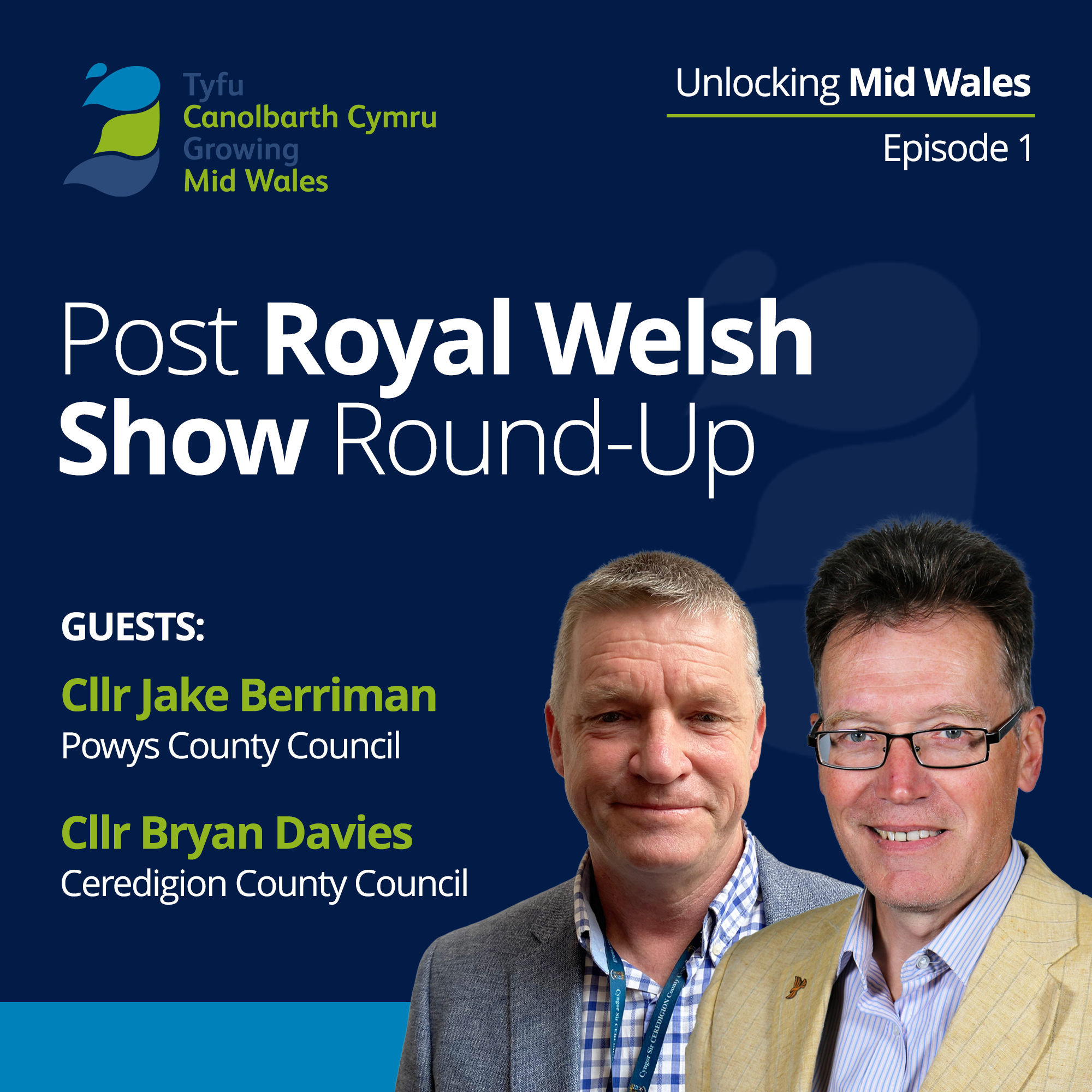
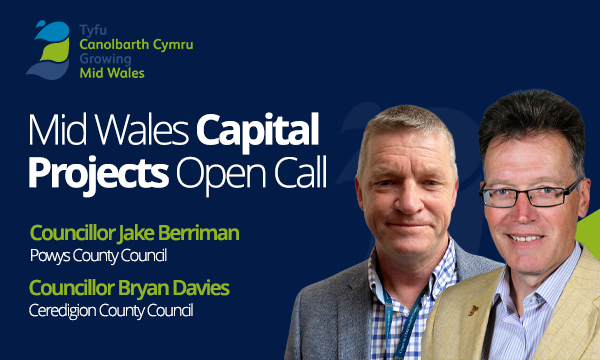
In a joint Statement from the Leaders of Growing Mid Wales Councillor Bryan Davies, Leader of Ceredigion County Council, and Councillor Jake Berriman, Leader of Powys County Council, said:
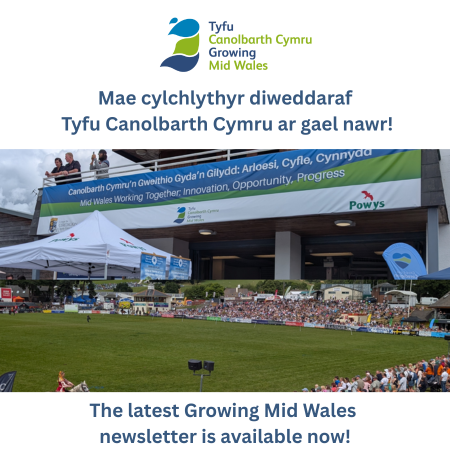
“We were proud to showcase the progress of the WSRID programme at the Royal Welsh Show this summer, which highlighted the strength of collaboration and innovation already happening in Mid Wales. We are now excited to see the next stage of the programme moving forward.
“These projects show how innovation, collaboration, and community involvement can go hand in hand to deliver real-world solutions. By testing and demonstrating new approaches in our region, we are helping to create a stronger, fairer, and greener energy system – and providing models that can be replicated across Wales and beyond.”
Updates on the projects will be shared in the Growing Mid Wales newsletter – email growingmidwales@ceredigion.gov.uk to be added to the mailing list.