GUEST COLUMN:
Cllr Shelley Childs
Cabinet Member for Highways and Environmental Services
Ceredigion County Council

Across Mid Wales the distances between towns and communities mean that significant transport projects often require several phases of investment before they can be completed. The new Mid Wales Regional Transport Plan gives Powys and Ceredigion a five-year framework for improving transport across the region, making it easier to see projects through rather than delivering one section and then waiting to find out whether the next can be funded.
That longer-term view is particularly valuable in a rural region. Under the previous model of annual grant applications, we might secure funding for one part of an active travel route without knowing when the next section could follow. Projects could become drawn out over many years, not because the ambition was lacking, but because the funding did not always allow us to plan with enough certainty.
The Regional Transport Plan changes that. Approved by Welsh Government and supported by more than £13 million of funding, it sets out a clear programme of transport improvements across Powys and Ceredigion. It covers active travel, public transport, road infrastructure, electric vehicle charging and other schemes intended to make journeys safer, easier and more sustainable.

It has also been shaped by public consultation, so the priorities within it reflect what people across Mid Wales have said about the way they travel and the improvements they want to see.
The difference a five-year plan can make is already becoming visible. The active travel link between Aberystwyth and the IBERS campus is due to be completed this year. Without the Regional Transport Plan delivery programme, I am not sure that project would have progressed in the same way.
That route shows why continuity of funding is so important. A short section of path may have limited value on its own, but once the full connection is completed it becomes a practical option for students, staff, residents and others travelling between those locations.
This is not simply about making local authority processes easier. Greater certainty allows us to explain clearly to communities what is planned, how different phases fit together and what we are trying to achieve over the full five years. It also gives Welsh Government a stronger picture of the investment Mid Wales needs to turn those plans into completed projects.
For businesses and the wider economy, that clarity is important. Infrastructure influences where firms can operate, whether people can reach work and how confidently businesses can make decisions about their future.
As projects within the Mid Wales Growth Deal develop, we expect to see new centres of work and education across urban and rural parts of the region. Those developments need to be connected to public transport, road networks and active travel routes so that workers and students can reach them safely and efficiently.
The Regional Transport Plan gives us an opportunity to align those investments. Rather than considering transport after a project has been built, we can look ahead at where interchanges may be needed, how services could connect with new sites and where improvements to walking and cycling infrastructure could support everyday journeys.
Active travel presents particular challenges in Mid Wales. The average journey between towns is lengthy, and for many people living in remote areas a car will remain the only practical option. We should be realistic about that.
There are, however, journeys where people might choose to walk or cycle if the infrastructure were safe and reliable. At present, active travel is not a realistic consideration for many residents because the necessary links between towns, villages, workplaces and services are not yet in place.
A five-year programme makes it easier to develop those routes in a logical sequence. It allows us to move beyond disconnected sections and work towards networks that people can use with confidence.
The same applies to public and community transport. The recent return of a weekend service between Aberystwyth, Tregaron and Lampeter restores a link that communities had lost. Improvements of that kind can help people reach shops, services, education and employment, while giving visitors more options for travelling around the region.
Tourism is another area where longer-term transport investment can deliver lasting value. The Tour de France is coming to Wales next year, creating an opportunity not only during the event itself but for years afterwards.
We want people to return to Mid Wales, ride the route and spend time in the towns, villages and businesses along it. To make that possible, visitors need to be able to reach the region by bus or train where they can, move around once they arrive and cycle safely during their stay.
The legacy of a major event depends partly on the infrastructure left behind. Better routes, stronger public transport connections and clearer links between destinations can support tourism long after the crowds have gone.
That is what the five-year Regional Transport Plan can unlock. It gives Mid Wales a clearer route from ambition to delivery, allowing us to complete more of the projects communities have asked for and connect transport investment with the wider needs of residents, businesses and the regional economy.
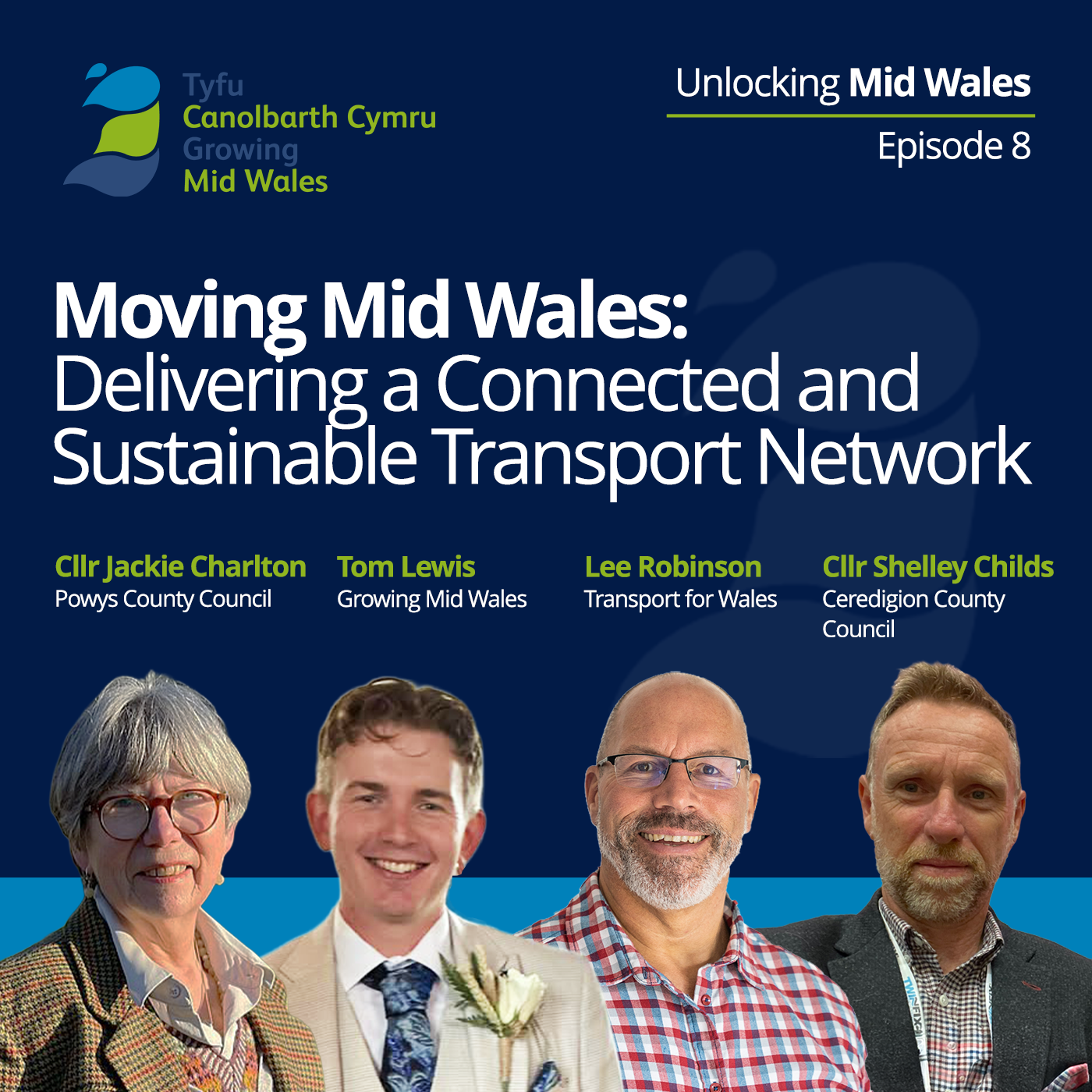
Shelley speaks about this and more on Unlocking Mid Wales, the Growing Mid Wales podcast series. Listen here: