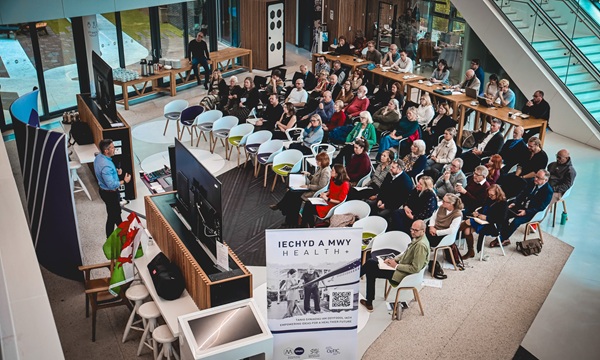
M-SParc has wrapped up its Football Hackathon, a nationwide initiative exploring how technology can better measure participation in grassroots football across Wales.
Delivered in partnership with the Cymru Football Foundation (CFF) and the Football Association of Wales, the project set out to answer a simple but important question: who is actually using new community pitches and what impact are they having?
Six teams from across Wales took part, combining technical expertise with a passion for the game. The goal was to develop practical, low-friction ways for clubs and funders to gather reliable participation data—without adding extra admin or effort for players.
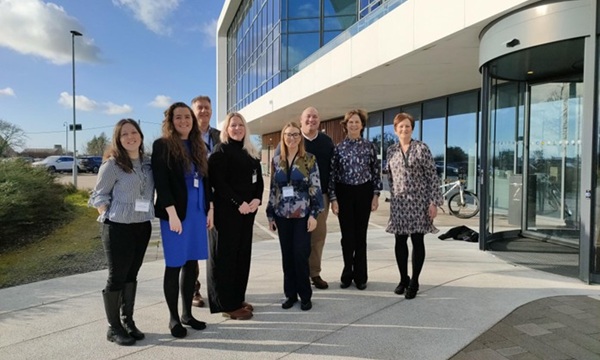
With support from industry mentors, teams refined their ideas and pitches before presenting to a judging panel made up of M-SParc’s Emily Roberts and Jordan Lee Eardley, Steven Parkes, Welsh Government’s Challenge Led Innovation Project Manager, and Aled Lewis, Head of Operations at the CFF.
Four teams made it through to the final in January 2026, pitching solutions that were judged on scalability, credibility, and overall delivery.

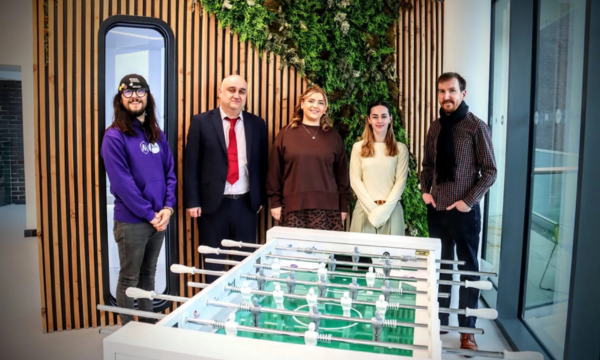
Chwarae Teg took the pilot award (£5,000) with a passive tracking system using RFID and LoRaWAN technology. Their approach requires no input from players, creating a seamless way to capture participation data. The team will now move into a live pilot with M-SParc.
Meanwhile, M-SParc tenant Brandified’s PASS app secured £35,000 in strategic investment. While not a hardware solution, the app showed strong potential at a national level, with plans to build secure infrastructure for collecting and managing participation data across Wales.
The project highlighted M-SParc’s role as more than just a workspace. Throughout the programme, teams received hands-on support—from marketing and recruitment to technical mentoring and prototyping facilities—helping turn early ideas into viable solutions.
Jordan Lee Eardley, Digital Innovation Officer at M-SParc, said:
“We’ve shown that Wales has the talent to rethink how grassroots football works. These solutions prove that smart technology can help us better understand—and invest in—the health of our communities.”