


Industry leaders warn that misunderstanding around underground cabling could delay vital infrastructure and undermine Wales’ renewable energy ambitions.
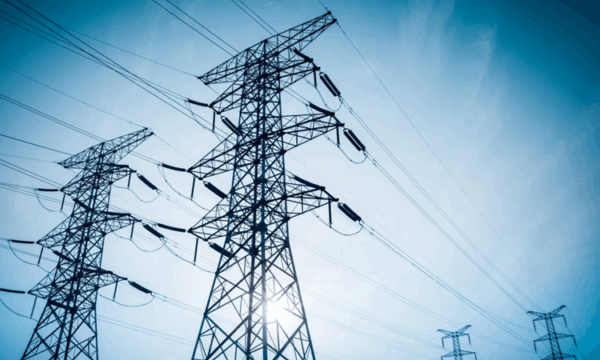
As Wales ramps up its efforts to transition to a low-carbon economy, a growing coalition of industry experts is urging greater public understanding around the realities of electricity grid infrastructure, warning that persistent misinformation around the costs and impacts of underground cables risks jeopardising progress.
Representatives from RenewableUK Cymru, leading civil engineering firm Jones Bros, and energy infrastructure developer Green Gen Cymru have spoken out this week on a Business News Wales podcast, calling for a more informed, evidence-based debate around how Wales delivers the grid it needs to support a renewable energy future.
“There’s been a lot of misinformation about the cost and feasibility of undergrounding high-voltage electricity cables,” said Abi Beck, Head of Strategic Communications at RenewableUK Cymru.
“While some argue undergrounding is now cost-comparable with pylons, the evidence just doesn’t support that, nor does it reflect the complex environmental and engineering challenges that come with it.”
Recent reports commissioned by Green Gen Cymru and compiled by Turner & Townsend found that installing underground cables could cost up to £5 million per kilometre, compared to £1.25 million for traditional overhead lines. The raw cable alone, before installation, is priced at nearly £1.8–1.9 million per kilometre, highlighting the sheer scale of cost difference.
“The cost differential isn’t theoretical, it’s real, and it’s driven by materials, installation complexity, and maintenance,” said Stephen Rowlands, Head of Construction and Supply Chain at Green Gen Cymru.
“That cost has huge implications for the speed at which we can decarbonise and for the economic viability of renewable projects across Wales.”
From a construction standpoint, the challenges are equally significant. According to Eryl Roberts, Contracts Director at Jones Bros, undergrounding involves a far more resource-intensive process than many realise.
“We’re talking about extensive trenching, haul roads, directional drilling in sensitive areas, and significant environmental management. Ground conditions, protected habitats, archaeological finds, water crossings, existing utilities, all of these make every project different and often more complicated underground,” Eryl explained.
“And maintenance? That’s a huge consideration. If something goes wrong with an underground cable during flooding, for instance, repairs become far more difficult than accessing overhead lines.”
Environmental impacts are also frequently misunderstood. While pylons are visually prominent, undergrounding requires far greater land disturbance; up to 14 times more earth needs to be excavated, which is particularly problematic for farmers and landowners. In some countries, such as Germany, land-use disruption has led to growing opposition to underground cable routes, despite initial public support.
All three experts agree that the current debate is too often shaped by aesthetic preferences or misinformed comparisons, rather than technical evidence or long-term strategic need.
“We’re not saying undergrounding should never happen,” Abi clarified.
“There are circumstances – urban areas, protected landscapes – where it makes sense. But we need to move away from blanket assumptions and look at the full picture: cost, feasibility, environment, and resilience.”
Stephen Rowlands added:
“Our reports are a resource for the public, for planners, and for decision-makers.
“We need to get that information out there and make sure people understand what it really takes to build a future-proof, affordable grid.”
With the pressure on to rapidly expand grid capacity and connect more renewable energy projects across Wales, the experts say the stakes couldn’t be higher.
“We want to deliver a portfolio of clean energy projects that bring real benefits to communities across Wales,” Eryl Rowlands said.
“But to do that, we need the infrastructure in place, and the right public understanding to support it.”