
GUEST COLUMN:
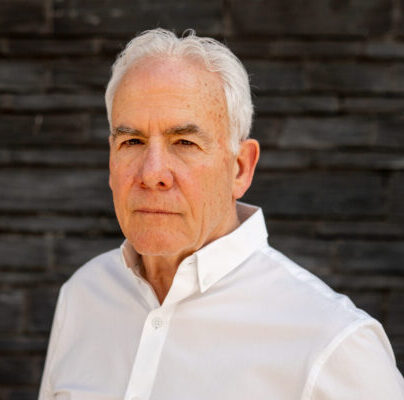
Frank Holmes
Chair
CCR Investment Board
Most regional strategies are written backwards. Sector, slogan and aspiration come first. How the money moves and who carries the risk comes later, if at all. Cardiff Capital Region (CCR) did the opposite, building its Evergreen Investment Framework first: invest, generate a return, recycle the capital into the next opportunity. Zip World, on the former Tower Colliery site, is not a case study bolted on for colour; it is the mechanism in miniature: money out, jobs created, money repaid, money redeployed.
Business schools have taught for thirty years that customers do not buy products. They hire them to do a job: nobody wants a drill, they want a hole in the wall. The same logic applies, uncomfortably, to regional investment.
Investors are not buying a postcode or a skyline. They are hiring a partner to convert public and private capital into a return, on time, without carrying all the risk alone.
Judged against that job, not against ambition, CCR’s pitch is unusually specific: a balance sheet with a track record running through it, and a portfolio of infrastructure, innovation and challenge projects delivered directly or through professional fund managers, all evidence that the job has been done before. Capturing and recycling value creation.
The commonest failure in strategy is starting with goals. A target is not a plan; it is a wish with a number attached. Good strategy starts by finding the crux (the challenge that, once solved, unlocks everything downstream), then concentrating resources rather than spreading them thin. The region has never lacked ambition or assets. Its crux has been the gap between commitment and deployable capital.
The Evergreen Investment Framework answers that crux directly: capital that is patient, repeatable and recyclable, so solving the problem once makes resolving the next one cheaper and faster. It is also why the portfolio is focused rather than exhaustive, with the discipline to ignore bright, shiny distractions. Choosing semiconductors, creative industries, SME finance, energy infrastructure, Northern Valleys regeneration and real estate means leaving other things undone: not a gap in the strategy, but the strategy itself.
That mechanism also guards against a well-documented pattern in large-scale public investment. Ambitious visions arrive over budget and over schedule, under-delivering again and again, even in cities with deeper pockets than Southeast Wales. The projects that escape that trap plan slowly and act fast, think from the destination backwards, and build from small, repeatable units rather than one irreversible bet.
The blunter lesson is that the biggest risk to a big project is usually the people running it: overconfidence, wishful thinking, an unwillingness to share the downside. Co-investment, risk shared with local authority partners, and decisions taken on the advice of professional experts and multi-disciplinary advisory boards are the answer: a region choosing not to be its own biggest liability.
If investors hire regions, regions hire delivery partners, and the standard should hold in both directions. The question is never who is most familiar or easiest to convene, but who is best qualified for the job, at this scale: independent assessors, not colleagues marking their own homework. A region that only ever hires the familiar will only ever deliver the familiar.
Coherence at this scale is engineered, not hoped for. Strategy formed by committee produces a list of everyone’s priorities rather than a decision. CCR is a partnership of ten councils, with guiding policies clear enough that a scheme sponsor in Blaenau Gwent and an investment officer in Newport reach the same conclusion without renegotiating the strategy each time.
What makes that work is that nothing rests on trust alone, though trust between partners still matters. Every scheme follows the same route, from strategic outline to full business case, each stage independently assessed. A regional impact toolkit captures benefits that resist monetisation and tracks where they land, so growth isn’t concentrated where it already exists. Evaluation continues after the decision, tying further funding to demonstrated impact, not asserted progress.
Governance is better understood as a de-risking instrument than a compliance obligation. Its assurance framework separates sponsorship, appraisal and approval: those who develop a scheme do not appraise it, and those who appraise it do not approve it. For an investor, who decided this, on what evidence, and who checked it, is documented before being asked. Good governance buys not merely propriety, but speed.
Research into corporate transformations offers a useful vocabulary here. Organisations that turned ambition into delivery shared three traits: speed, resilience and consistency. They moved through planning faster, cancelled fewer than one in ten initiatives once underway, and kept adding commitments rather than coasting after an early burst. The most rigorous generated nearly double the shareholder return within two years: not from ambition alone, but from clear ownership, decisions taken close to the work, and a routine habit of tracking delivery, not promises.
As a region in Wales we have sat outside of the English devolution movement that has seen enhanced powers, funds and settlements granted to some of our neighbours in English Combined Authorities. We do not have core funding but have been successful at winning new programmes competitively like the Investment Zone and Local Innovation Investment Partnership as well as c. £100m UKRI awards for our creative industries and Compound semiconductor cluster. The problem is that these come with conditionality of being sector centric, location specific or around university commercialisation and do not make for the investment requirements of the Heads of the Valleys, the development of energy security capabilities and other economic wellbeing initiatives.
None of this guarantees the next chapter (the Investment Zone, the AI Growth Zone, the Local Innovation Investment Partnership, Local Growth funds, the move into capital markets) will go to plan. Nothing in infrastructure ever does. Knowing how to get a job done is one thing. Sticking to the plan is another. It means avoiding the trap of government setting unrealistic targets that industry agrees to meet, both sides knowing they’ll be reset later. The crux is discipline, not ambition.
Demand for AI fluency (using these tools, not simply holding the licence) has grown roughly sevenfold in two years. Pairing people with AI could unlock billions in economic value, but only where organisations redesign how work is done, not automating individual tasks at the margins. Technology will shape the future. Investment in people will determine what it looks like. The lesson applies directly. A semiconductor foundry or a creative industries cluster is only as valuable as its workforce. Building that fluency is itself a delivery task, not a slogan, subject to the same sponsorship, appraisal and review as any other scheme.
AI will compress decision cycles which can improve asset utilisation, creates flexibility and enhances the ability to capture growth opportunities despite changing market conditions or capacity constraints.
But the honest test for any region asking for monetary or human capital is not whether its ambition impresses. Brain capital matters too. It is shaped by the environments, institutions and communities in which people live, and it drives competitiveness, economic wellbeing, societal cohesion, resilience and human flourishing.
The evergreen approach is a distinctive Welsh way which will help us ensure that we have some means of continuing to invest or catalysing co-investment in all parts of the region as this has never been a zero-sum game but imagine what could be achieved with more backing, some additional freedom and flexibility. Our ambition has forced us to do things differently whilst discipline has seen us use resources intelligently.
On that test, Cardiff Capital Region is not asking investors or government to believe in a vision. It is asking them to hire a team that has already shown its working and left the results open to inspection and back the call for the levers to shape, invest, innovate and scale its ambition and disciplined capability to deliver.
Last week’s confirmation from National Wealth Fund to bestow a Strategic Partnership on the region is a clear vote of confidence in this regard.