
GUEST COLUMN:
Air Marshal Andrew Turner
Former Deputy Chief of the Air Force
CEO, Saibre Capital
For much of the public, national security still means soldiers, ships, aircraft and events taking place far from daily life. That view is dangerously out of date. The threats facing the UK now reach into the systems on which ordinary life and the economy depend.
A cyber attack, interference with GPS, a hostile act in space or a disruption to the timing systems that keep hospitals, fuel pumps and financial transactions working may not look like a conventional battlefield, but they are now part of the same security picture.
I do not think we have been in a more dangerous time. The issue is not only the scale of the threats, but the degree to which we are sleepwalking into them. We are underprepared, not always aware of the risks around us and, in some cases, still hoping we can somehow avoid the consequences.
Those threats are not theoretical. We have seen a chemical attack in Salisbury, cyber attacks across the world, aircraft affected by interference with timing and GPS systems, and more obvious state-on-state conflict in Europe and the Middle East. Russia is the principal instigator of the threats most proximate to us, but China is also active in ways that many people do not see, including in space.
Satellites now carry some of the world’s most important data sets, including precision time, which synchronises everything from dialysis machines and traffic lights to fuel pumps and financial transactions. Interference with that infrastructure is not a science fiction scenario. It is part of the reality in which states now compete.
At the same time, many of the institutions created to de-escalate disputes are being weakened. The World Bank, the IMF, the United Nations and NATO were part of the international architecture built after World War II to manage conflict and contain risk. Yet their authority is being attrited from within by member states. When was the last time most people paid serious attention to a UN Security Council resolution?
This is the context in which the UK Government’s Defence Investment Plan has landed. There will be debate about whether it goes far enough, whether the balance of spending is right and whether the political system can move quickly enough. Those debates are necessary, but they must not obscure the more immediate point.
Business is ready to respond, and in many cases has been ready for some time. The problem is that government and procurement systems have not always been ready to make proper use of that capability.
For Wales, that creates both a risk and an opportunity. There will be many parts of the UK looking at the prospect of increased defence spending and asking how they can capture more of that investment. The places that are best prepared, most coherent and quickest to demonstrate delivery will have the advantage.
Wales cannot afford to sit back, look towards Westminster and wait. It needs to be on the front foot, making the case for investment, jobs, growth, intellectual property, patents and high-skilled employment. It has universities, businesses and industrial capability that can contribute to a stronger defence and security economy. The task now is to connect those strengths in a way that is credible to government, primes and buyers.
That means removing the barriers that make it harder for businesses to respond. In the Air Force, I used to say that my job was to turn the Grand National into the Derby: knock down the fences, remove the water and let every horse finish. That same mindset is needed here. Wales should be working to make itself an obvious investment target, not a passive recipient of decisions made elsewhere.
For SMEs, my advice is direct. Defence does not like partial answers. The Ministry of Defence and the wider security architecture want clean, vertically integrated solutions that match their requirements. It is not enough to have an excellent piece of technology if nobody can see where it fits or how it solves a defence or security problem.
A business may have a brilliant circuit board, component, system or service, but it needs to understand the customer’s problem and show how its capability fits into the wider solution. That requires discipline. SMEs need to follow closely what the MOD, agencies and primes are asking for and be rigidly focused on solving those problems rather than presenting interesting technology in search of a use.
There is still a role for experimentation and innovation, but urgency changes the test. At a time of heightened threat, the question becomes whether a business can contribute to a deployable, understandable and useful answer.
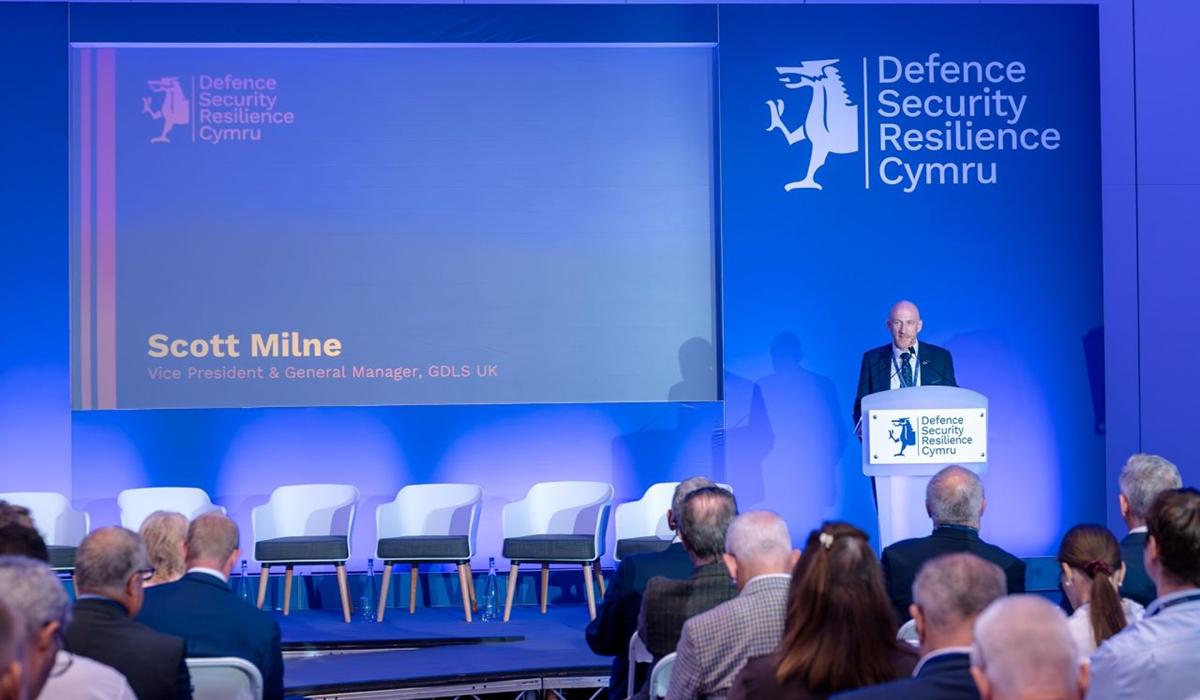
That is why the Defence Security Resilience Cymru event, being hosted at the ICC Wales in Newport in September, has a practical role to play. It can help bring together buyers, suppliers, innovators, public bodies and businesses that may not yet understand where they fit.
The race is starting. Those with a clear plan for capability, investment, jobs and delivery will be the ones best placed to make the most of it.
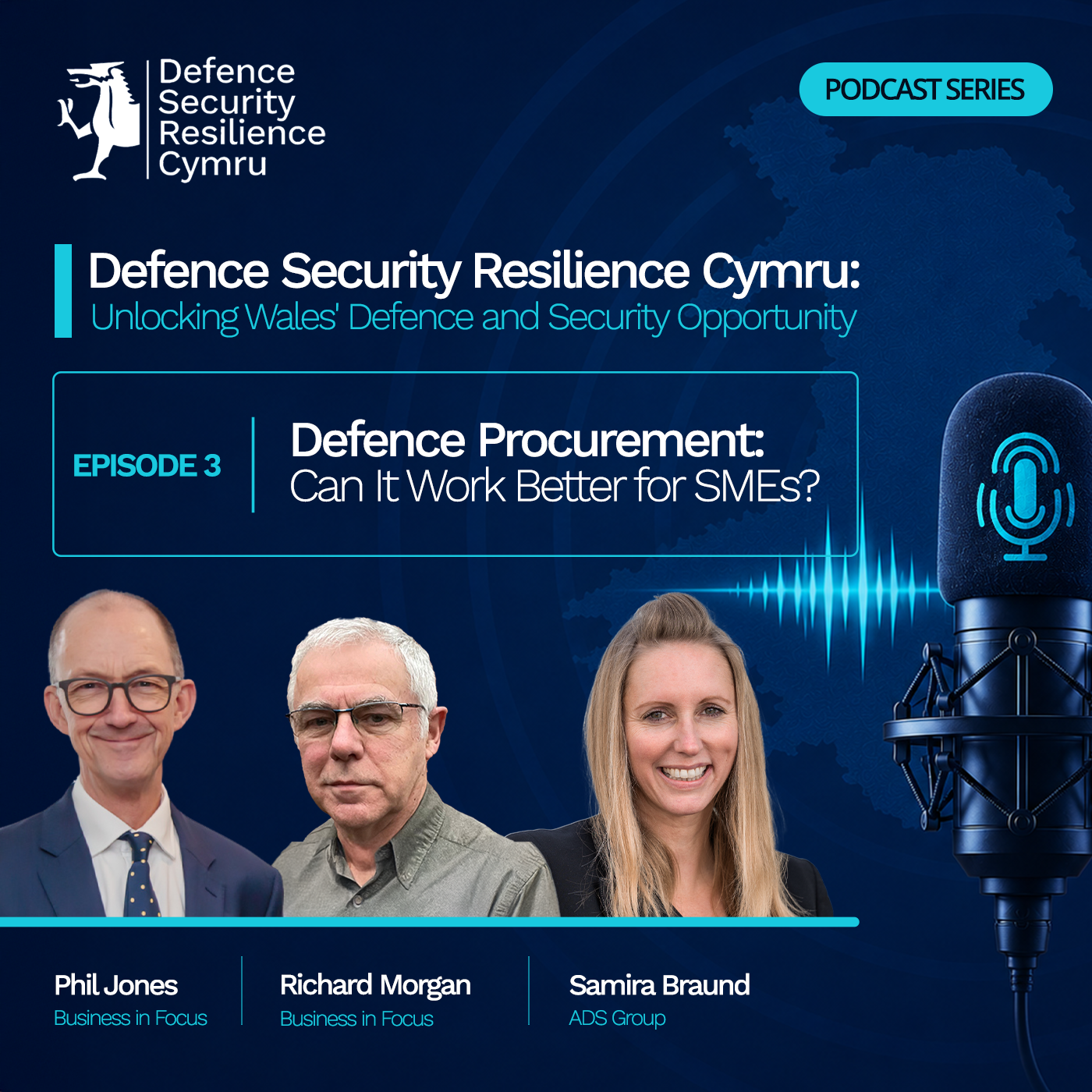
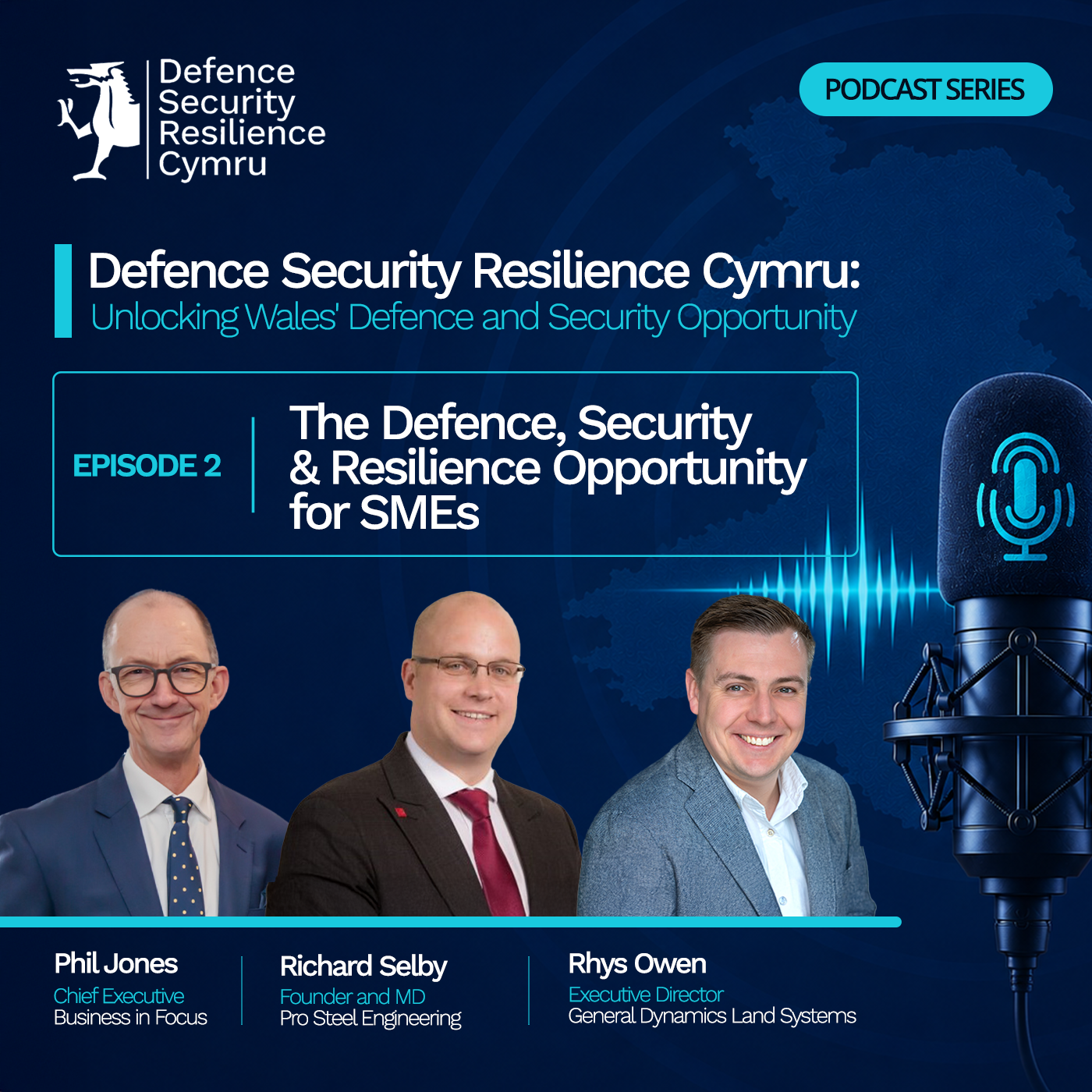
Andrew talks about this and more on the Defence Security Resilience Cymru podcast. Listen Here:
Find out more about Defence Security Resilience Cymru, being held at ICC Wales in Newport on September 3 and 4 2026, here: https://www.dsr.cymru/