







GUEST COLUMN:
Councillor Huw Thomas
Leader
Cardiff Council

The Atlantic Wharf regeneration is one of the most significant projects we have undertaken in Cardiff for many years. It is a central part of our wider ambition for Cardiff Bay and marks the latest phase of work that began with the building of the barrage in the mid-1990s.
Regeneration does not finish at a single moment in time; it evolves with the city’s needs. For us, a key challenge has always been how to complete the connection between the city centre and the Bay. That ambition has guided much of our planning over the past decade.
A crucial part of that vision is the new 16,500-capacity indoor arena. For a long time, this venue has been identified as the missing piece in Cardiff’s cultural offer. The Principality Stadium sits at the very top end of capacity, but only a limited number of artists can fill it. What we have lacked is a venue that allows for a consistent year-round programme of performances from touring artists who might not be staging stadium shows but who can draw significant audiences.
A thriving cultural landscape depends on this regularity, not just on a few large events scattered across the calendar.
The arena will help provide that consistency. With around 140 event nights projected each year – roughly two or three a week during peak seasons – the venue will give our hospitality and tourism sectors a more reliable pattern of demand. That level of activity matters for hotels, restaurants, transport operators and small businesses. We expect around a million additional visitors annually, and the impact will be felt well beyond the Bay itself.
The arena’s location is equally important. Its success is closely tied to our work on Cardiff Crossrail, which will create a new tram link between Cardiff Central and the Bay. This connection is essential if we are to increase public transport use and reduce pressures on roads. To make this viable, we need strong footfall. The arena provides exactly that, supporting our long-term strategy to create a more sustainable, joined-up city.
The wider Atlantic Wharf scheme sits alongside this. The relocation of the Travelodge is already part of the enabling works, while our plans to redevelop County Hall will reshape a site that has played an important role in the story of Cardiff Bay. That building originally helped kick-start regeneration in the 1980s. We are now applying the same principle again. A new, smaller, low-carbon core office will sit beside the arena, and within its footprint the Wales Millennium Centre will have a dedicated space to develop and rehearse its own productions. This strengthens Cardiff’s creative sector and brings new activity into the area.
Once the new building is complete, the current County Hall site will be redeveloped to include residential, office and leisure spaces. We also plan to update the Red Dragon Centre, much of which is currently surrounded by surface-level car parking. By consolidating parking into a smaller footprint, we can create public realm and spaces for people rather than vehicles. The aim is to develop a mixed environment of homes, workplaces, cultural facilities and leisure opportunities, all within walking distance of the arena and the Bay’s waterfront.
Sustainability runs through every part of the redevelopment. We are committed to achieving carbon neutrality as a council and driving wider change across the city. The new County Hall reflects this commitment, but so does the masterplan as a whole. There is no net increase in car parking despite the scale of the arena. The development supports walking, cycling and public transport. We are also exploring how parts of Lloyd George Avenue can be reshaped, reducing the dominance of car traffic and creating a greener, more pedestrian-friendly route between the city centre and the Bay.
Ensuring these developments benefit local communities is central to our approach. Past regeneration in the Bay did not always deliver the opportunities it should have for people in Butetown. This time, social value is embedded in the procurement process. We expect meaningful job creation during both construction and the 40-year lifespan of the arena. The length and complexity of the programme also give us the chance to support long-term skills development within the construction sector, offering clearer pathways for local people.
The economic potential stretches further. The arena strengthens Cardiff’s position in the UK’s cultural landscape and makes the city more attractive to inward investors. Many of our challenges in economic development relate not to persuading people of Cardiff’s merits, but simply getting them here in the first place. Once people visit, the quality of life, cultural offer and access to nature often speak for themselves. Adding the arena into this mix completes our offer in a way that makes Cardiff more competitive when attracting employers and skilled workers.
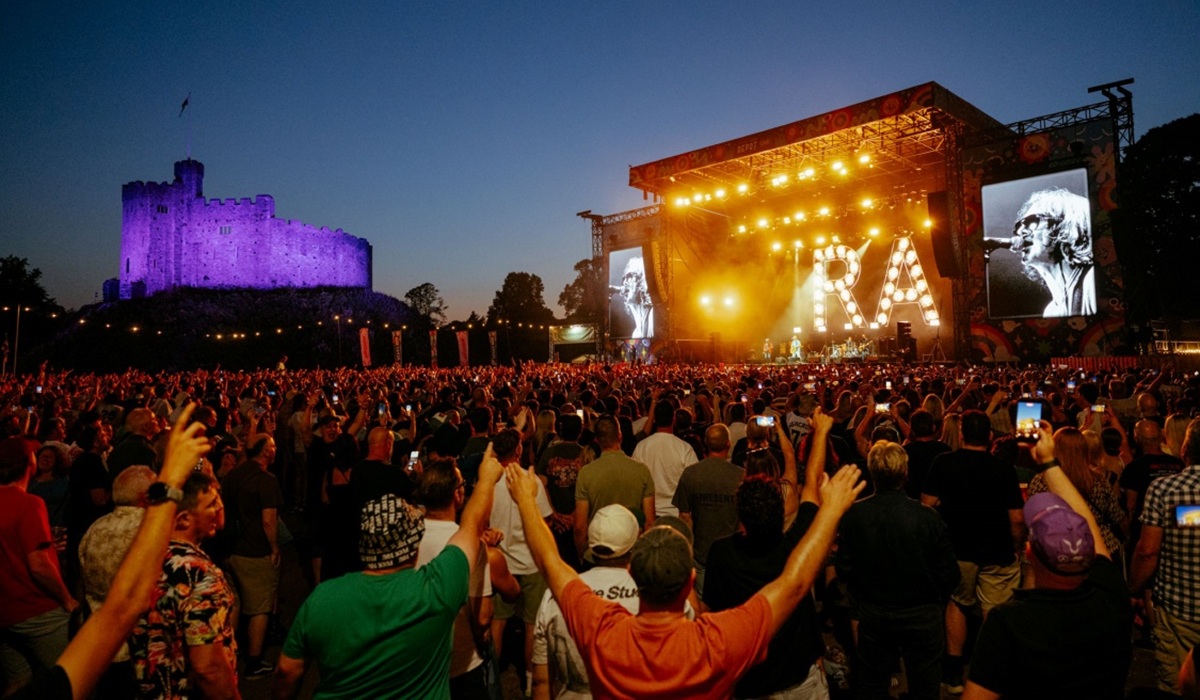
Other cities have used cultural-led regeneration to good effect. Manchester has opened a new arena of its own, and Bristol has been working to deliver one. Cardiff has taken a long-term view, and that persistence has been important. Even during the uncertainty of the pandemic, when some questioned the future of live music, we were confident that demand remained strong. This summer alone, more than half a million tickets were sold for live music events in Cardiff. The appetite is clear, and the arena will allow us to meet it all year round, regardless of the weather.
Atlantic Wharf is already taking shape, but it is not the final chapter. There will be further phases of development, supported by the footfall the arena generates and by the new transport links that come with it. We are in discussions with potential investors who see the opportunity to base jobs and activity here. This first phase will help unlock future growth, not just in the Bay but across the city.
Our goal is straightforward: to ensure that these developments create jobs, attract investment, and improve opportunities for local people. The arena may be the missing piece in our cultural offer, but it is also a catalyst for a wider transformation. It marks a new chapter for Cardiff Bay and strengthens our ambitions for the city as a whole.
Councillor Huw Thomas talks about this and more in the Cardiff Business podcast episode Building the Future: How the New Cardiff Bay Arena Will Transform the City. Listen to the podcast here.