GUEST COLUMN:
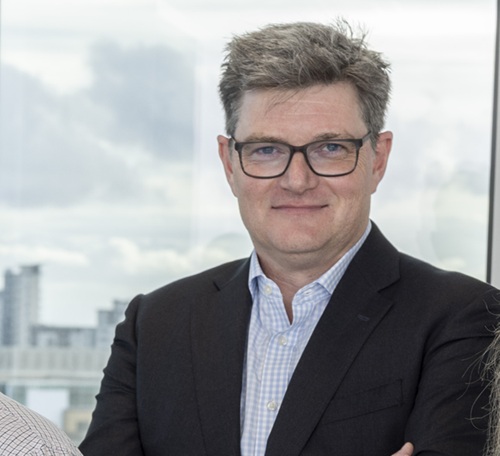
Simon Jones
CEO
Global Centre of Rail Excellence
When we talk about infrastructure, we often think in terms of transport connectivity; the things that help move people from A to B – roads, railways and bridges. But just as important is the economic infrastructure in a place that draws opportunity in – the investment, knowledge and skills vital to a thriving economy.
That is the thinking behind the Global Centre of Rail Excellence.
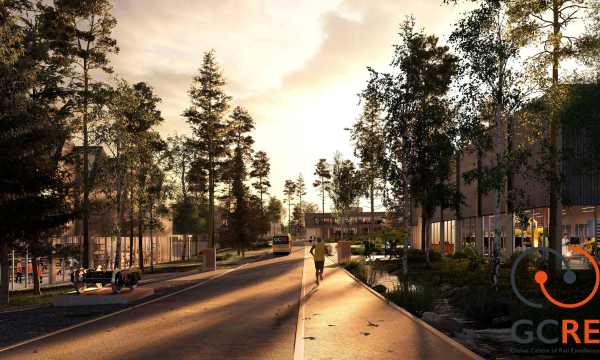
At its core, GCRE is not simply a rail project. It is an economic development platform, one designed to create a permanent, immovable asset that businesses from across the UK, Europe and beyond will actively choose to come to. And in doing so, it has the potential to reshape the economic future of Mid and South West Wales.
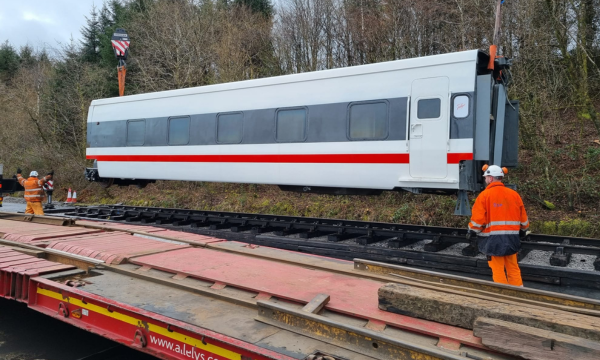
There is a clear and urgent need for what we are developing at GCRE. Today, the rail industry faces a fundamental challenge: there are few facilities in the UK where new trains can be tested before being put into service. Worse than this, there is no purpose-built site anywhere in Europe where problems with complex rail infrastructure and systems – the signalling, electrification, and telecommunications so important to modern projects – can be worked through before deployment.
We have seen all too painfully the consequences of that gap. Major projects such as Crossrail have faced significant delays and cost overruns because systems integration testing is done too late. In some cases, testing on projects has to be done on inadequate heritage railway lines; on live passenger railways or carried out overseas. All the while adding cost, complexity and time.
What we are creating in Mid and South West Wales is a strategic solution to that problem: a world-class research, testing and innovation environment where technology and systems can be developed, proven and refined before they are introduced into service.
But the real economic opportunity of GCRE goes far beyond this.
If you look at comparable facilities, particularly in the automotive sector, you see something interesting. The testing facilities themselves are only the beginning. Around it, over time, grows an exciting innovation cluster: R&D teams putting down local roots, supply chain partners themselves creating jobs, export-focused and innovation-led technology firms starting up and growing in the area. Companies actively choosing to locate close to high quality innovation infrastructure because they need to use it regularly.
That is the model we are pursuing.
The Global Centre of Rail Excellence will be a place where businesses come to test, but also a place where many will choose to stay. That is where the long-term economic value lies: in creating a cluster of innovation, sovereign capability and high-value employment that is anchored here in Wales.
The GCRE railway has the potential to create more than 1,100 jobs and a £300m GVA uplift to the local and regional economy over its first decade. Every £1 spent developing the GCRE project returns £15 in wider community, economic and rail industry benefit.
And once it is built, it cannot be moved. This is not footloose capital. It is not an investment that can shift with market conditions. It is a permanent asset for Wales, rooted in a specific place, creating sustained economic activity over decades.
That matters enormously for a region like Mid and South West Wales.
We are building this on the site of a former opencast mine, in an area that has been battered by deindustrialisation. Jobs have gone. Communities have been impacted. But where there is still a strong legacy of skills, of engineering capability, of industrial muscle memory.
What we have through GCRE is the opportunity not simply to replace what was lost, but to build for tomorrow; something that is aligned with the industries of the future.
Rail is central to that. It sits at the intersection of advanced manufacturing, digital systems, energy and net zero. It is an industry that is evolving rapidly, but does not have the infrastructure to move innovation on at a fast enough pace. One that requires exactly the kind of comprehensive testing and innovation capabilities that we are proposing.
The level of interest we have seen from industry, both in the UK and internationally, gives us confidence that this is a proposition the market understands and values. Businesses want to use this facility. Many will want to establish a permanent presence here. New businesses will be born around it.
The challenge, as with many infrastructure projects of this scale, is how we unlock it. Ahead of the rail project we are exploring with interested parties the opportunities the wider site offers – at 700 hectares the same as Gibraltar – as a location for complementary energy and data centre infrastructure. Several blue-chip companies have already expressed interest in this opportunity.
But to make the rail project work around it and unlock the bigger economic impact of a new innovation cluster requires policy and investment creativity and means working with our partners. Private capital is interested, but it requires certainty. And that is where government has a crucial role to play, not in funding everything, but in creating the conditions that allow the necessary private investment to flow.
If we get this right, the prize is significant.
We are not just building a test track. We are creating a new economic magnet for Wales, one that brings together innovation, investment and opportunity in a way that is both practical, grounded and long-term.
Opportunities like this do not come along often. The question is whether we are ready to seize it.
Simon Jones talks about this and more in the Business News Wales Economy and Infrastructure Wales podcast episode GCRE – Improving Transport and Rebuilding Prosperity. Listen to the podcast here.