A digital infrastructure programme is aiming to strengthen business growth and regional economic development by improving connectivity across parts of Powys and Ceredigion that risk being missed by commercial rollout plans.
The Growing Mid Wales Digital Programme forms part of the wider Mid Wales Growth Deal portfolio, jointly led by Ceredigion County Council and Powys County Council and funded by the UK Government and Welsh Government.
Its purpose is to improve digital infrastructure across the region, while also helping businesses adopt and make better use of technology. The programme is focused on complementing existing commercial and public investment rather than duplicating it.
The programme includes a Business Park Full Fibre to the Premises project, being delivered by BT. It will bring gigabit-capable broadband to 14 priority business parks across Powys and Ceredigion, with the rollout covering around 127 premises and other nearby premises also expected to benefit.
The project is targeting business parks not included in existing commercial or public rollout plans. The network will be open access, meaning businesses will be able to choose from a range of internet service providers rather than being tied to a BT retail product.
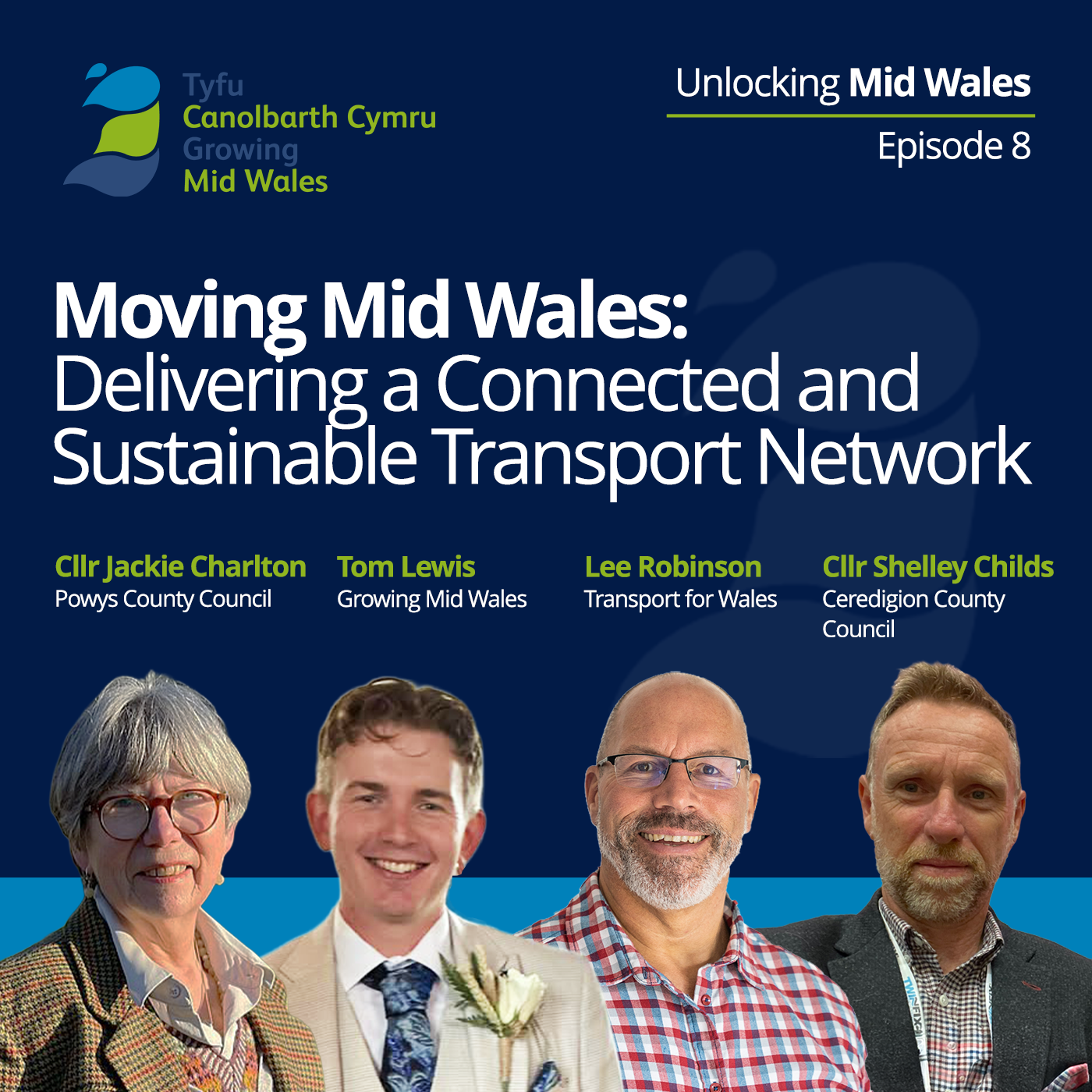
Speaking on Unlocking Mid Wales, the Growing Mid Wales podcast, Richard Anderson, Business Development Manager for Wales at BT, said the project was about giving Mid Wales businesses the same digital foundations available in larger urban areas.
He said many of the sites included in the project were among the hardest and most costly to reach, making public-private partnership important in ensuring firms were not left behind.
Alongside the infrastructure rollout, BT will deliver a six-week virtual digital skills accelerator programme for SMEs in Powys and Ceredigion. The programme will be led by industry experts and is intended to help businesses understand how digital tools can support growth, productivity and efficiency.
The podcast episode also heard about a second scheme, the LoRaWAN Stimulation Project, delivered with support from Antur Cymru. It is offering grants of up to £4,999, alongside hands-on guidance, to help businesses adopt low-power sensor technology.
Alex Matthews, General Manager of Telemat at Antur Cymru, said the technology was particularly useful in rural and large-scale environments because sensors could be used in places where power or Wi-Fi connectivity may be difficult.
He gave examples of a brewery in Aberystwyth which is now using a temperature sensor to reduce manual checks during the brewing process, agricultural businesses monitoring gates and water troughs and tourism and hospitality operators using sensors to understand energy use, lighting and occupancy.
Retailer Dr Jan Martin, owner of craft shop The Snail of Happiness in Lampeter, has used LoRaWAN footfall sensors for more than two years. The business combines sensor data with till information to understand patterns in footfall, conversion rates and the impact of town events.
Jan told the podcast:
“Being able to actually look at trends…can be so useful in terms of just making choices about opening hours.”
Dave Owen, Digital Programme Manager at Growing Mid Wales, said the programme was designed to support economic growth, business competitiveness and long-term regional resilience.
He said the challenges facing Mid Wales included topography and sparse population density, meaning no single programme would address every connectivity issue. The role of the Digital Programme is to help fill gaps where possible and ensure businesses across rural areas, towns and business parks had the opportunity to benefit from digital infrastructure and technology, Dave said.
Hear more on Unlocking Mid Wales, the Growing Mid Wales podcast here: