GUEST COLUMN:
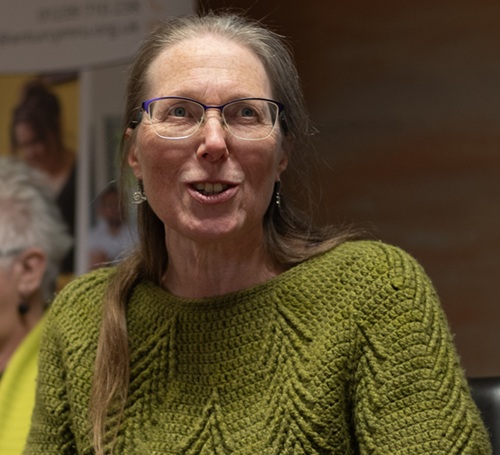
Dr Jan Martin
Owner
The Snail of Happiness, Lampeter

For a small high street shop, some of the most important business questions are also the most ordinary. When do people come in? What makes them stay? Which local events bring customers through the door, and which simply make the street look busier?
At The Snail of Happiness in Lampeter, we have always been interested in patterns. We are a small craft shop on the high street, and our business is perhaps a little unusual. We support the circular economy by selling pre-loved items, keeping things in use and encouraging people to enjoy making and mending. We want to help people keep items in circulation within the rural economy and within our town, reducing what goes to landfill while sharing the enjoyment that can come from making and repairing.
The name of the shop came from that idea. We called it The Snail of Happiness because we wanted to encourage people to do things slowly and enjoy the process. We have now been in Lampeter for just over four years, and like many small businesses, we are always thinking about how to understand our customers better and make sensible decisions about the way we operate.
About two years ago, we were offered the opportunity to use LoRaWAN technology, and we have had sensors in the shop since then. It came at a useful point for us. We had received a grant which helped us buy some equipment, including a till which allowed us to record all sorts of information we had not been able to capture before, including sales and stock data.
When the opportunity came to use LoRaWAN, we thought footfall sensors would allow us to combine till data with information about how many people were actually coming into the shop. That would let us look at conversion rates and start to understand whether there were patterns in how people used the shop.
The original sensor was a straightforward beam that recorded people coming in and going out. Later we were offered the chance to have another sensor installed, which collects more detailed data. It sits on the ceiling and is intended to detect things such as height, so it can help distinguish between a dog and a person, or between a child and an adult.
What the sensors have already helped us do is look at questions that are genuinely useful to a small business. If there is an event in the town, does it have a positive or negative effect on our footfall? If footfall changes, does that translate into sales? Is it worth opening specially for particular events, or does the data suggest otherwise?
Those are practical questions. They affect time, staffing, planning and energy. In a small business, every decision has a cost attached to it, whether that is money, time or simply capacity. Having better information makes it easier to make those decisions with more confidence.
Both my partner John and I have backgrounds in science, so we are perhaps more comfortable with numbers, data and patterns than some people might feel at first. Even so, I do not think this kind of technology is only for people who are already confident with tech. Any business owner has to understand numbers, customers and conversion rates if they want to develop their business. The technology simply gives you another way of seeing what is happening.
For example, we tend to be quiet on a Saturday afternoon. If the data supports that, we can think differently about how that time might be used. It could be a useful time to invite people into the shop who prefer a calmer environment, including neurodivergent customers who may not want too much stimulation.
That is what I have found most valuable about this process. It is not technology for the sake of it. It is about asking what you want to know, what problem you are trying to solve and what might make running the business easier.
The LoRaWAN Stimulation Project, through Growing Mid Wales, is offering other businesses in Ceredigion and Powys the chance to explore similar opportunities, with support available to help them understand what the technology can do and how it might apply to their own operations.
For us, LoRaWAN has given us a clearer picture of how people interact with the shop, and that helps us make better decisions about the business we are enjoying building.
Dr Jan Martin speaks about this and more on Unlocking Mid Wales, the Growing Mid Wales podcast. Listen here: