




GUEST COLUMN:
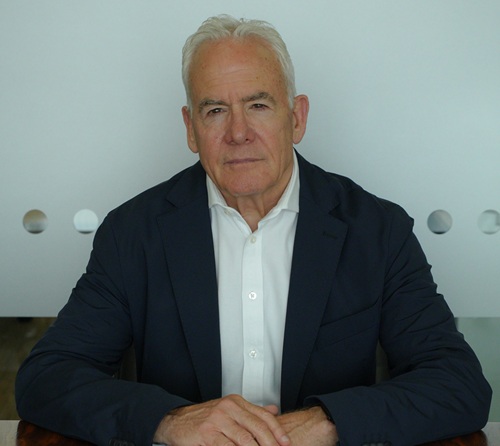
Frank Holmes
Chair
CCR Investment Board
For too long, the UK has treated infrastructure and industrial investment as a cost rather than a strategic weapon. The result has been slow productivity growth, fragile energy security and regional economies left waiting for capital that never quite arrives.
That era is ending. Across the UK a new investment logic is emerging – one that recognises that energy, manufacturing, digital infrastructure and skills are not optional extras but the foundations of national competitiveness.
Nowhere is this shift more visible than in the Cardiff Capital Region (CCR), where the core purpose is to drive economic wellbeing. We talk much about ROI – but this is a bi-product and an important one at that, since it can help seed additional ideas, new opportunities and funds, delivering dividends back to communities.
Nevertheless, the conditions are being assembled for long term institutional capital to flow at scale. Pension funds, infrastructure investors and private debt providers are not being asked to subsidise decline. They are being offered the opportunity to invest in the next phase of industrial renewal.
We are not alone. Consider the remit of the National Wealth Fund and the new local government Welsh pension pool.
The mission for stronger, fairer and greener growth must reach areas where there are more entrenched issues around low competitiveness and where viability gaps persist.
Regenerating CCR’s Northern Valleys goes back a century, and billions have been spent via the WDA and other bodies. A new, more long-term strategic framework is required through seed and enabling funding via a combination of grants and commercial finance to subsidise the gap funding necessary for the development of strategic employment sites and premises. The A465 corridor comprises of eight local authorities which collectively need to engage on driving this transformation and make the case for investing where there is market failure.
This is not about moral obligation. It is about economic self-interest.
One of the most significant changes taking place in the CCR is cultural. The region has reacted to the reality of unsustainable grant dependency through a different approach to accessing finance and some professional capital deployment. Returns are recycled. Assets are built. Balance sheets matter.
This evergreen investment approach mirrors how serious investors operate. Capital is deployed into productive assets. Income flows back. That capital is reinvested again. Over time a permanent investment engine is created and self-sufficiency takes root.
This matters for pension funds and private capital because it reduces political risk, increases project continuity and creates scale. It signals that the region understands how to behave as a long-term investment partner rather than a short-term funding recipient.
Successful investment regions do not rely on single flagship schemes. They build diversified portfolios. CCR has started to do exactly this with subsidiary, professionally managed funds, formal investment scrutiny and co-investment partnerships.
Its portfolio spans digital infrastructure, industrial property, clean energy assets, innovation funds, manufacturing facilities and strategic redevelopment sites. This creates resilience. Stable infrastructure style assets sit alongside higher growth innovation investments. Debt backed projects balance equity exposure. Shorter cycle developments complement long horizon energy assets.
For institutional capital this matters. Diversification reduces volatility and creates predictable long-term returns. It also allows capital to remain deployed locally rather than exiting after a single project completes.
Capital flows to capability. CCR has focused on building sector depth rather than chasing headlines.
Advanced manufacturing is now anchored by a globally significant compound semiconductor cluster. This is not theoretical innovation. It is export driven production feeding power electronics, renewable systems, aerospace platforms and next generation digital hardware. This cluster creates sustained industrial demand for energy, logistics, testing facilities and specialist real estate.
Creative industries provide a different kind of strength. CCR has become one of the UK's most important production hubs outside London. Studios, broadcast facilities and postproduction infrastructure create fast delivery projects that generate jobs immediately and attract international spending into the region. These assets also anchor long term place making and regeneration.
Digital and data infrastructure binds everything together. Fintech, cyber security, artificial intelligence and fibre networks enable productivity across the economy. Manufacturing becomes smarter. Creative production becomes faster. Energy systems become more efficient. Digital infrastructure is no longer a support service. It is core economic infrastructure.
Energy is the foundation beneath all of this. Without secure, affordable clean power none of these sectors scale. This is why CCR has placed energy at the centre of its local and inward investment strategy.
The next industrial era will be built on electricity. Data centres, manufacturing plants, electric transport and automation all require constant reliable power. Regions that control energy infrastructure will control industrial growth.
The CCR is positioning itself accordingly.
Former coal fired power station sites are being transformed into clean energy hubs. Battery storage facilities at Uskmouth are providing grid resilience and flexibility. Large scale redevelopment sites, such as Aberthaw, are being prepared for generation and storage whilst hydrogen production is anticipated to be established in Bridgend.
This is not symbolic. These are real assets with long operating lives and stable revenue potential. They match the investment profile that pension funds and infrastructure capital actively seek.
Few regions in Europe possess a natural energy asset comparable to the Severn Estuary. Tidal energy offers predictable generation, long asset lifetimes exceeding 100 years and baseload power output of several gigawatts. Unlike wind and solar it operates on known cycles that can be forecast decades in advance.
The development of tidal lagoons creates multi-billion-pound construction programmes, permanent operational assets and domestic supply chains. It also delivers energy security benefits that extend far beyond Wales, a magnet for inward investors.
This is the kind of project that defines national infrastructure. It is also precisely the type of asset class long term institutional capital was built to finance.
Renewable generation alone is not enough. The winners of the energy transition will be those who control flexibility and storage.
Investment fails without skills. CCR has recognised this by integrating universities and colleges directly into its industrial strategy. Further education is integral given the presence of colleges in every part of the region.
Engineering talent feeds manufacturing. Creative graduates supply media production, and the sector supports opportunities for the foundational economy. Data specialists support fintech and artificial intelligence. Energy engineers enable grid expansion and renewable energy deployment.
This is not academic alignment. It is workforce planning at regional scale. For investors this reduces labour risk and improves long term asset performance.
Large infrastructure and industrial projects do not exist in isolation. They generate procurement pipelines, supply contracts and commercial opportunities for local enterprises, particularly those that wish to grow beyond S to M in stature.
Small and medium sized enterprises benefit from access to capital, long term customer relationships and export pathways. Engineering firms, digital providers, construction specialists and creative studios all plug into the wider investment ecosystem.
This is how regional economies compound. Capital deployed into anchor projects creates secondary growth that multiplies economic returns.
CCR is not attempting to compete on cheap labour or short-term incentives. It is building structural advantage.
Professional investment governance. Diversified portfolios. Sector depth. Energy control. Skills integration.
These are the foundations that institutional capital looks for.
As the UK moves deeper into the energy transition and industrial renewal, capital will concentrate in regions that can deploy at scale, manage risk and deliver long term value. CCR is positioning itself to be one of those regions.
This is not about catching up. It is about leading.
If Wales is serious about re industrialisation, then the blueprint is already being written. The question is no longer whether capital will come. The question is whether we are prepared to move fast enough to seize it.