




Coed Cadw – the Woodland Trust in Wales – is calling on councils and public bodies to make towns and cities fairer for everyone by using a Tree Equity Score to identify where urban trees are needed most.
Urban communities require trees as essential infrastructure to support public health and climate resilience, it says, adding that communities with low tree cover are disproportionately affected by environmental hazards such as surface water flooding during heavy rainfall, and heat exposure during heatwaves.
Coed Cadw says:
- Achieving Tree Equity in towns and cities provides numerous benefits to public health, water, air quality, climate and community wellbeing.
- Neighbourhoods with higher tree cover can be up to 4 °C cooler during heatwaves.
- Tree-rich areas experience around 30% lower nitrogen dioxide (NO₂) pollution than those with little canopy.
- According to the Woodland Trust’s State of the UK’s Woods and Trees 2025 report, over 80% of Welsh neighbourhoods assessed have inadequate tree cover.
- Across Wales, the benefits of trees are not shared equally. Affluent neighbourhoods have more than twice as many trees per person as less affluent areas.
“Tree Equity is about fairness,” said Jacinta Challinor, Tree Equity Lead at Coed Cadw. “Everyone deserves to live in a healthy neighbourhood, but the Tree Equity Score makes it clear that the benefits of trees are currently not evenly distributed – and it gives public bodies a practical way to put that right.”
The Tree Equity Score uses national data to reveal how tree cover correlates with key quality of life indicators like income, health, and heat vulnerability. It provides an easy-to-use digital map that invites everyone in, so that planners, councillors and community groups can prioritise where tree planting will have the greatest social and environmental impact.
Over 1,000 Welsh neighbourhoods have now been given a Tree Equity Score, covering around 65% of the population. The score ranges from 0 to 100. The lower the score, the greater priority for tree planting; a score of 100 means the neighbourhood has enough trees.
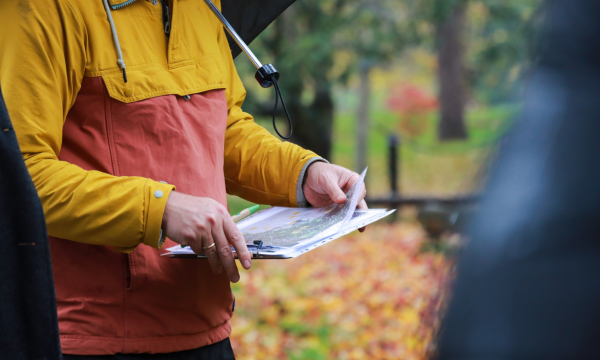
To bring the issue of Tree Equity to life, Coed Cadw recently hosted an immersive event – Exploring Tree Equity in Cardiff. The guided walk through the city’s ‘green divide’ took participants from Cardiff Council from Bute Park through contrasting neighbourhoods, showing how tree cover affects health, wellbeing and climate resilience.
Ben Geeson-Brown, Principal Sustainability Officer at Cardiff Council, said:
“Cardiff Council is proud to support the Tree Equity Tool as a vital instrument for creating a fairer, greener city. Coed Caerdydd, which is the council’s urban forest programme, has already been using this tool to prioritise areas low scoring areas; and we are also looking to roll out training to other members of staff who would benefit from using the tool in their work, particularly colleagues in design, neighbourhood renewal and planning. Trees are not just an environmental asset – they are essential for health, wellbeing, and resilience. By using the Tree Equity Tool, we can identify areas where canopy cover is lacking and ensure that every community benefits equally from cleaner air, cooler streets, and richer biodiversity. This approach helps us tackle climate change and social inequality together, making Cardiff a city where nature is accessible to all.”
Jacinta added:
“Within the capital city of Cardiff, areas of high tree equity with leafy, shaded streets in affluent areas can be found just a short distance from areas of low tree equity with very few trees, higher exposure to heat and pollution and increased vulnerabilities for the communities that live there. By using the Tree Equity Score, our ask is that local authorities can prioritise planting where it’s needed most – creating a greener, fairer Wales for generations to come.”