






Welsh homeowners are significantly more supportive of replacing Council Tax and Stamp Duty with a single annual property tax than those living in London and the South East, according to new research from North Wales estate agent Cavendish.
The survey of more than 2,200 adults asked respondents whether they supported proposals, similar to those being explored by Prime Minister Andy Burnham, to replace the current system with an annual property tax based on the value of a home.
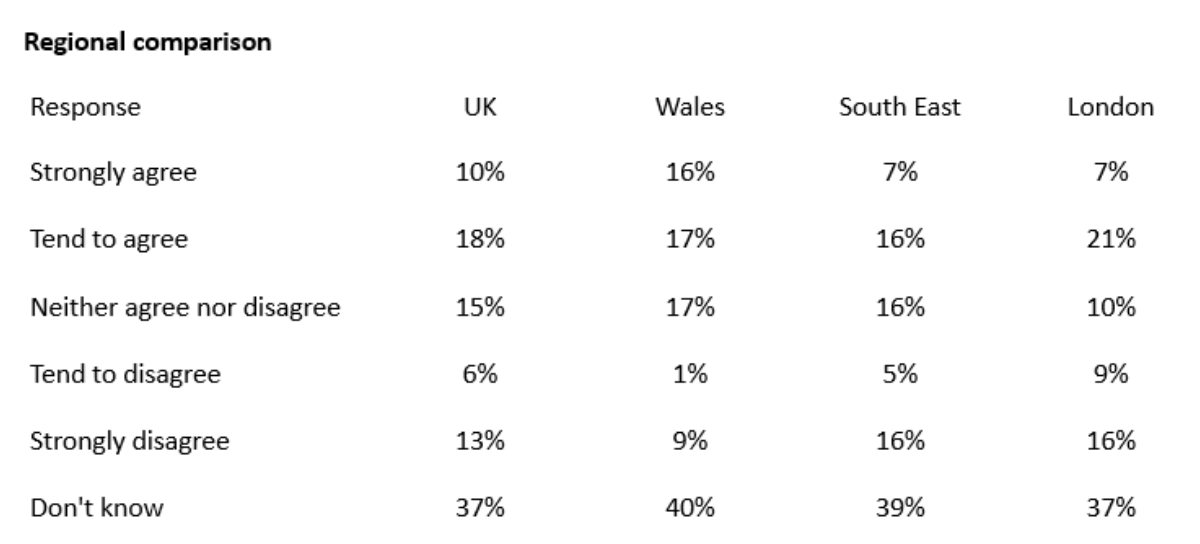
While 33% of people in Wales support the proposal, which would be a devolved matter, support falls to 23% in the South East and 28% in London.
The strongest backing comes from Wales and the North West, where 16% strongly agree, compared with just 7% in both London and the South East.
Conversely, outright opposition is greatest in the regions with the country's highest property values – 16% of respondents in London and the South East strongly oppose the proposal, compared with 9% in Wales.
Simon Leadbetter, marketing adviser to Cavendish and Founder of Voice of the Agent, said:
“The regional differences are striking. Wales is considerably more supportive of reform than the South East and London.
“Although this survey wasn't designed to explain why people hold these views, the pattern mirrors regional house prices. In areas where homes are generally less expensive, people appear more willing to consider an annual property tax. In higher-value markets such as London and the South East, support is more muted and opposition is stronger.”
David Adams, Managing Director of Cavendish, said:
“What is most significant is that more than a third of people still don't know what they think. That suggests the debate is still in its infancy, and many homeowners will be urgently seeking more information so they can work out the potential financial costs to them.”
Cavendish was established in 1993 and has offices in Mold, Ruthin and Chester.