




GUEST COLUMN:
Simon Stephens
Head of Networks (Wales)
Mind Cymru

As a nation, we’re increasingly worried about the cost of living, with 75% of Welsh respondents in Deloitte’s state of the state survey claiming it as their number one priority for action. And, while we’re so often drawn to the financial implications of this, the cost of living is having a very real impact on the mental health of many people too.
Financial difficulties can make people’s mental health worse, and worsening mental health can make it difficult for people to escape the challenging situations they find themselves in.
Mind’s annual Big Mental Health Report has shown that people living with a mental health problem such as depression or anxiety earn on average £8,400 less than those living without one. It has also found that poor mental health contributes towards people falling out of the workplace or needing to reduce their hours for example – not only impacting a person’s financial security, but ultimately our economy too.
And yet, whilst the link between mental health and a person’s finance, employment, or housing situation is more understood, we still need to take more decisive action to help benefit people’s lives.
Why this matters now
In the third sector, there’s a very real understanding of the two-way link between the cost of living and people’s mental health, and the support needed to help people who are struggling.
And yet, the Charity Commission’s 2025 Sector Risk Assessment shows that charities are under significant pressure themselves, with over 42% now spending more than they earn. This situation is impacted by increased workforce costs and contracts remaining static against inflation.
Where there is hope, there is community
In April 2025, the Welsh Government outlined an ambitious ten-year mental health strategy, setting a bold ambition to address wider social and welfare issues within Wales’ communities, and take these forwards as a cross-government commitment.
Meanwhile, many third sector services across Wales are already delivering open and person-centred support. This includes 15 local Minds in Wales providing mental health support, alongside advice, support and services to help people to find or stay in work or housing, and work towards financial security. All of which underpin mental wellbeing and hold significant economic value.
This includes a Welsh Government funded In Work Support Service from Mid and North Powys Mind in partnership with Brecon and District Mind, which provides flexible, instant access support, helping hundreds of people experiencing mental health problems stay employed.
A Tenancy and Supported Living Service from Mind in Gwent works with people at risk of losing their homes. It has supported more than 200 people in the last year to maintain their tenancy and live independently, including 69 classed as homeless.
And in the west, Pembrokeshire and Carmarthenshire Mind works with Hywel Dda University Health Board to support young people engaged with the early intervention psychosis team, helping them to return to and stay in work, education or training.
Behind this support, volunteering remains all too often the unsung hero, helping to provide services at a time where sector-wide funding remains tight. In the last year alone, volunteers in Wales’ network of local Minds provided around £670,000 worth of volunteer hours.
The true value of volunteering also extends well beyond the financial, by supporting volunteers themselves to develop valuable skills that can enhance their own employment prospects. Volunteering can reduce social isolation and loneliness by building social connections by creating a sense of purpose and also improves mental health too.
What needs to happen next?
It’s important to acknowledge that people are outlining strategic ambitions in Wales that are more focused on the two-way link between people’s financial situation and their mental health.
But tangible action and investment is still needed for this to be achieved, starting with a recognition of the true value of third sector services. Not only do we help people address social factors impacting their mental health, but we contribute to the wider economic climate in Wales too.
To help bring this into perspective, almost half of all local Mind services in Wales (48%) are focused on community wellbeing and resilience. This includes housing and tenancy support, peer support groups and community groups as well as information and advice around welfare, benefits, rural information and money advice.
The economic environment is possibly the toughest it has ever been for third sector organisations, and yet the need for their services has arguably never been greater.
As we look to 2026, it would seem there is real opportunity to grow productivity in Wales. But preventative, community-based services that are already working to tackle root causes of poverty must be included in this – for the sake of everyone’s wellbeing, but also our economy too.
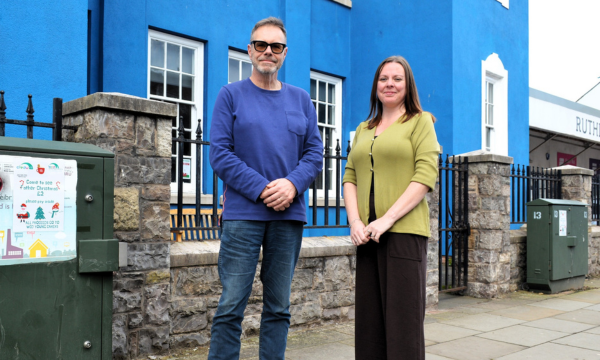
Simon Stephens is Head of Networks (Wales) at Mind Cymru, holding strategic relationships with 15 local Minds, their CEOs and Chairs of Trustees across Wales, working together towards a more impactful, influential, and sustainable future.
Simon has worked in the charitable sector for over 16 years, and during this time has worked with a range of sectors including, health, education, justice, and the arts.