Welsh businesses are weighing how to maintain resilience while planning for growth in 2026 as a Senedd election and fast-moving geopolitical developments continue to shape confidence and investment decisions.
Business leaders told the Business in Focus podcast From Startup to Scaleup that resilience had become the default operating state for many firms, forged through the financial crisis, Brexit and the Covid pandemic. However, they warned that survival alone is no longer enough, with prolonged uncertainty increasingly influencing hiring, investment and growth planning.
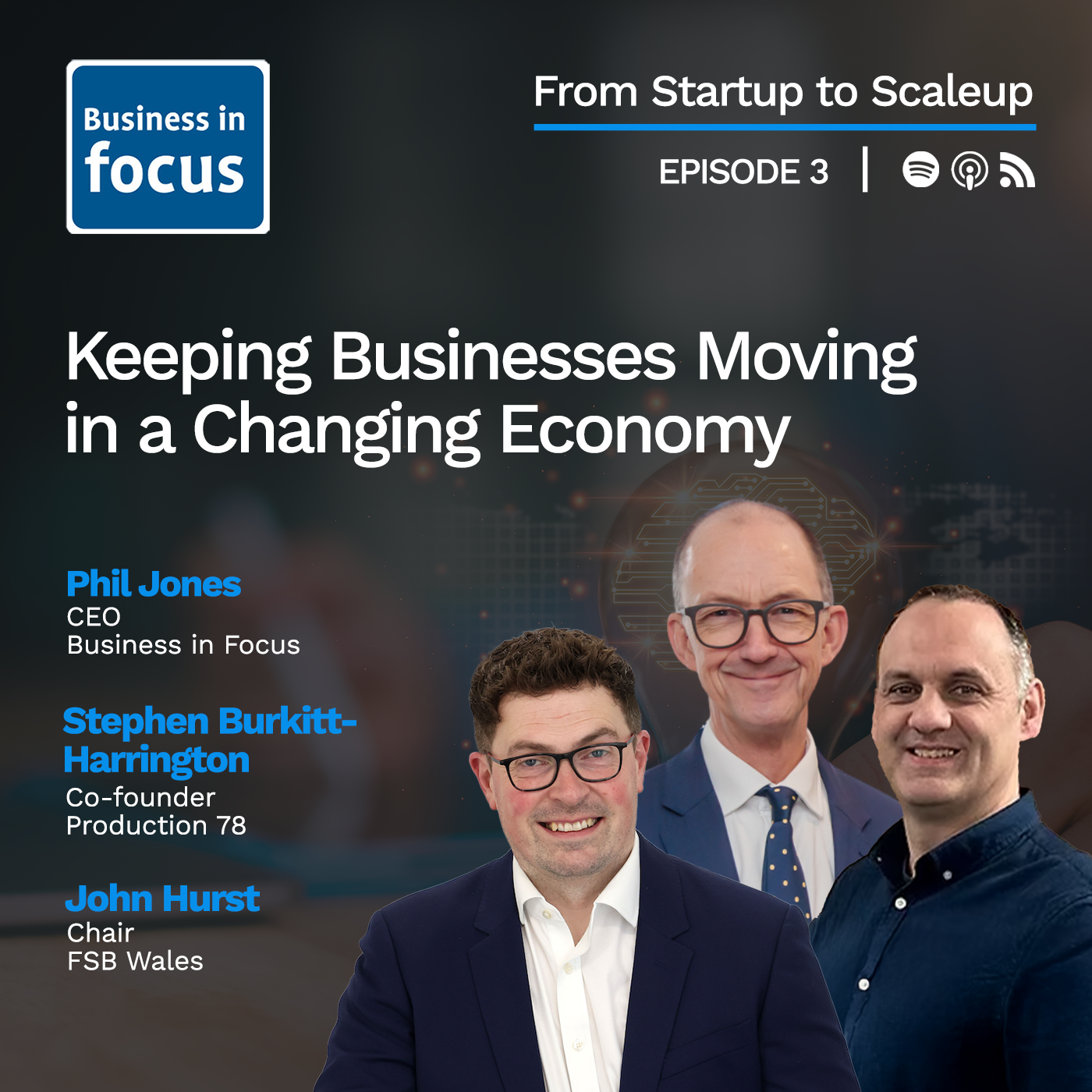
Federation of Small Businesses Wales chair John Hurst said resilience was often treated as a catch-all term, when in reality it describes businesses absorbing stress in altered circumstances. Drawing on feedback from FSB members, he said business owners remain resilient but are increasingly running firms in spite of the economic environment rather than being supported by it.
John said many small business owners are passionate about what they do and want to grow, but are stuck in a holding pattern, focused on survival rather than thriving. He pointed to confidence levels among SMEs as being lower than during the pandemic, reflecting ongoing pressure from rising costs and continued uncertainty.
With a Senedd election approaching in May, John said the purdah period and any delay in post-election decision-making risked creating a leadership vacuum. He warned that this can quickly affect capital investment, recruitment and growth planning.
The podcast heard that FSB Wales is calling on the next Welsh Government to treat the 2026 to 2030 Senedd term as a “small business term”. John said businesses are looking for a clear economic plan and steady funding over that period to provide certainty and close what many small firms feel is a gap between themselves and decision-makers.
From a business support perspective, Phil Jones, chief executive of Business in Focus, said SMEs need to understand resilience in practical terms rather than as a single abstract quality. He described it as a combination of conceptual preparedness, moral resilience within teams, and physical capability through systems, skills and resources.
Phil said businesses should be alert to global developments as well as national and devolved factors, as both threats and opportunities are shaped by capability and intent. While he acknowledged that election cycles and public-sector procurement delays can affect planning, he cautioned against businesses waiting for certainty before acting, as this can become a brake on growth.
He encouraged firms to continue investing in people where possible, think carefully about how they plan to grow or diversify, and seek partnerships to build capability. Phil also highlighted the role of Business Wales, funded by Welsh Government and delivered in part by Business in Focus, as a route for SMEs seeking advice, tendering support and access to wider networks, particularly around public-sector supply chains.
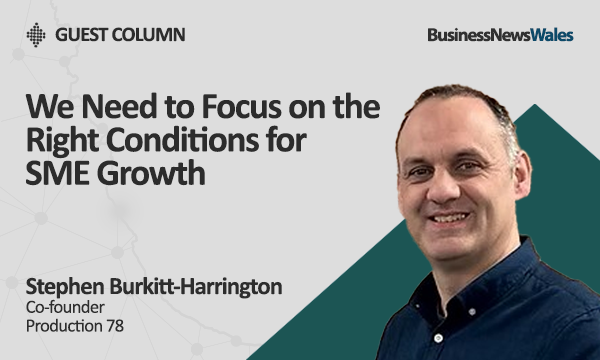
For creative businesses, the impact of prolonged uncertainty has been particularly acute. Stephen Burkitt-Harrington, co-founder of Production 78, said his business has weathered multiple shocks over its 25-year history, including severe disruption during the pandemic when events were unable to take place for an extended period.
Stephen said any business that has survived recent years has demonstrated resilience but warned that resilience alone does not make businesses sustainable or enjoyable to run. He described seeing firms in his supply chain operating month-to-month, paying wages and rent until they are no longer able to continue.
While Production 78 has continued to invest cautiously in recent years, Stephen said the business is now ready to enter a new phase of growth. However, he said investment decisions are being carefully weighed against ongoing uncertainty around policy direction and future requirements on businesses.
“Certainty is the key thing,” Stephen said. “Give us something we can get behind and get on with.”
Across the business community, leaders said resilience remains essential, but confidence and clarity will play a decisive role in whether firms choose to invest and grow through 2026.
Hear more in the Business in Focus podcast From Startup to Scaleup here.