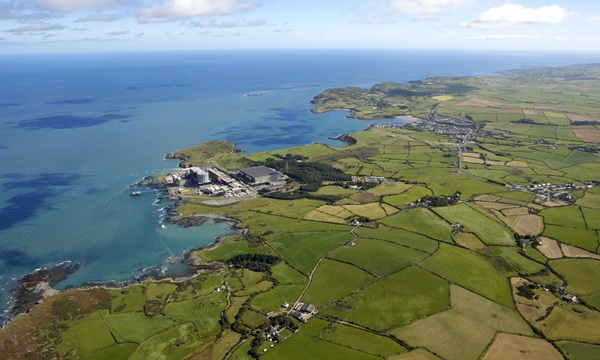

A mound of ash is not usually where conversations about innovation begin. But at the Aberthaw Power Station site the pulverised fuel ash left behind by decades of coal-fired power generation is too significant to be treated simply as material to be managed, moved or disposed of.
Pulverised fuel ash, or PFA, is the fine ash produced when pulverised coal is burned in a power station. At Aberthaw there is an estimated 18 million tonnes of it, held in a 50-metre-high mound across the former power station site.
For CCR Energy, which assumed control of the decommissioned power station in 2023, the work now is to understand whether the material can be used in construction, minerals recovery or other low-carbon and advanced applications, and how the right mix of academic, industrial and public sector expertise can help establish what is technically possible and commercially realistic.

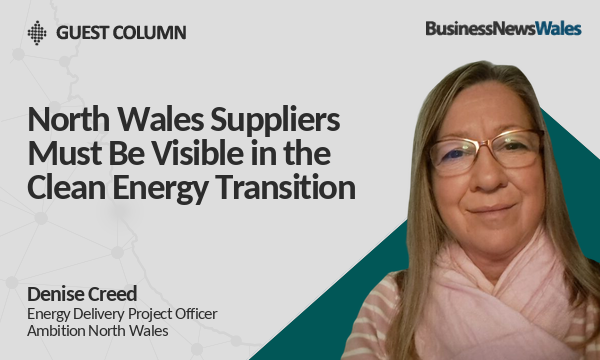
My role at CCR Energy is to lead on innovation, and PFA is one of the key areas we have been focusing on. The material has many potential uses, but the real work is in bringing those possibilities into a structured process. That means working with regional universities, businesses and the public sector to look at novel uses, but also at the commercial routes that would allow those uses to be developed responsibly.
My own background is in civil engineering. I spent 20 years as a lecturer at Cardiff University before moving into innovation management, and that combination is useful in a project of this kind. There is a strong scientific and technical element to the work, but there is also a need to understand how ideas move from research into practical use, and how academia, industry and the public sector can work together rather than in separate conversations.
We have already carried out initial analysis of samples taken from the surface of the ash mound, covering the top three metres. That work found rare earth elements and critical minerals, alongside a long list of other minerals. The results provide an important starting point for further discussion with organisations interested in the material.
Those results do not, on their own, prove the commercial route. Finding something in the ash is not the same as proving it can be extracted, processed and used at scale in a way that is affordable and practical. Some technologies may exist in a laboratory, or at a low technology readiness level, but the challenge is to understand whether they can be developed into something that works beyond controlled conditions.
That is where partnership working becomes central. Universities can bring specialist research capability, testing facilities and scientific depth. Businesses can bring market understanding, technology, investment and routes to commercialisation. The public sector can help create the conditions for longer-term collaboration and keep a focus on the wider regional benefits, including skills, jobs and low-carbon economic activity.
The ash at Aberthaw needs to be considered from all of those angles. Specialists naturally focus on their own area, whether that is materials science, minerals extraction, processing, regulation, construction, skills or markets. But the opportunity sits between those areas. Each time we bring people together, we learn more, because one part of the conversation often changes how another part of the opportunity is understood.
The timing of the work is also useful. While further analysis is being carried out, and while CCR Energy continues to build a clearer picture of the material, we have some space to explore lower technology readiness ideas. We do not have to decide too early that the whole resource must go down one route. It may be possible to use some of the ash in established markets while continuing to test higher-value or more innovative uses.
And it is this balance which could be important. If revenue can be generated from existing markets, some of it could potentially help support earlier-stage research and innovation. Public funding routes, including innovation funding, often require match funding, and CCR Energy is a small team. We can bring time, expertise, access to the material and access to the site, but some cash support would help develop research projects that may unlock longer-term value.
The site itself could also have a role beyond supplying material. We have been approached by companies with demonstrators that need somewhere to be trialled. Aberthaw could potentially support that kind of activity if we develop an innovation hub approach, where organisations can come together to test, learn and understand whether their ideas can move beyond theory.
This fits with the wider ambition for Aberthaw. The former power station is not only a place where material has been left behind; it could become a place where legacy industrial resources are tested, understood and repurposed for future use.
At Aberthaw the circular economy becomes a practical exercise. Can a material once seen primarily as a by-product be used in ways that support construction, manufacturing, minerals recovery or other emerging sectors? Can research, demonstrators and commercial markets develop alongside each other? Can South Wales use its industrial inheritance to support new low-carbon activity?
Aberthaw gives us the material, the site and the scale; the answer to the question will come as a result of evidence, collaboration and patience.