GUEST COLUMN:
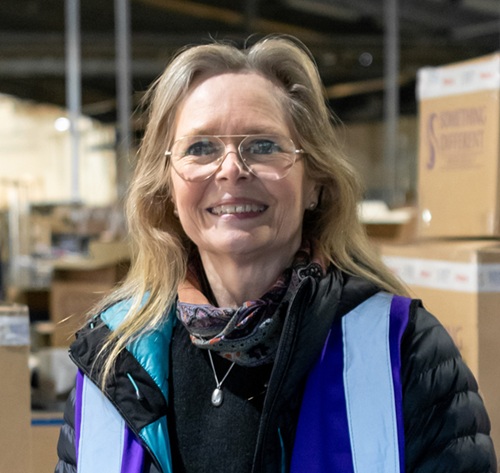
Jane Wallace-Jones
CEO
Something Different Wholesale

Running a small business can sometimes feel like you are operating at one remove from the bigger economic conversations. You hear talk of GDP, GVA and national productivity figures and it is easy to assume that those numbers are shaped elsewhere – by large corporates, major infrastructure projects or government policy – rather than by firms like yours or mine.
I think that is a mistake. Small businesses can and do make a meaningful contribution to productivity and economic performance. The challenge is that, when you are busy running a business day to day, it is not always obvious how that contribution is made, or where to focus your efforts to improve it.
At Something Different Wholesale, we design giftware in-house at our warehouse in Swansea. We bring new ranges to market constantly, have products manufactured overseas, import them into the UK and distribute them to a wide range of retail customers, all on a B2B basis. It is a fast-moving, very practical operation, with around 80 people working across multiple departments.
Productivity, for us, is not an abstract concept. It shows up in whether orders are despatched on time and in full, how smoothly containers are unloaded, how effectively customer enquiries are handled and how motivated our teams feel at the end of a working day. We measure productivity across the business, but the measures differ by department. In the warehouse, for example, output is about orders despatched and customer satisfaction. In customer services, it is about volumes of calls and live chats, and how issues are resolved.
Much of our operation is manual. We do not have a robotic warehouse. That means people matter enormously – not just their physical capacity to do the job, but their mental health, motivation and sense of ownership. One of the most important lessons we have learned is that productivity improves when people understand the bigger picture. If the team knows that the goal today is to get 400 orders out of the door, and they can see progress towards that goal, they are far more engaged than if they are simply told to complete individual tasks in isolation.
That transparency also creates space for improvement. Our teams regularly suggest better ways of working, and when those ideas are adopted, motivation increases again because people can see that they are shaping how the business operates. Productivity, in that sense, is as much about culture and communication as it is about targets and KPIs.
Like most business owners, I am commercially focused. We have to be profitable. Working more efficiently gives us more room to reinvest, whether that is in automation, in AI or new ways of doing things. The point of improving productivity is not to sit on higher margins. If you do that, you will not survive. You have to reinvest in order to grow, and growth matters not just for individual firms, but for the wider economy too.
The Wales Productivity Forum has created a toolkit which helps you step back from the business. Owner-managers can become very tunnel-visioned, simply because there is always so much to do. The toolkit does not tell you what to think, but it prompts you to ask questions you might otherwise overlook. Sometimes it is enough to spark a line of thinking that leads to small, practical changes.
One example sticks with me because it shows how easily productivity gains can be hidden in plain sight. We have 20 packing benches in our warehouse. At the end of the day, everyone tidies their bench, restocks consumables and sweeps the floor. Watching this, it struck me that all 20 people were walking back and forth across the warehouse to fetch the same items. We moved consumables closer and put brushes at the end of each bench. When we timed it, we saved 20 minutes a day – just one minute per person. Over a year, though, that added up to 87 hours.
On its own, that saving looks modest. But it changed how I thought about productivity. If one small business can save that much time by moving a broom, what happens when you scale that thinking across millions of firms? Suddenly, the link between small, everyday decisions and national productivity figures does not feel so distant.
This is where I think many small businesses struggle. It can be hard to see how your actions connect to GVA or GDP, so productivity feels like someone else’s problem. In reality, it is the accumulation of countless small improvements that shifts those numbers.
People remain at the centre of all of this for me. There is one of me and many more of them. Investing time in communication, valuing teams properly and giving people ownership over how work is done all feed directly into productivity. So does taking time out of the business to think strategically, rather than getting lost in detail.
You do not need to change the world overnight. Productivity improvements often come from small, thoughtful steps taken consistently. If more businesses felt able to see themselves as part of the bigger picture, and to act on that belief, the collective impact would be far greater than many realise.
Find the Wales Productivity Forum’s business toolkit here: https://www.productivity.ac.uk/regions-nations/wales-regional-forum/toolkit/
Jane Wallace-Jones talks about this and more in the Unlocking Wales’ Productivity Potential podcast episode Unlocking Hidden Business Productivity Potential. Listen to the podcast here.