The compound semiconductor cluster in South Wales continues to expand its economic contribution, now supporting £436 million of Gross Value Added (GVA) and 3,140 jobs across Wales.
An independent annual report for CSconnected, produced by the Welsh Economy Research Unit (WERU) at Cardiff University, assesses the cluster’s performance in 2025 and tracks its development since 2020, when a UK Research and Innovation’s Strength in Places Fund (SIPF) programme began.
In 2025 the cluster directly employed 1,914 people, with a further 1,226 jobs supported across Wales through its wider economic footprint. Total Welsh employment linked to the cluster increased from 2,748 in 2024 to 3,140 in 2025, a 14% year-on-year rise.

The sector generated £267 million in direct GVA, with an additional £169 million supported elsewhere in Wales, bringing total Welsh GVA impact to £436 million, up 19% on last year.
This growth has been achieved during a period marked by global semiconductor volatility and continued pressure on UK manufacturing employment, CSconnected said.
Professor Max Munday of Cardiff University, lead author of the report, said:
“The compound semiconductor cluster continues to show resilience and sustained growth. While other parts of manufacturing have faced considerable challenges, this sector has expanded employment, increased productivity and strengthened its wider economic contribution. The modelling shows both direct growth and a deepening of economic effects across Wales.”
Exports remain central to the cluster’s contribution. In 2025, companies recorded £480 million in exports, accounting for over 90% of industrial output and representing approximately 2.8% of total Welsh goods exports. Annual sales reached £531 million.
Because most sales are made internationally, the cluster brings significant external revenue into Wales. This supports further activity across supply chains and local services.
Over the past five years, export intensity has remained above 90%, ensuring that sector growth translates into sustained economic value for Wales.
Average salaries remain high at approximately £66,000, well above the Welsh average, with more than 95% of employment full-time.
Since 2020, the cluster has expanded significantly:
- Total Welsh jobs supported by the cluster have risen from 2,085 to 3,140 (+51%)
- Total Welsh GVA supported by the cluster has increased from £172m to £436m (+153%)
These figures demonstrate not only growth in core activity, but a strengthening of the cluster’s wider economic footprint across the region, CSconnected said.
While the cluster’s core footprint is in South Wales, its economic influence extends across the UK.
In 2025, activity linked to the cluster supported:
- £567 million of GVA across the UK economy, up from £434 million in 2024 (+31%)
- 4,392 jobs across the UK
Around 77% of this GVA remains in Wales, up from 59% in 2024, showing that a growing share of value is being retained within the Welsh economy.
Each direct job in the cluster now supports a further 1.29 jobs across the UK, contributing to a total of 4,392 jobs nationwide.
2025 marked the completion of the original UKRI Strength in Places funding period for CSconnected. Over five years, the programme has strengthened collaboration between industry and academia, supported investment and accelerated cluster growth.
Professor Wyn Meredith, Chair of CSconnected and the SIPF programme, said:
“Five years on from the launch of the Strength in Places investment, the results are clear. Employment has grown, productivity has increased and the cluster’s economic impact has nearly doubled. We’ve built a stronger and more connected cluster, with real economic impact across Wales.”
CSconnected’s ambition to 2030 includes:
- Growing cluster revenue to £1 billion
- Expanding skilled employment to 6,000 people
- Capturing greater value across the regional supply chain
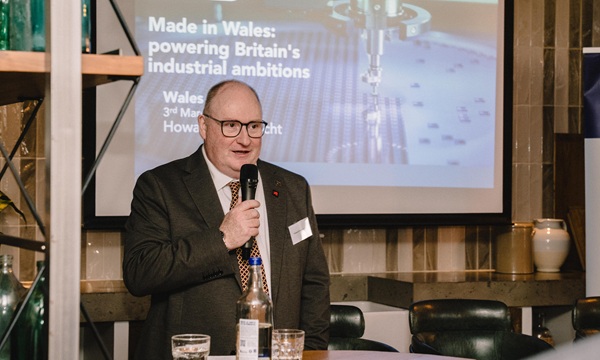
Howard Rupprecht, Managing Director of CSconnected, said:
“The progress we’ve seen over the past five years gives us a strong foundation for the next phase. Our focus now is on scaling capacity, strengthening regional supply chains and developing the skills needed to support long-term growth. The opportunity ahead is significant, and we want to ensure Wales captures as much of that value as possible.”
Initiatives such as the Local Innovation Partnership Fund (LIPF) and the South Wales Investment Zone are expected to support this next phase, particularly in areas such as supply chain development, skills and regional value capture.