
In the food and drink manufacturing sector, change is a constant. Nowhere is that more apparent than in the area of consumer demand. The food innovation landscape is evolving rapidly, and businesses need to stay relevant by responding to what consumers both want and need.
This means thinking not only about less processed and more natural foods, but also about local supply and the health challenges facing our population.
In Wales, more than 60 per cent of the population is either overweight or obese. That raises important questions about the role of food manufacturers in supporting healthier outcomes. It’s not just about following trends, but about addressing nutritional needs. This could be through fortification, functionality, or responding to the wider shift towards more plant-based diets in support of the sustainability agenda.
At BIC Innovation, through our work with the Nutri-Wales cluster, we bring academic research and industry together to collaborate on solutions. Funded by the Welsh Government, our work focuses on how food and drink businesses can respond in a practical and commercially viable way. One of the key aspects of this is understanding how to communicate clearly with consumers. That includes messaging around health claims and nutritional content – making sure it is both engaging and evidence-based.
Innovation is taking many forms. One of our current areas of focus is around fortification and functionality. We’re supporting businesses to secure funding that helps them explore how to use local crops, processed naturally, to retain nutritional content and incorporate those ingredients into everyday products. The goal is to support better health outcomes across the population, particularly by addressing micronutrient needs. In Wales, there are some excellent examples of businesses using ingredients like nettles and indoor-grown mushrooms. These are approaches that not only meet nutritional aims, but that can also be scaled effectively within Wales, supporting local economies.
Sustainability and long-term business viability are now closely linked. Meeting legislative requirements and working towards Wales’ net zero objectives by 2030 are part of this, but there are also broader benefits. We have worked with growers to examine the difference between importing produce and growing it locally. Through life cycle analysis, we can provide businesses with insight into the environmental and economic trade-offs involved. Often, sustainable options come with an additional cost, so we also support businesses in thinking through how to manage that. This includes working with the public sector to show the broader benefits of sustainable supply chains.
A recent example is the Veg in Schools project, which has shown that an additional three pence per meal can allow schools to provide fresh, local, sustainable fruit and vegetables. These are small changes with potentially wide-reaching implications, particularly when they influence policymaking and public procurement.
Much of our work is about insight. We regularly undertake horizon scanning to understand what best practice looks like, not only in Wales but around the world. A recent project for the Future Generations Commissioner’s Office looked at the policy levers available to better support food businesses. By feeding our findings into reports and strategies, we can help shape the conditions that allow the sector to move forward in line with the Wellbeing of Future Generations Act.
Looking ahead, we expect consumers to remain time-poor but more demanding. There will likely be continued interest in convenience, but with an added expectation of naturalness and functionality. Consumers will be looking for whole foods, cleaner labels, and more purposefully processed products. That brings challenges for manufacturers in terms of ingredient use and product development. Innovation will be needed to meet expectations while keeping products affordable and accessible.
We also anticipate a growing emphasis on health, well-being and personal nutrition. As consumers turn to self-diagnosis and personalised food choices, there will be questions around how those decisions affect public health more broadly. At the same time, companies will need to explore ways to make better use of waste streams, diversify their offering, and embrace circular economy principles. That will require new skills and new approaches if it is to be scalable and effective.
For food and drink manufacturers in Wales, these trends present both a challenge and an opportunity. Understanding what consumers want – and need – is the first step. Using local supply chains and working collaboratively to deliver innovation will be essential for building a resilient and future-fit sector.
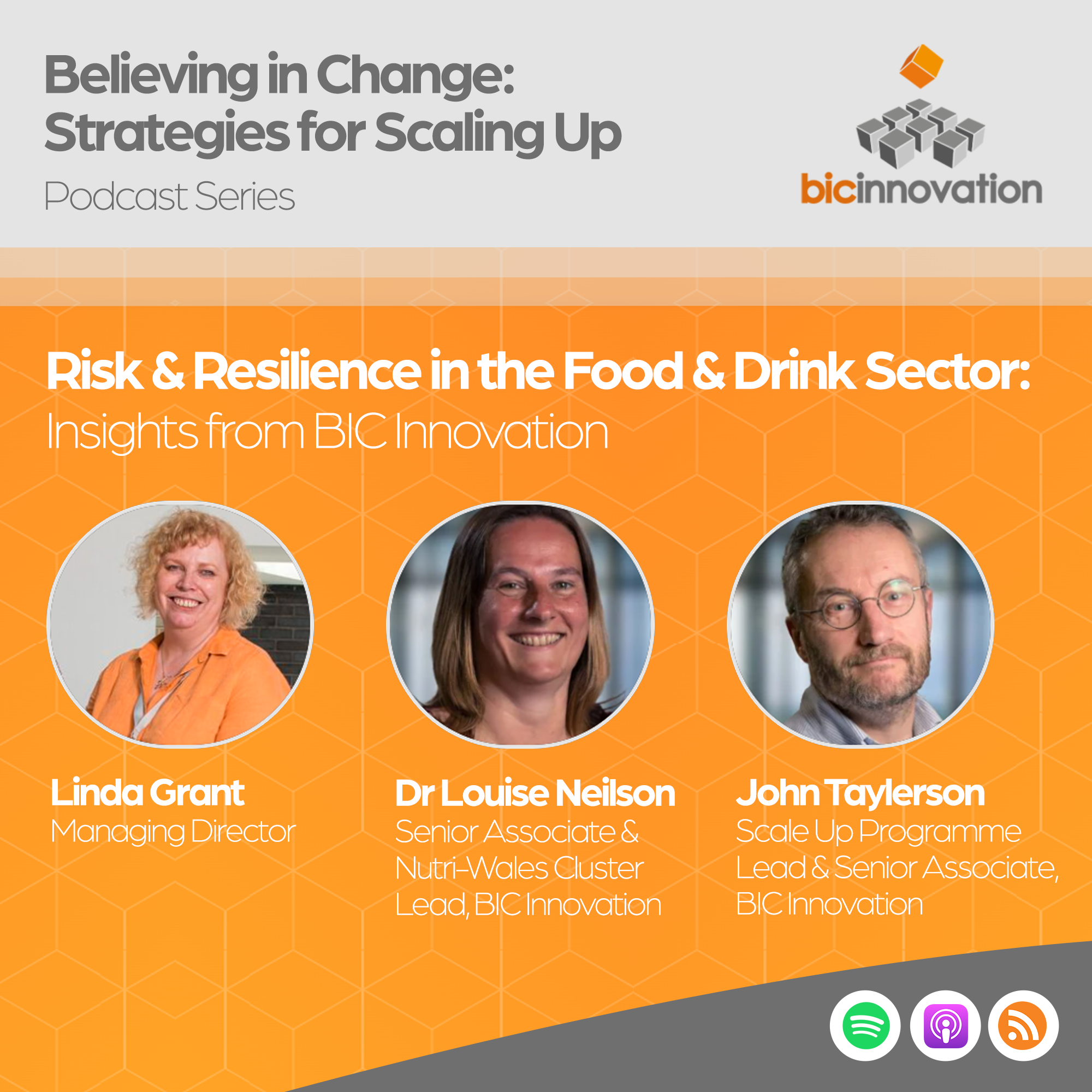
Dr Louise Neilson talks about this and more in the BIC Innovation podcast episode Risk and Resilience in the Food & Drink Sector – Insights from BIC Innovation . Listen to the podcast here