Public sector organisations across Wales are being urged to build sustainability into programmes from the very start, with design specialists warning that early decisions shape both the environmental and economic impact of major projects for years to come.
The Business News Wales Government and Not for Profit podcast heard how sustainability is still too often treated as an add-on rather than something to be embedded at the earliest stage of design and procurement.
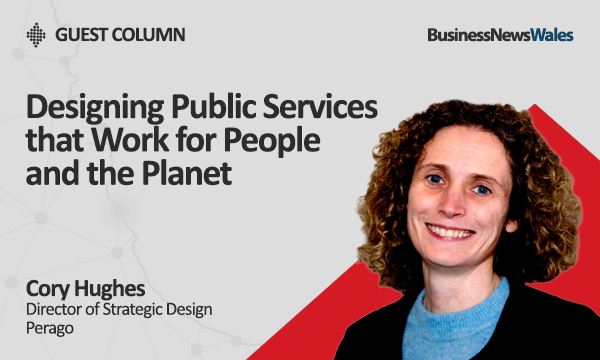
Cory Hughes, Director of Strategic Design at Perago, has seen this play out repeatedly in public services. She said many organisations have made progress in developing digital and technology functions, but the skills and resources needed to apply design consistently are not yet universal.
While most public bodies say they recognise the value of design, she noted that confidence in applying Design for Planet principles remains uneven. Cory told the podcast that designers should now treat digital decisions as climate decisions, arguing that public services need a broader mindset that looks beyond the experience of users alone. She said that quantifying the full environmental impact of digital systems remains challenging, which is why early collaboration between IT teams, climate specialists and citizens is essential.
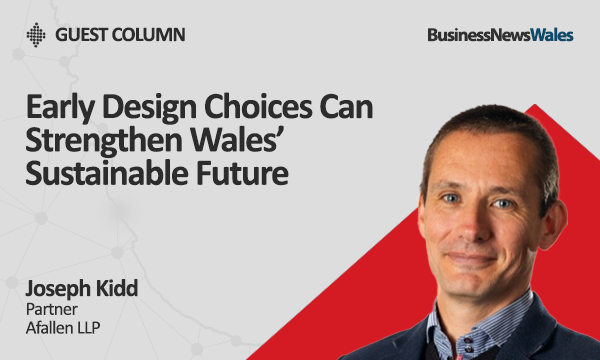
Joseph Kidd, partner at Afallen LLP, has taken a similar view from the perspective of large-scale energy and infrastructure projects. Much of his work has focused on identifying sites, assessing environmental impacts and involving a wide range of stakeholders to shape project design.
He said this approach is at the core of the guidance produced by the Design Commission, which emphasises the importance of embedding circular economy and sustainable development principles up front. He has seen these benefits first-hand through local area energy planning across Wales, where local authorities, housing providers, environmental organisations and the National Grid pooled their expertise to develop holistic decarbonisation strategies. Joseph said this type of early engagement helps create more resilient and realistic plans.
He also pointed to the recent floating offshore wind leasing round in the Celtic Sea, where the Crown Estate was encouraged to consider social value as part of the competitive process. Joseph noted that this resulted in commitments from all three consortiums involved, including on local content and apprenticeships. In his view, it demonstrates how early design decisions can influence supply chains and economic benefit over the long term.
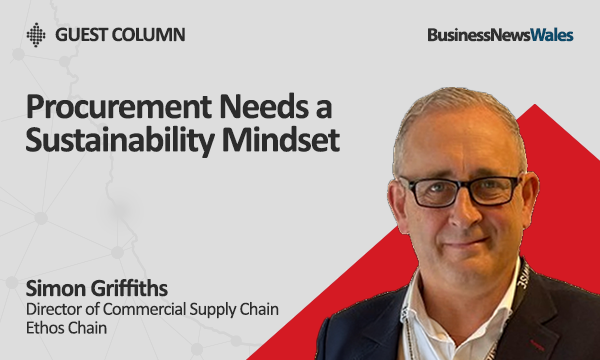
Supply chain visibility is where Simon Griffiths, Director of Commercial Supply Chain at Ethos Chain, believes Wales could gain significantly by adopting a Design for Planet-first approach. Simon said that aligning the Well-being of Future Generations Act with modern supply chain tools creates opportunities to strengthen the Welsh economy and reduce carbon emissions.
Public sector spending in Wales amounts to more than £8 billion pounds a year, and he argued that mapping demand against the capability of Welsh suppliers could support more local procurement while remaining fully compliant with procurement regulations.
Simon said much of the current challenge lies in long and opaque supply chains, where the focus rarely extends beyond the Tier 1 contractor. He has worked on projects where examining Tiers 2, 3 and 4 has uncovered Welsh suppliers with the capability to contribute but who need early visibility or modest support to participate. He also pointed to examples overseas where digital tools are already being used to provide full provenance and carbon data for construction materials, giving organisations the information they need to make more sustainable choices.
For all three specialists, procurement culture remains a key barrier. Joseph said short-term thinking around price continues to steer decision-making, making it harder to choose sustainable products or approaches. Simon described similar issues, noting that evaluation weightings still prioritise price even when regulations no longer require it. Both said that changing procurement decision-making would have the biggest impact over the next five years, increasing social value and helping Wales benefit more fully from major projects.
Hear more in the Government and Not for Profit podcast episode Design for Planet. Listen here.