


The Welsh Government has published its new Programme for Government, setting out the priorities and commitments that will shape its work over the next four-year Senedd term.
Published following the Senedd election on 7 May, the Programme for Government sets out what ministers intend to deliver before Wales next goes to the polls.
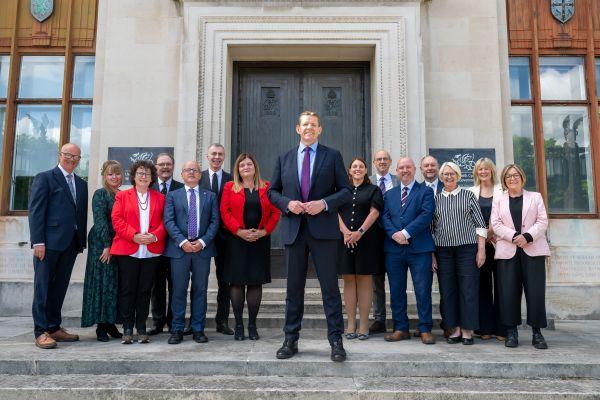
Launched by First Minister Rhun ap Iorwerth, the programme identifies a series of headline priorities for the new administration, including bringing down NHS waiting lists, helping families with the cost of living, creating good and well-paid jobs, raising educational standards, tackling child poverty and standing up for Wales.
A significant part of that agenda is focused on the economy and the Government's ambition to generate and retain more wealth within Welsh communities while addressing regional inequalities.
The economic programme includes plans for a national productivity mission, a new National Development Agency, reform of the Development Bank of Wales, greater public-sector procurement from Welsh businesses, a new approach to skills and major changes covering energy, transport, digital technology and regional development.
Here is a breakdown of the main economic commitments contained within the Programme for Government.
National Productivity Mission
Increasing productivity will become a cross-government priority, with a target of halving the productivity gap between Wales and the rest of the UK within ten years.
A new Economic and Fiscal Commission will be established to set targets, improve data collection and measure progress, with government activity considered against its contribution to productivity.
Backing Welsh Businesses
The Government will establish a new, business-led National Development Agency operating at arm’s length from ministers. Its remit will include helping Welsh companies grow, innovate and export while attracting inward investment and increasing well-paid employment.
The Development Bank of Wales will also be reformed, with a particular emphasis on financing the growth of medium-sized businesses.
Keeping Public Spending in Wales
With Welsh public bodies spending more than £11 billion annually on goods and services, procurement is being positioned as an economic development tool.
The Government will aim to increase procurement from Wales-based suppliers towards 70%, introduce a measure of Welsh economic value from procurement and use purchasing power to develop sectors including Welsh timber. A Fair Work First approach will also apply to public grants, loans and contracts.
Small Businesses and High Streets
Business rates will be reformed and rebalanced to provide greater support to hospitality, leisure and retail businesses.
The Town Centre Taskforce will also explore ways of revitalising town centres, including bringing empty properties back into use as social housing.
Community Wealth
Plans include legislation creating a community right to buy, making it easier for communities to take ownership of local assets.
Additional specialist support and access to Development Bank finance will be provided for co-operatives, employee-owned companies and social businesses.
Skills
A new Skills Strategy for Wales will follow a national skills audit, with the aim of aligning education, vocational training, qualifications and apprenticeships more closely with the needs of employers and the future economy.
The Government also plans action towards a financially sustainable tertiary education system and intends to maximise opportunities arising from the UK's return to Erasmus+.
Digital and AI
A new Digital Strategy will focus on digitisation, innovation and public-service transformation.
AI is specifically identified as an economic opportunity, with the Government seeking to encourage safe, ethical and cyber-secure adoption while improving access to superfast broadband.
Transport and Connectivity
The Wales Transport Strategy will be refreshed, alongside a new pipeline of rail projects and further integration between bus and rail.
Commitments include bus franchising, simpler fares and pay-as-you-go ticketing, a renewed EV strategy, improved Menai Strait and South East Wales road resilience, a North-South coach service and continued work on Cardiff Airport and Welsh ports.
Rural Wales
Agriculture, food, fishing and rural communities feature prominently.
The Sustainable Farming Scheme will continue to evolve, alongside a new Bovine TB Plan, Animal Welfare Plan, Rural Development Strategy and National Food Strategy. The Government also proposes making rural proofing of spending and policy programmes a legal requirement.
Energy Independence
A National Energy Strategy will map Wales's future energy requirements and infrastructure needs, supported by a Renewable Energy Sector Deal.
Trydan Gwyrdd Cymru, Ynni Cymru and the Welsh Government Energy Service are also set to be brought together into a strengthened national energy company, with increased community ownership of renewable generation among its objectives.
Tourism
The Government will review the 182-day threshold applying to holiday accommodation, assess existing measures covering second homes and holiday lets, and review whether Visit Wales remains the appropriate model for supporting and promoting the tourism industry.
Planning and Regional Development
Finally, the planning system is set for reform, alongside an overhaul of spatial planning and the creation of a National Development Framework for Wales.
The stated aim is to replace fragmented regional approaches with a more integrated framework connecting planning, infrastructure and economic development. A new Marine Planning Framework is also proposed.
Taken together, the economic programme places productivity, Welsh business growth, domestic procurement, infrastructure and retaining wealth within Wales at the centre of the Government’s approach for the four-year Senedd term.
The First Minister said:
“This Programme for Government is our blueprint for change. It sets a new ambition for Wales to realise our vision of a modern, thriving, ambitious and confident nation.
“For too long, silo working has stood in the way of progress. This new government is taking a different approach. By bringing imagination and innovation to the way decisions are made and priorities are set, we will work across government departments – not just within them – to address the greatest challenges facing our society today.
“Our focus is on turning our early action into lasting results – by getting waiting lists down, ensuring a more sustainable future for our NHS, helping families with the cost of living, creating good jobs, raising standards in our schools and tackling child poverty.
“We will be uncompromising in standing up for Wales and demanding fairness from Westminster, making the case for empowering the Senedd with the tools that will enable us to be bolder and more radical in how we change our citizens' lives for the better.
“We were elected to get Wales moving after years of drift and stagnation. That remains our mission.”
Russell Greenslade, CBI Wales Director, said:
“Firms grappling with high operating costs and ongoing global economic uncertainty will welcome the clarity provided by a four-year Programme for Government and its focus on boosting productivity, driving investment and creating opportunities across Wales.
“A planning system that is too slow and under-resourced remains one of the biggest barriers to growth. To unlock investment and deliver the housing, energy, transport and industrial projects Wales needs, businesses require greater capacity, clearer policy and faster decision-making. While the proposed Skills Strategy for Wales has the potential to create a skills system that better meets the needs of business, reform of apprenticeships and wider training provision is also essential to give firms the confidence to invest further in developing their workforce.
“The appointment of a panel of respected business leaders, chaired by Jonathan Lewis, to help shape the proposed National Development Agency is an important step towards ensuring its success. Ultimately, the test of the new agency will be its ability to deliver. Businesses do not need more strategies or reviews; they need faster decisions, investment unlocked and barriers to growth removed.
“With innovative businesses, world-class educational institutions, abundant natural resources and a strong strategic position for clean energy, Wales has the foundations to succeed. Business stands ready to work in partnership with the Welsh Government to turn this programme into tangible economic growth over the course of this Parliament.”
John Hurst, FSB Wales Chair, said:
“This Programme for Government sets a welcome direction and shows real ambition to unlock the potential of the Welsh economy. The priority now must be turning these positive commitments into practical delivery that businesses can see and feel on the ground.
“The commitment to establish a new, business-led National Development Agency offers a key opportunity to simplify Wales's complex economic landscape and improve direct access to business support. Similarly, planned reforms to planning, business rates, and tourism support have great potential to cut costs, delays, and uncertainty for small firms.
“Increasing procurement spend within Wales is a welcome goal, yet its true value lies in ensuring a greater share of contracts goes directly to local small businesses. Likewise, applying fair work criteria to funding must be done pragmatically so smaller firms aren't shut out by complex administrative requirements.
“The ultimate test will be whether these proposals help more small businesses start, sustain, and scale. That will only happen if the everyday realities of running a small business shape how this strategy is rolled out from day one.”
Sara Faye, Head of Policy and Communications at Crisis in Wales, said:
“We welcome the First Minister’s commitment to a Housing First, trauma‑informed approach to homelessness.
“This commitment comes alongside similarly significant ambitions to boost the supply of social homes and effectively implement our new, transformative homelessness legislation. With thousands of households experiencing homelessness each year, this action can’t come soon enough.
“We look forward to working with the Welsh Government to ensure that the Housing and Regeneration strategy is able to support and monitor success across this range of connected and important ambitions that will collectively ensure everyone in Wales has the safe, affordable home they need.
“This Government has set out a clear ambition to deliver for the people of Wales. This must be met with strategic thinking, transparency around delivery, and a relentless focus on reducing homelessness each year.”