




A chance encounter on a train – and an unexpected introduction from a magazine – sparked a scientific partnership that has now spanned more than two decades and reached the heights of Mount Everest.
For Professor Bryn Hubbard, of the Centre for Glaciology at Aberystwyth University, the relationship with Robertson Geo began by chance.
“I was travelling back to Aberystwyth, picked up a magazine and it introduced me to Robertson Geo and its televiewer,” he said.
“I had no idea this technology even existed.”
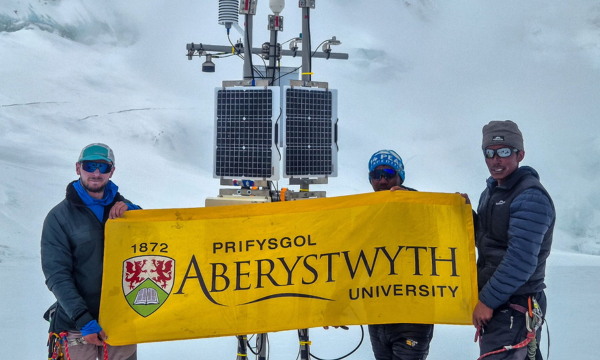
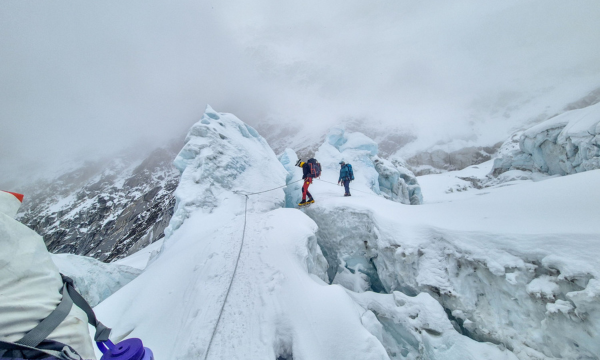
That discovery would prove transformative and culminated in one of the most ambitious glaciological expeditions ever undertaken when Professor Hubbard led a team to the Khumbu Glacier on Mount Everest, deploying the company’s technology at 6,660 metres above sea level.
The expedition, part of the NERC-funded ‘Losing their Cool’ programme, used a lightweight Robertson Geo televiewer system via a portable Mini Winch to collect high-resolution borehole images alongside core samples and meteorological measurements.
Working in oxygen levels less than half of that available at sea level, with temperatures dropping below -25°C at night, the team relied on the firm’s instrumentation – requiring no modification to operate in extreme cold – to deliver results where conventional equipment would have failed.
Dr Matthew Peacey, who took part in the expedition, said the performance of the equipment was critical.
“When you're working at that altitude, every piece of kit has to work first time. Robertson Geo's technology did exactly that – reliably, in some of the most hostile conditions on Earth,” he said.
“It really changed everything,” Professor Hubbard added.
“The televiewer enabled us to see inside glaciers in unprecedented detail. Robertson Geo has played a huge part in that journey.”
The Everest project is the pinnacle of a collaboration stretching back to the early 2000s, when Robertson Geo's High Resolution Optical Televiewer (Hi-OPTV)® was first introduced to glaciology.
Over more than 20 years, the business has supported fieldwork across the Arctic, Antarctic, Andes and Himalayas, supplying the Hi-OPTV® alongside winches, probes and downhole cameras, including on previous Himalayan missions in 2017 and 2018.
The latest results are already reshaping scientific understanding. Preliminary findings show unexpectedly warm ‘firn’ temperatures alongside clear evidence of melt and refreezing processes, while televiewer data revealed internal ice slabs and lenses, offering crucial insight into glacier structure and deformation.
The stakes are high. Between 1977 and 2010, Himalayan glaciers lost around 24% of their area and 29% of their volume. These glaciers supply freshwater to more than 10% of the world's population, and scientists now warn the region may be approaching “peak water” – the point at which meltwater begins to decline.
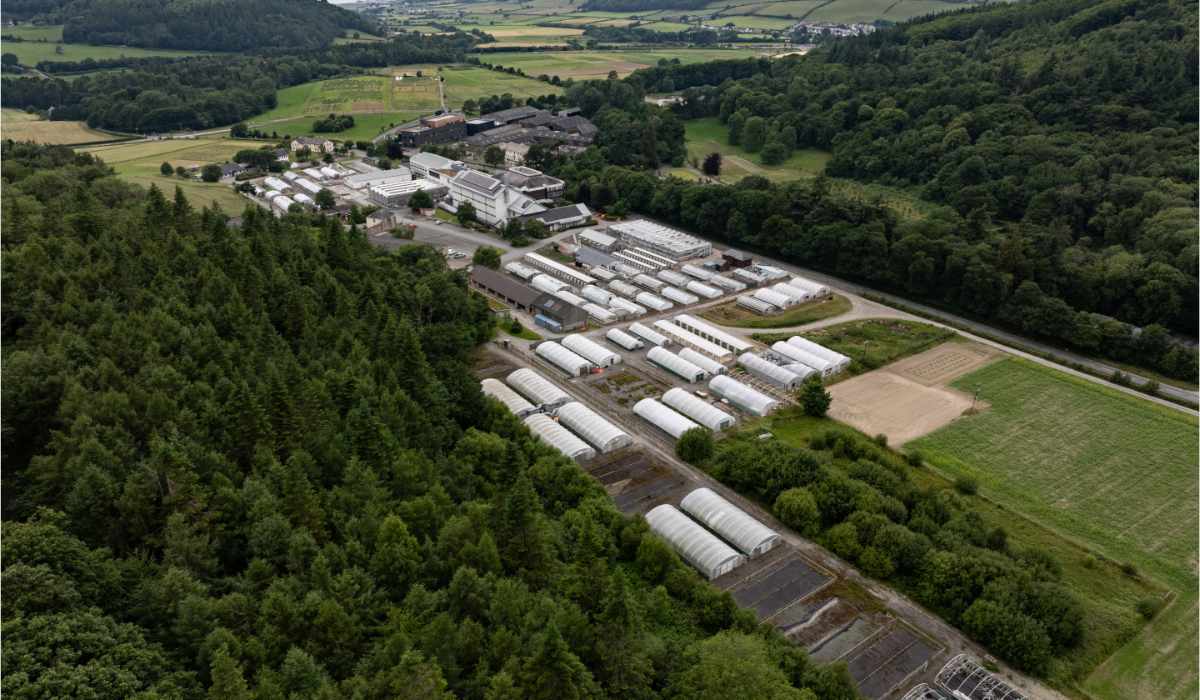
Robertson Geo – based in Conwy, the US and Hong Kong – exports 95% of its products and operates in more than 160 countries.
Managing Director Simon Garantini said the company was proud to support research with such far-reaching implications.
“We've built a strong partnership with Professor Hubbard's team over many years. Seeing our technology perform at the extremes – and contribute to critical climate science – is incredibly rewarding.”
Further Himalayan expeditions are planned for 2026 and Professor Hubbard is heading to Greenland this summer, again with Robertson Geo.