Projects being developed in Mid Wales could help unlock new ways to decarbonise rural economies while supporting jobs, cutting costs and strengthening local energy resilience.
The Whole System Research and Innovation for Decarbonisation (WSRID) programme is now entering its second phase, shifting the emphasis from early concepts to building, testing and refining solutions in real-world rural settings. Funded by the Welsh Government and delivered through the Climate Innovation programme, with regional coordination by Growing Mid Wales, Phase 2 funding is enabling four projects to begin prototype development and live demonstrations across farms, villages, business sites and transport networks.
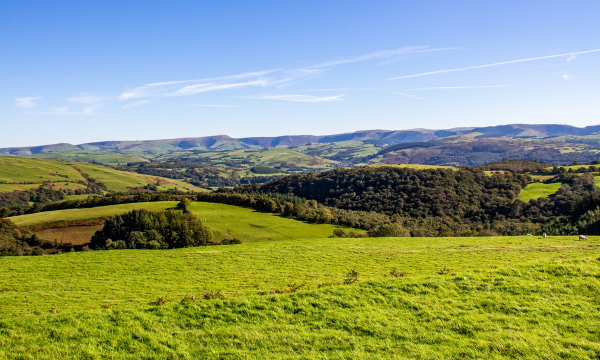
The programme takes a place-based approach, using evidence from Local Area Energy Plans and Regional Energy Plans to target innovation where it is most needed. In Mid Wales, those plans highlight agriculture and forestry as accounting for around 59–61% of territorial carbon emissions.
Unlocking Mid Wales, the Growing Mid Wales podcast, heard how one of the projects moving forward is led by Water to Water, which is developing a free-to-use digital tool designed to help dairy farmers assess how on-farm microgrids could meet their own energy needs. The project builds on Phase 1 work that showed three Mid Wales farms could potentially operate off-grid using a mix of renewables, storage and fuels such as hydrogen.
Rather than constructing a single physical demonstrator, the Phase 2 focus is on creating a scalable tool that allows farmers to explore options themselves, without the cost and complexity of consultant-led studies. The tool is being piloted with farms in Mid Wales, with the aim of creating a pipeline of projects that could later move into delivery. The project is working with First Milk, alongside technical partners, to ensure the tool reflects practical farm operations.
Another project, led by Lafan CYF in partnership with Coleg Sir Gâr and Coleg Ceredigion, is focusing on how surplus nutrients from intensive livestock farming could be used to generate energy while reducing environmental pressure. The project is developing a mobile slurry dewatering process that can operate across multiple farms, producing a solid feedstock that can be transported to a central facility.
The intention is to generate energy and produce biochar, rather than returning digestate to land that is already nutrient-rich. By removing water at source, the approach aims to reduce transport requirements and relieve pressure on land and waterways, while creating a model that could attract longer-term private investment. The colleges are supporting the practical development of the technology, while engagement is under way with utilities and other partners to understand how the system could operate at scale.
HARVEST, led by the Centre for Energy Equality, is testing how communities themselves could play a more active role in generating, managing and sharing low-carbon energy. Phase 2 will see solar and battery systems installed in homes, new developments and community facilities, all connected through a “social virtual power plant” that allows assets to be managed collectively.
The project will also test local energy trading models, enabling producers to sell electricity within their community and households to access power at lower costs. The aim is to assess not just technical performance, but whether such models are socially and financially viable, and whether they can generate surplus value that communities choose how to reinvest.
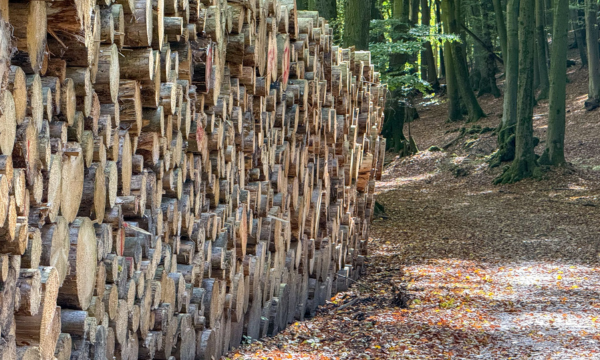
A fourth project, led by Challoch Energy, is exploring whether green hydrogen could offer a route to decarbonising timber transport, one of Mid Wales’s largest employers, supporting around 14,000 jobs. Heavy vehicles operating in forest environments are difficult to electrify, and the project is examining whether locally produced hydrogen could replace diesel in parts of the supply chain.
The work is still at an early stage and focuses on bringing together wind farm owners, forestry bodies, hauliers, processors and vehicle suppliers to test whether a viable pathway exists. One option under consideration is producing hydrogen using surplus electricity from wind farms approaching repowering, where grid capacity is limited.
Simon Minett, managing director of Challoch Energy, told the podcast the current phase is about testing whether the concept can stand up in practice.
Across all four projects, Phase 2 is intended to de-risk ideas that have potential economic and societal benefits but would struggle to progress without public support. By moving into live testing, the programme is seeking to generate evidence on what could work in rural Wales and what would be needed to scale those approaches more widely.
Hear more in Unlocking Mid Wales, the Growing Mid Wales podcast. Listen here.