
Transport investment is most valuable when people can see and feel the difference it makes to their everyday journeys. That is now beginning to happen across Mid Wales, as the Regional Transport Plan moves from a long period of evidence gathering, engagement and strategic planning into delivery on the ground.
More than £13 million has been confirmed for transport improvements across Powys and Ceredigion, allowing a broad range of schemes to move forward. The majority of that funding is capital investment, so it will support physical improvements to transport infrastructure, from walking and cycling routes to bus facilities, electric vehicle charging and targeted work in key towns and communities.
The scale of the opportunity lies partly in the breadth of the plan. It is not focused on one form of transport or one type of journey. It covers public transport, active travel, highways, electric vehicle charging and road safety, recognising that the transport needs of a rural region are varied and cannot be addressed through a single solution.

It also takes a regional view. Administrative boundaries do not reflect the way people travel for work, education, services or leisure, and the border between Powys and Ceredigion is not the end of anybody’s journey. By planning at a regional level, we can look more closely at how places connect and how investment in one area can support wider movement across Mid Wales.
That approach has been shaped by the people who use the transport network. Before the plan was approved, there was extensive public engagement and consultation with communities, businesses and other stakeholders across the region. People were asked about their experience of travelling in Mid Wales and the improvements they wanted to see.
The response highlighted a clear demand for safer walking and cycling routes, better public transport, stronger rural connectivity and transport solutions suited to the geography and character of the region. Those priorities have directly informed both the final plan and the schemes now being progressed.
Some of the improvements are already visible. Work is continuing on the active travel route between Waunfawr and the IBERS campus in Aberystwyth, creating a better connection between two major university sites. The Brecon High Street transformation is moving through its phases, while Newtown is also seeing active travel improvements in the town centre and along the riverside.
Investment is also reaching bus infrastructure across the region. Improvements to local bus stops may appear relatively modest in isolation, but they form part of a wider programme to make public transport more accessible and practical. Demand-responsive transport pilots are running in several areas of Powys, including around Brecon, Llanidloes, Rhayader, Machynlleth and Llanfyllin, testing ways of providing services that respond more closely to the needs of rural communities.
Electric vehicle charging infrastructure is expanding too, with new facilities being delivered through the regional funding. Alongside these larger infrastructure programmes, the plan is supporting road safety initiatives including Pass Plus Cymru, Kerbcraft, national cycle training and enhanced motorcycle rider schemes.
Taken together, these projects show why the Regional Transport Plan should be seen as an economic and social investment, rather than simply a programme of transport works. Better connections can help young people reach education, apprenticeships and employment. They can make it easier for businesses to recruit and retain staff, improve access to services and give communities more sustainable choices about how they travel.
There is also an opportunity for Mid Wales to demonstrate how a predominantly rural region can approach decarbonisation in a practical way. The growth of electric vehicle charging and the increasing use of demand-responsive bus services show that lower-carbon travel is not solely an urban agenda. Rural areas need solutions designed around longer distances, dispersed populations and different patterns of demand.
The plan itself covers five years, and work is already under way to shape the programme for year two. Some schemes will continue into further phases, while investment in electric vehicle charging, bus stop infrastructure and demand-responsive transport is also expected to continue.
Not all of that work will be immediately visible. Developing future schemes, preparing designs and building a pipeline of projects are essential parts of turning a strategic plan into deliverable improvements. The funding is therefore supporting both what people can see today and the projects that can be brought forward in the years ahead.
The Regional Transport Plan gives Mid Wales a clearer basis for deciding where investment should go and what it should achieve. As delivery gathers pace, it will create stronger connections, improve everyday journeys and open up new opportunities for people, communities and businesses across the region.
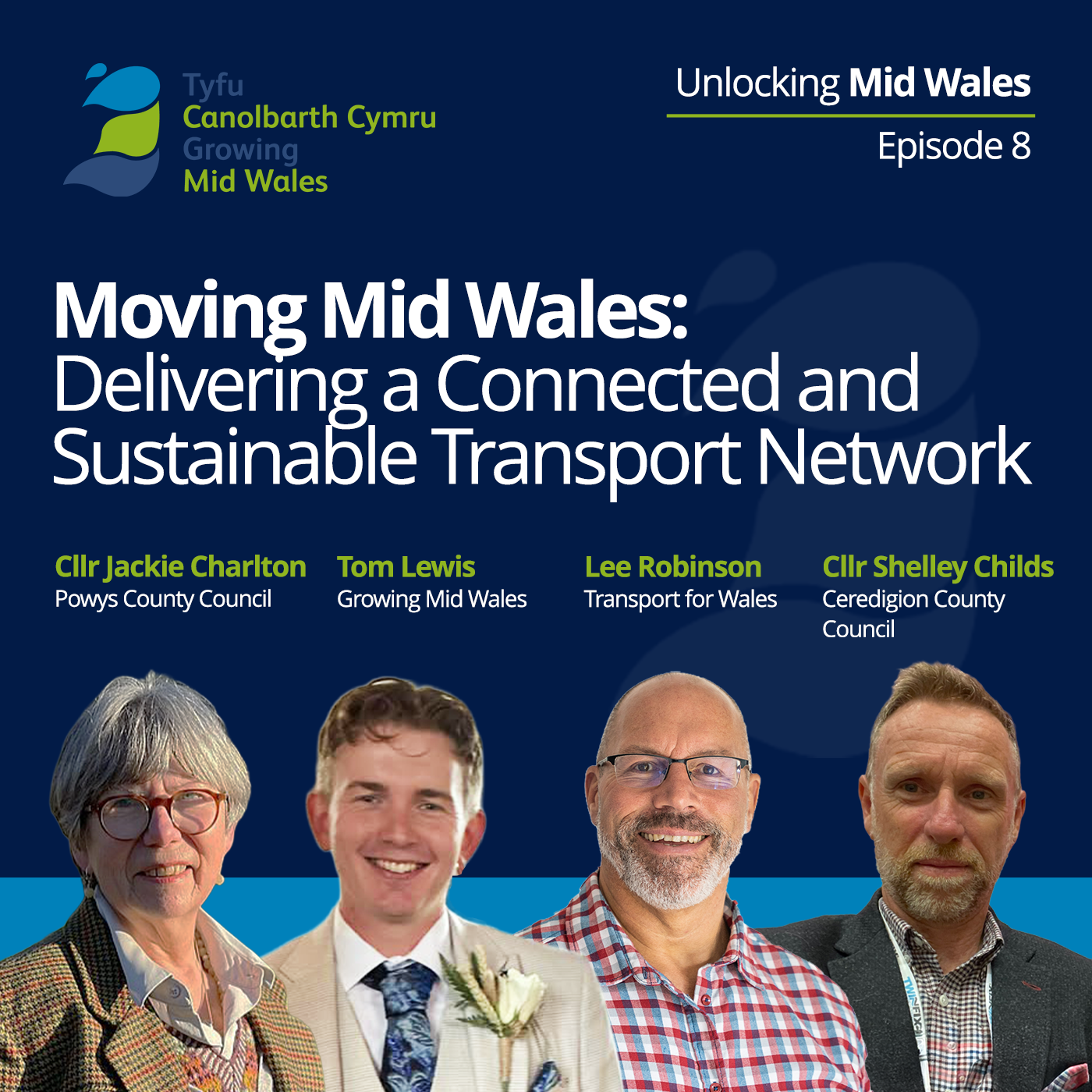
Tom speaks about this and more on Unlocking Mid Wales, the Growing Mid Wales podcast series – listen here