Mentoring, peer networks and access to experienced non-executive support are increasingly being recognised as critical drivers of success for women-led businesses in Wales.
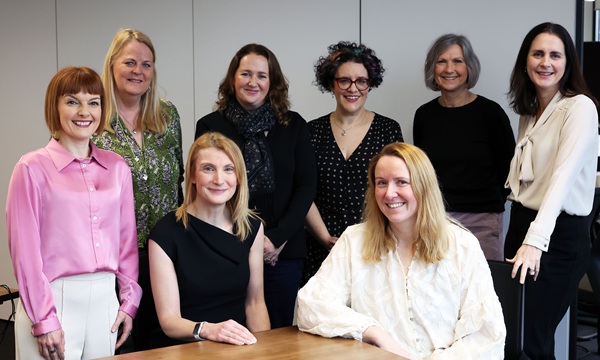
A Development Bank of Wales and Business News Wales roundtable for International Women’s Day 2026 highlighted how these relationships are helping founders navigate risk, reduce isolation and build the confidence needed to scale.
While access to finance remains an important factor in business growth, participants at the roundtable were clear that capital alone is rarely enough. Instead, many described mentors and peer groups as acting like informal boards, offering challenge, perspective and reassurance at moments when decision-making pressure is at its highest.
Several business leaders shared experiences of feeling pressure during key growth phases, particularly when taking on debt, investing in new assets or employing senior staff for the first time. Having a trusted mentor or non-executive director with prior experience was described as transformative, helping founders separate perceived risk from real risk and focus on long-term strategy rather than day-to-day survival.
One recurring theme was the emotional reality of entrepreneurship. Running a business was described not just as a technical challenge, but as an intense personal responsibility, especially where family security and personal assets are involved. Peer networks were highlighted as spaces where these pressures could be discussed openly, without judgement, allowing founders to learn from others who had faced similar situations.
Participants noted that these networks often evolve into trusted communities where business leaders can share setbacks as well as successes. This honesty was seen as particularly important for women, who can feel pressure to appear fully confident or capable even when facing uncertainty. By normalising challenge and vulnerability, peer groups help build resilience and prevent founders from feeling isolated.
The roundtable also highlighted that support needs change as businesses grow. Early-stage founders may benefit most from guidance on cash flow, compliance and basic governance, while scaling businesses increasingly need strategic input on leadership, investment readiness and operational complexity. Flexible mentoring models, rather than one-size-fits-all programmes, were seen as more effective in meeting these evolving needs.
Another key finding was the importance of timing. Several participants noted that mentoring support often arrives too late, once funding has already been secured or major decisions have been made. There was strong agreement that earlier access to experienced advisors could prevent avoidable mistakes and increase the likelihood of sustainable growth.
Representation and visibility also emerged as important factors. Women-only networks and peer groups were described as particularly valuable in creating environments where founders feel comfortable asking questions and sharing concerns. Participants emphasised that this is not about exclusion, but about creating spaces where women can build confidence before stepping into broader, mixed networks.
From an ecosystem perspective, the roundtable reinforced the role that institutions such as the Development Bank of Wales can play beyond finance. By connecting businesses to non-executive networks, angel investors and peer communities, funders can help embed long-term capability as well as short-term capital.
There was also recognition that Wales has strong foundations to build on. The country performs relatively well in supporting women-led businesses compared to other parts of the UK, but participants agreed that greater coordination, visibility and awareness of existing networks would improve take-up and impact.