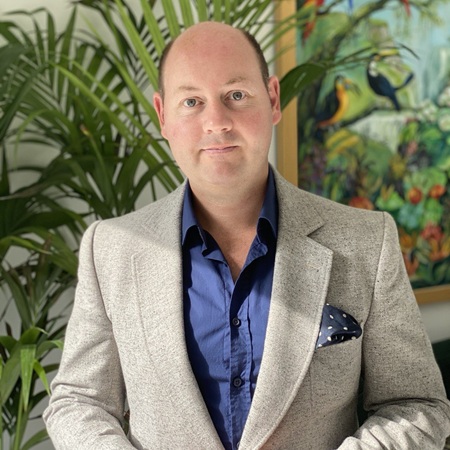
GUEST COLUMN:
Owen Guy
Professor of Semiconductor Chemistry
Swansea University

The strength of South Wales’ compound semiconductor cluster has not happened by chance. It rests on relationships built over many years between industry and education, and it is those relationships that now give the region an edge in a global sector facing significant skills pressures.
The next decade will test the depth of those partnerships, but it will also show just how far a coordinated approach between universities, further education colleges and employers can take us.
At Swansea University, we see how broad the skills base for this industry really is. One of our top PhD students, who originally joined us from a non-semiconductor background (bioscience), is now working at KLA. Their journey shows why transferable skills matter. Of course we need chemists, physicists and engineers, but people with strong intellectual capability from a range of disciplines can thrive in semiconductor roles. Making that clear to students is essential if we want the widest possible pool of future talent.
That message has to reach people early. We are working at school level, from primary through to secondary, and continuing that support at university through courses, workshops and employability programmes. These are designed to show science and engineering graduates – and those in maths and computer science too – that their skills are relevant and valued in an industry they may not even have known was on their doorstep. Raising awareness at the point where students make decisions about subjects, apprenticeships or degrees has a direct impact on the choices they later make about careers.
Universities and FE colleges are central to this. The cluster model works because education and industry are not separate. We work closely with companies across the region, shaping and delivering courses that reflect what the sector actually needs. All our chemistry, physics and electrical engineering graduates are taught semiconductor and compound semiconductor technology, and we are expanding into areas such as computer science and maths, which will become even more important. Our partnerships with companies such as Vishay, KLA, IQE and Microchip ensure that students are learning content that is directly relevant to real-world manufacturing and research.
Facilities matter too. In Swansea, our Centre for Integrative Semiconductor Materials — our “Fab on the Beach” – is a miniature version of Vishay’s Fab in Newport. Cardiff has its equivalent in the Institute of Compound Semiconductors. These are £100 million-class sites with the capability to inspire young people in a way that a classroom cannot. We have had hundreds of school children visit the Swansea facility, some as young as seven, and those experiences often shape their understanding of what is possible. When you give pupils access to cleanrooms and state-of-the-art equipment, you show them that these careers are not out of reach.
We also work with partners who can extend this reach even further. Our collaboration with Dragons Rugby has shown how much impact a familiar local presence can have. Coaches visit schools across Newport and Gwent every few weeks, delivering rugby sessions alongside semiconductor activities. It reinforces the message and keeps pupils engaged over time. To build on that, we are developing a new passport to semiconductors scheme, which will track students from primary school through secondary and into further or higher education. The aim is to keep them connected to opportunities at the key points where they make decisions about their future.
Partnerships with industry do not stop at undergraduate level. We run joint schemes with companies such as Vishay and KLA that allow employees to study for a master’s degree or even a PhD while working. This is an important part of career progression and helps retain people in the industry. It also ensures that research projects are aligned to commercial needs, which strengthens the region’s capability in areas that will matter to the global market.
Some of those technologies are already taking shape. Artificial intelligence and the growth of data centres are expected to drive increasing demand for power electronic devices, many of which rely on technologies such as silicon carbide and gallium nitride. Wales plays a key role here, and companies like Vishay are already focused on this work. In response, we have developed new courses on these materials and run them both at university and within industry. These skills also apply to electric vehicles and net-zero applications, showing the broader relevance of semiconductor expertise.
Higher-level training is another area where the cluster’s collaboration stands out. Many of our postgraduate students are sponsored by industry to carry out research that is directly commercially relevant. This creates a pipeline of PhD graduates with the experience and insight to step straight into roles across the sector.
When I recently attended SEMICON Europa, the largest semiconductor conference in Europe, it was clear that Wales is at the forefront when it comes to skills. Our cleanroom training course at the Swansea Centre for Integrative Semiconductor Materials (CISM) – a week-long programme where participants manufacture a state-of-the-art gallium nitride device – is something very few places can offer. The combination of facilities, expertise and industry involvement puts us in a strong position, but sustaining it requires proper resourcing from both government and industry.
Looking ahead, maintaining Wales’ competitive edge will depend on recognising the value of these partnerships and investing in them. The talent pipeline is not built through isolated interventions; it is built through a coordinated journey that starts in primary school and continues into postgraduate study and industry employment. The passport to semiconductors is one way of structuring that journey, linking the choices young people make with the opportunities that exist here in South Wales.
The cluster’s success so far proves that when education and industry work together, the region can lead in a field that is critical to the global economy. The next decade will be shaped by that same collaboration – and by the people it brings into the industry.
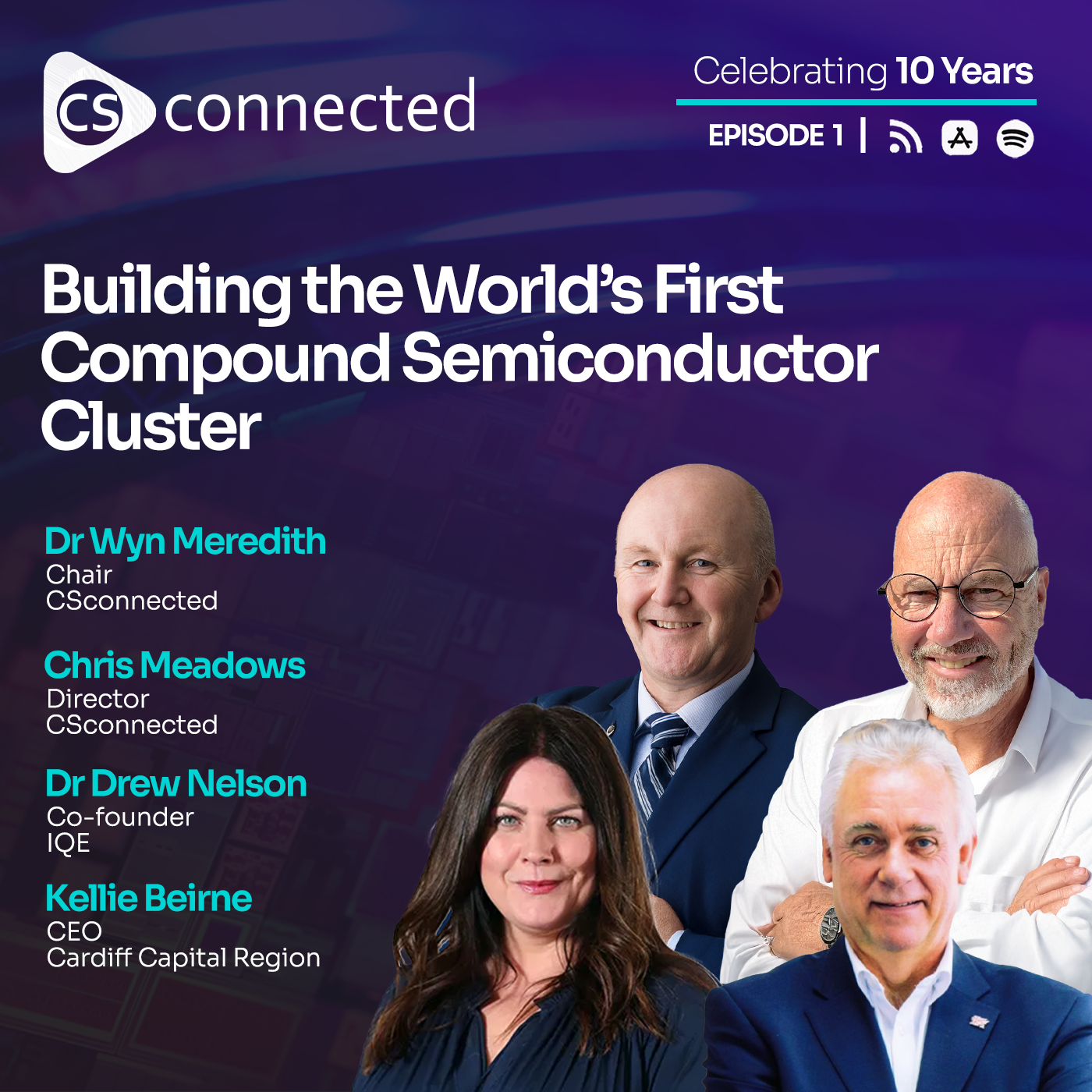
Owen Guy talks about this and more in the CSconnected podcast. Listen here.