



GUEST COLUMN:
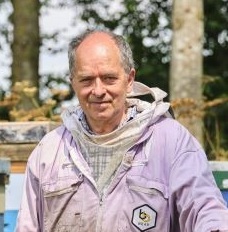
David Wainwright
Co-founder
Wainwright’s Bee Farm
I started keeping bees in 1970 with just two hives. My fascination with bees started when I was a teenager. I was intrigued by these extraordinary insects, the way they work together efficiently and the warm aroma of trees resins that fills the air around their hive.
Those first two hives sparked a journey that has taken me across continents, through decades of learning, and into a family business that I now run alongside my daughter, Dawn. What’s kept me going all these years is simple: a respect for the bees, the landscapes they forage from, and the incredible honeys they produce.
In the early 1980s, I travelled to rural Zambia with Voluntary Service Overseas, to teach “modern” beekeeping. What I found instead was a humbling lesson. The Zambian villagers I worked with had perfected bark hive beekeeping over generations. Their methods were sustainable, low-impact, and deeply respectful of the forest. They didn’t even need protective suits – their knowledge of the bees was that profound.
The honey they harvested from the Miombo forest was unlike anything I’d ever tasted: rich, complex, and gathered from hundreds of tree species. I realised then that the role I could play wasn’t in teaching them but in helping build a reliable market for their honey back home. Together with my partner Sarah, we set up Wainwright’s Bee Farm in 1990, importing organic forest honey to the UK. We worked with the Soil Association to set up the first organic honey standards and later became Fair Trade founders. Our Zambian honey continues to stand out in the UK as the first certified organic honey – setting the benchmark for organic honey in partnership with The Soil Association and leading European organic bodies. As Fair Trade pioneers, we pay a fair price for every drop of honey – empowering Zambian beekeepers to protect their forests and livelihoods. Our Organic Zambian Forest Honey is proudly available nationwide at M&S.
Back in Wales, I grew my own hives slowly and steadily. What began with a couple of colonies has now grown into one of the largest honey operations in the UK. We specialise in what we call Single Apiary honey- each jar traceable back to one farm, one season, one set of hives.
Our approach is deliberately small batch. We keep every farm’s honey separate because I believe the flavour, colour and aroma are worth celebrating, not blending away. One season you might taste the punchy richness of high-altitude heather, another the delicate sweetness of summer willowherb. Each is a reflection of the land, the weather, and the forage available to the bees at that moment in time.
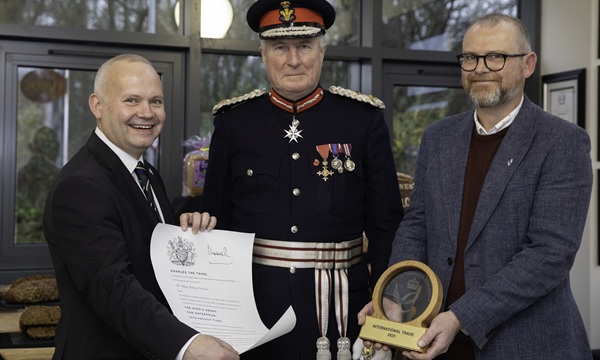
That attention to detail has brought recognition – this year we were named Food Producer of the Year at the Welsh Food and Drink Awards 2025, and our Single Apiary Honey was judged Best Tasting Honey in the UK in the Telegraph taste test. But while the awards are wonderful, what matters most to me is keeping alive the connection between people, bees, and place.
A huge part of that has been our partnership with M&S, which began more than 14 years ago. From the start, it felt like a natural fit. M&S Select Farms share our values, putting provenance, biodiversity and quality first. Our hives thrive on M&S Select Farms, pollinating strawberries, cherries, gooseberries and broad beans – helping bring fresh, flavour-packed produce straight to store shelves. The farmers on the Select Farms make their farms bee friendly by planting edges of fields with flowers, reducing pesticides and keeping biodiverse hedges and corners.
M&S is the only supermarket to offer Single Apiary honeys like ours. Every jar comes with a numbered lid label, telling the story of that season’s forage and conditions. We work closely with M&S Select Farms to create habitats that support not only honeybees but also a diverse range of wild pollinators, including bumblebees, solitary bees, butterflies, and hoverflies. These practices aim to enhance biodiversity and ensure that both managed and wild pollinators can thrive.
For me, it’s a privilege to know that people across the UK are enjoying honey that reflects the true diversity of our countryside.
As I look back over the decades, from those first two hives to today’s family business, I see more than just honey production. I see a story of connection, between bees and flowers, between farmers and beekeepers, between Zambia’s forests and Britain’s fields.
Our work with M&S has given us the platform to share that story with millions of people, and I’m incredibly proud of what we’ve achieved together. But more importantly, I’m excited for what’s to come.