GUEST COLUMN:
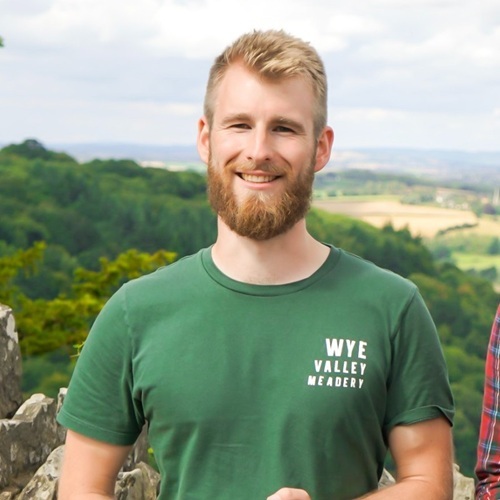
Kit Newell
Founder
Hive Mind Mead
When my brother and I launched Hivemind in 2018, we were stepping into a sector we knew very little about. We’d come from completely different jobs and decided to turn our beekeeping hobby into something more ambitious.
Mead making may sound niche – and it is, with only a handful of meaderies in the UK. But we saw an opportunity to bring it into a more contemporary space, away from the Viking imagery most people associate with it, and towards something closer to cider, beer or even wine.
Over the years we’ve added a range of meads, but this year at Blas Cymru / Taste Wales, an event hosted by Welsh Government, we focused on something new: a soft drink called Honeyade, using honey as a sweetener instead of sugar or artificial sweeteners.
People often ask us what Blas Cymru / Taste Wales is like because they’ve heard us talk about it so much. The easiest way I can explain it is that it has all the good parts of a traditional trade show and none of the difficult bits. Our first event was in 2019, and even then we walked away feeling as though we’d been handed an opportunity that doesn’t exist anywhere else. Instead of waiting and hoping that a buyer might pass your stand at the right moment, you sit down for dedicated, scheduled meetings. Twenty minutes where both sides know why they’re there, with no need for awkward grabs at attention.
This year was no different. The format means you can be productive in a way that normal shows don’t allow. Over the two-day event we had 21 meetings, plus conversations at the networking dinner. That gives us two or three months of focused follow-up, which shapes the whole rhythm of our sales activity. It’s not that we wouldn’t have had these conversations eventually, but certainly not all at once, and not with the clarity that comes from knowing a buyer has chosen to sit down with you.
The other side of Blas Cymru / Taste Wales is the support that sits around it. Over the years we’ve used most of what’s available. Recently we’ve been working closely with the Welsh Government Scale Up Programme, which has been important as we move from what felt like a hobbyist set-up to something more structured. Processes shift when you start dealing with larger customers, and we’ve had to adapt everything from production to admin. The less glamorous parts of running a business – cash flow management, for example – have been just as important as the product development. My brother still handles more of the hands-on beekeeping and brewing, but I’ve learned that a surprising amount of my time goes into organisation, planning and paperwork.
We’ve also benefitted from the Welsh Government funded Honey Cluster, which brings producers together to solve problems and share experience. And the Food and Drink Wales mentoring programme has been incredibly helpful. Talking to people who have already gone through the same challenges makes a huge difference when you’re navigating decisions that feel bigger every year. There’s actually so much support available that you have to choose carefully, simply because you can’t take up everything. It’s a good position to be in, but it does mean focusing on what’s most useful at each stage.
Among the really positive conversations this year were those about new product development. We’re launching a cherry juice and honey fermented mead – a style known as a melomel. Mead has thousands of years of history to pull from, and being able to reinterpret those recipes is part of what keeps the creative side of the business exciting. It will be a seasonal product running up to Christmas, which fits with how traditional mead tends to be viewed, and then we’ll return our focus to the soft drinks ahead of the summer. Our sparkling light mead always performs well in warmer months.
In terms of stockists, we now supply around 200 independent farm shops, delis, garden centres and cafés, alongside some well-known names like Selfridges and the Globe Theatre in London, where our mead is served during performances. But as with everything, those relationships have built up over time, and events like Blas Cymru / Taste Wales have accelerated that growth.
For us, Blas Cymru / Taste Wales has become a fixed part of how we plan the year. It gives our business a clear focus, a chance to test ideas, and a way to build genuine relationships. I don’t think we would have moved at the pace we have without it. It’s rare to find an event where small businesses don’t feel overshadowed, and where a producer like us, making something as niche as mead, can sit in front of exactly the right people.
Kit Newell talks about this and more in the Food and Drink podcast episode Driving Growth at Blas Cymru / Taste Wales 2025. Listen to the podcast here.