GUEST COLUMN:
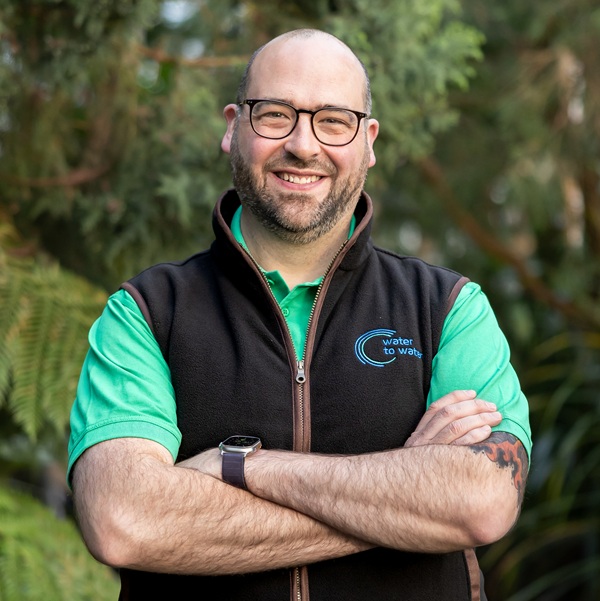
Alex Gauntt
CEO and Co-Founder
Water to Water
Decarbonising rural economies is not an abstract policy debate. It is a practical, everyday challenge that plays out on farms, in villages and across supply chains that are both energy-intensive and geographically dispersed.
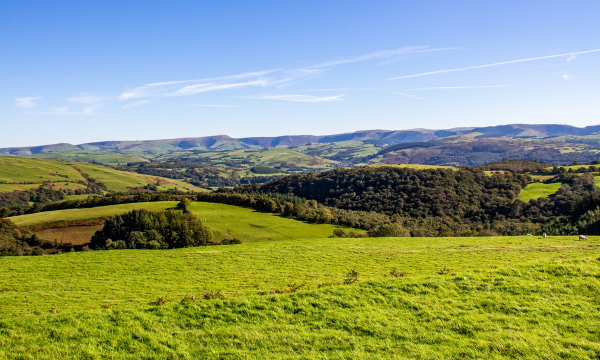
In Mid Wales, agriculture sits at the heart of the regional economy, and it also accounts for a significant share of territorial carbon emissions. That combination makes Mid Wales a difficult place to decarbonise – but also one where the impact of getting it right could be substantial.
At Water to Water we work directly with farmers and rural communities to design and deliver small-scale renewable energy systems that meet their real-world needs. Our focus is on practical solutions that can reduce emissions, cut costs and improve resilience at the same time.
That is why our involvement in the Whole System Research and Innovation for Decarbonisation (WSRID) programme feels so important. Funded by the Welsh Government and supported by Growing Mid Wales, WSRID is creating the space to test ideas that would otherwise struggle to get off the ground in rural settings.
The programme is now moving into Phase 2, shifting from feasibility into prototype development and live testing. For us, that marks a deliberate decision to focus less on building a single physical demonstration site, and more on removing a barrier we kept hearing about from farmers themselves: knowing where to start. During Phase 1, again supported by Growing Mid Wales, we demonstrated that three farms in Mid Wales could meet their own on-site energy needs through renewable microgrids. What surprised us was not the technical outcome, but the volume of interest that followed. Farmers across the region were exploring similar questions, but the process was often consultant-led, expensive and overly technical.
Our Phase 2 project responds directly to that gap. We are developing a free-to-use web tool that will allow any farmer in Wales, of any size, to carry out an initial assessment of their on-farm renewable energy potential, starting with dairy farmers. The aim is not to replace detailed design work, but to make the first step accessible. Farmers can explore how technologies such as solar, batteries, micro-anaerobic digestion, ice storage and green hydrogen could work together on their own site, using the farm’s own real data rather than generic assumptions. The tool produces a simple, printable summary of options and an indicative ‘next step’ pathway, so farmers can have a grounded conversation with suppliers, cooperatives and funders.
This work is being delivered in partnership with First Milk, along with a group of software and technical specialists led by OnGen, a UK software developer. First Milk’s involvement matters. As a large dairy cooperative with hundreds of members, it brings a practical understanding of farming realities and a ready network of farms interested in regenerative and low-carbon practices. The tool is being piloted with farms in Mid Wales, but it is designed to scale, allowing insights to be applied more widely across Wales and beyond.
Mid Wales is a strong testbed for this approach because the constraints are real. Dairy and livestock farms are significant energy users, and full electrification is not always a realistic or affordable option. Local energy plans point to the scale of grid upgrades that would be required if rural areas relied solely on electrification. At the same time, farmers are under intense cost pressure, with limited control over the prices they receive for their produce. Energy independence, even partial, can change that equation by stabilising costs and creating new income opportunities.
The collaborative nature of WSRID is critical here. Public funding from the Welsh Government, regional coordination through Growing Mid Wales, private sector delivery, and direct engagement with farmers all have to align. No single organisation can solve this alone. By grounding innovation in local energy planning and real farm data, the programme reduces risk and shortens the path from concept to deployment.
For our project, the immediate milestone is the launch of the web tool itself. That will act as the demonstrator for this phase, allowing hundreds of farmers to explore their options and build a pipeline of projects that are genuinely ready to move forward. Over time, that creates a portfolio of shovel-ready schemes that can be delivered as funding and conditions allow.
There is a wider implication too. Farms are often seen only as sources of emissions, rather than as active contributors to the net zero transition. This work challenges that assumption. By combining on-farm generation, storage and flexible demand, farms can play a meaningful role in local energy systems while improving their own resilience.
WSRID is not about quick wins. It is about creating the conditions to test, prove and refine solutions that can operate at scale in rural environments. For Mid Wales, that matters. If we can show that these approaches work here – technically, economically and socially – then they can be adapted elsewhere. That is how innovation in rural decarbonisation moves from aspiration to practice.
Alex Gauntt talks about this and more in Unlocking Mid Wales, the Growing Mid Wales podcast. Listen to the podcast here.