GUEST COLUMN:
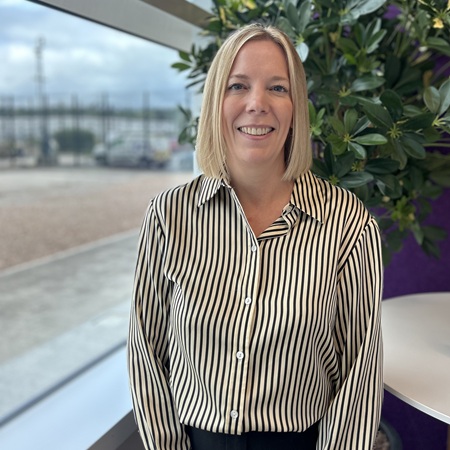
Catherine Lundie
People and Resources Director
Novomorphic

The semiconductor sector is expanding faster than the talent available to sustain it, and that gap is already being felt across the UK and further afield. For companies working in South Wales, the question is how we build the workforce that will carry this cluster through the next decade of growth. The answer lies not only in recruitment but in culture, communication and long-term collaboration between industry and education.
At Novomorphic, we were established with a clear dual purpose: to provide integrated circuit design services and to help build a skills pipeline for South Wales. Funded by Welsh Government, Cadence and CSA Catapult, we have been set up as a design centre with a strong commitment to developing people. We take on a cohort of graduates each year and train them in integrated circuit design, and although we are still a small team – 12 people, including six graduates and four senior design engineers – we are focused on scaling that capability.
As we prepare to move into Centre 7 – a dedicated space for inward investors of semiconductor sector supply chain companies in Cardiff Gate Business Park – our aim is to grow within the wider semiconductor cluster and contribute directly to the region’s long-term skills base.
Digital design brings particular pressures. As the first design centre of our kind in South Wales, encouraging experienced designers to relocate is challenging. Alongside that, we see strong demand for graduates with degrees or qualifications directly linked to microelectronics and IC design. Addressing both issues requires us to think differently about where talent comes from and how we support people once they join us.
For graduates, our approach is to speak widely, engage early and consider skills in the broadest possible sense. We meet students across a range of disciplines and talk to them about the opportunities in our field, focusing on what their existing strengths could become rather than only on what they already know. Transferable skills matter, and we can support the technical development they need through in-house training. At the same time, recruitment is also about showcasing the region itself. South Wales is a fantastic place to live and work – I have been here for 20 years – and we encourage candidates to visit, meet the team and get a feel for the area before making their decision.
Awareness remains one of the biggest barriers for young people. Many do not realise what the industry does or the impact they could have within it. Starting in primary schools, particularly in Years 5 and 6, and keeping up a steady rhythm of communication as students get older helps to bring these opportunities to life. Letting pupils and students use equipment, visit facilities and understand the purpose behind the work is essential. People often aspire to what they can see, so our job is to ensure they see this sector clearly and early enough to make informed choices about subjects, apprenticeships and degrees.
Once people join a company, retention depends on far more than salary. Culture is central. People want to work in an environment where they feel supported, valued and able to grow. Clear progression routes help, but so does the ability to see the impact of their work. Knowing that their role contributes to solving emerging challenges and shaping future technologies gives meaning to day-to-day tasks, especially for early-career engineers.
It is also important to recognise that progression is not only vertical. Some people may want to move into project management, business development or other functions that sit alongside engineering rather than above it. Thinking broadly about career paths helps companies retain talented individuals who might otherwise assume they have reached the limits of what is possible.
Collaboration with universities is another part of making these roles “sticky”. Opportunities for continual professional development, including postgraduate qualifications, strengthen both confidence and capability. We already have one colleague studying for a PhD, and we want to expand that model so that learning and advancement are built into the fabric of the company. Access to local CPD matters; when people can continue developing their skills without leaving the region, it reinforces their decision to build a long-term career here.
Looking ahead, the sector needs the ability to scale and repeat what works. That means stability in funding cycles, long enough for initiatives to grow rather than reset. It means maintaining engagement from primary school through to university and into industry. And it means working together across the cluster, through CSconnected, so that successes can be strengthened and expanded.
The skills gap in our industry is real, but it is not insurmountable. With the right culture inside companies, the right communication with young people, and the right partnerships with universities and colleges, we can build a workforce that grows with the sector. The next decade offers South Wales a real opportunity, not only to develop semiconductor technology but to develop the people who will lead it.
Catherine Lundie talks about this and more in the CSconnected podcast. Listen here.